6 Best Cameras for Travel Vlogging in 2026
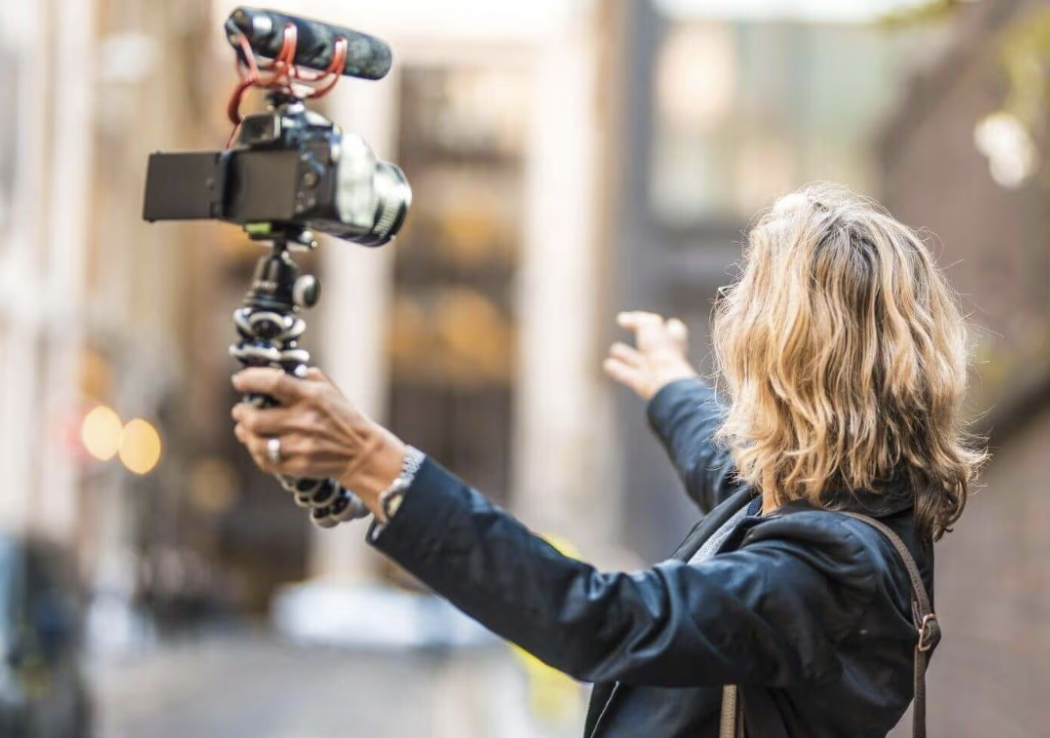
The best camera for travel vlogging isn't necessarily the best camera for vlogging in general. There are a few travel demands that can quickly change which camera makes sense.
Portability, stabilization, battery life, and durability are more important than raw specs when you're walking through a new city, hiking with a backpack or filming from a busy market.
This guide breaks down what actually makes a camera travel-ready, then compares 6 models worth packing on your next trip.
Things That Make a Good Travel Vlogging Camera
To choose the best travel vlogging camera, you need to understand what separates it from a regular studio camera. On the road, every gram and setting must earn its place in your luggage.
- Portability: If your vlogging camera, lens, charger, and other accessories can't fit in a small daypack, then it is not ideal for travel. A lightweight body or built-in lens helps when you're filming for several hours on foot.
- Stabilization: Travel footage often comes from walking shots, boat rides, or quick handheld clips. Built-in stabilization (mechanical or digital) keeps you from packing a separate gimbal.
- Battery: For a travel vlog, your battery life should be good enough to cover several hours of intermittent shooting. Look for a camera that can record for at least 1–2 hours on a charge, supports USB charging, and allows you to carry a spare battery or power bank for longer days.
- Durability: Your travel vlogging camera should be able to withstand travel situations such as beaches, rain, dust, accidental drops, and temperature changes.
6 Best Cameras for Travel Vlogging
As mentioned already, not every vlogging camera is suitable for travel. Some are heavier than they look in photos, others consume battery quickly, and a few simply aren't rugged enough for daily movement.
If you'd rather go fully rugged, our breakdown of the best action cameras for vlogging is worth a look, and if budget is the main constraint, the best cameras for vloggers on a budget covers more affordable options in depth.
Quick Glance among the 6 Travel Vlog Camera
Below are six cameras that hold up specifically when you're moving through airports, cities, and trails.
| Camera | Type | Approx. Weight | Stabilization | Approx. Battery Life | Best For | Travel Advantage |
|---|---|---|---|---|---|---|
| DJI Osmo Pocket 3 | Pocket/gimbal | 179 g | 3-axis mechanical gimbal to keep footage smooth and steady | 166 mins video | Walking & city vlogs | Tiny + stabilized |
| Sony ZV-E10 II | Mirrorless | 292 g | Electronic stabilization reduces shake digitally, making handheld footage smoother. | 130 mins video | Solo travel vlogs | Light + interchangeable lenses |
| Canon PowerShot V1 | Compact | 426 g | Optical + digital IS combines lens-based and digital stabilization to reduce camera shake during handheld shooting | 65 – 85 mins video | City + food travel | Built-in wide zoom |
| Fujifilm X-S20 | Mirrorless | 491 g | In-body stabilization to keep handheld footage steady by compensating for camera movement | 80 min 4K actual | Photo + video travel | Strong hybrid performance |
| GoPro HERO13 Black | Action | 159 g | HyperSmooth 6.0 delivers strong stabilization for high-movement shots | 1.5 hr at 5.3K30 | Adventure travel | Rugged + mountable |
| DJI Osmo Action 5 Pro | Action | 146 g | RockSteady/HorizonSteady for smooth footage during movement | 240 mins video | Outdoor & water travel | Waterproof + long battery |
DJI Osmo Pocket 3
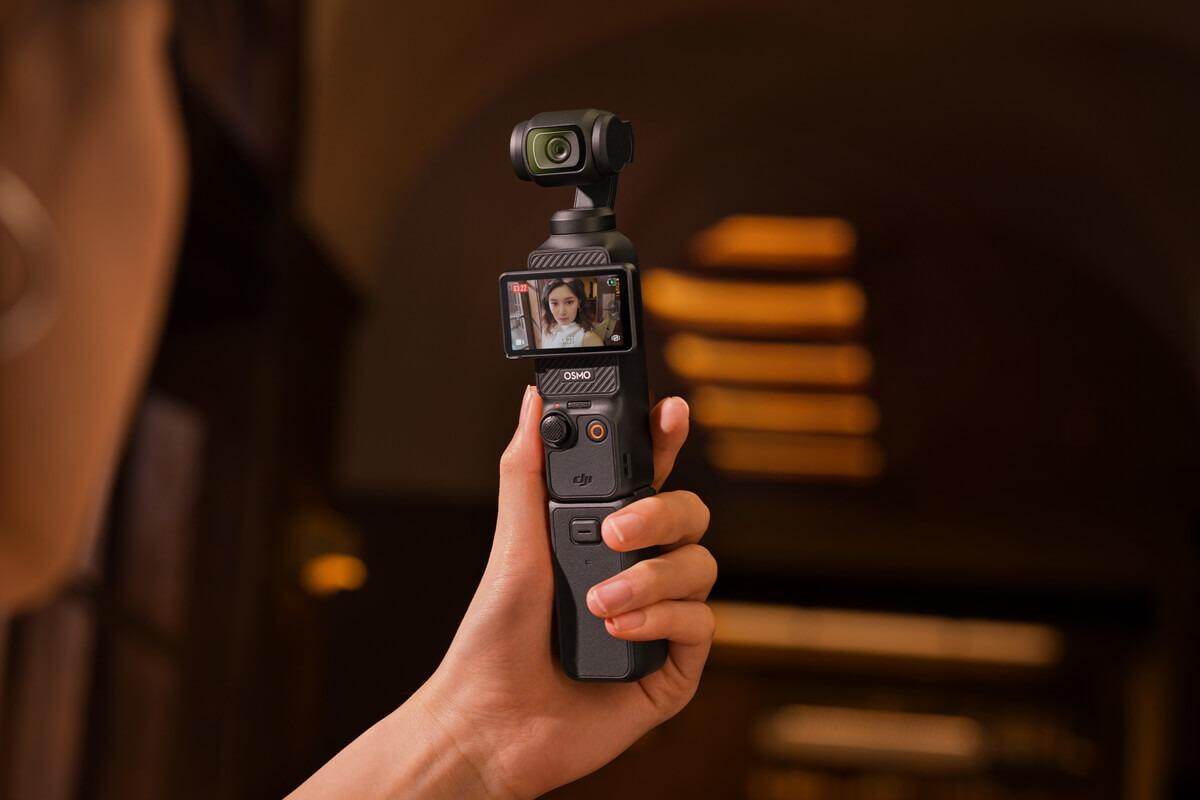
The DJI Osmo Pocket 3 is one of the best cameras for travelers who want smooth footage without carrying a separate gimbal. Its pocket-sized design combines a 1-inch CMOS sensor with a three-axis mechanical gimbal. This makes it particularly useful for walking tours, city exploration, food trips, and solo travel.
Key features:
- 1-inch sensor: Captures brighter, more detailed footage, especially useful when filming indoors, at sunset, or in other situations where lighting is less predictable.
- Rotating touchscreen: Makes switching between horizontal and vertical filming simple, which is useful when creating both YouTube videos and short-form content.
- ActiveTrack 6.0: Helps keep you in the frame while moving, making solo vlogging easier.
- 4K/120fps: Gives you detailed footage and the option to create smooth slow-motion shots for action, scenery, or travel highlights.
Why it's good for travel vlog:
Several vloggers found it because its small size makes it easy to carry and pull out whenever they need to capture a moment. Its ActiveTrack feature also comes in handy for maintaining framing while you move, reducing the need to constantly adjust the camera.
Things to consider:
The Pocket 3 is not designed to replace a rugged action camera. If your trip involves snorkeling, heavy rain, mountain biking, or situations where the camera could take a serious impact, the safer choice might be an action camera.
Sony ZV-E10 II
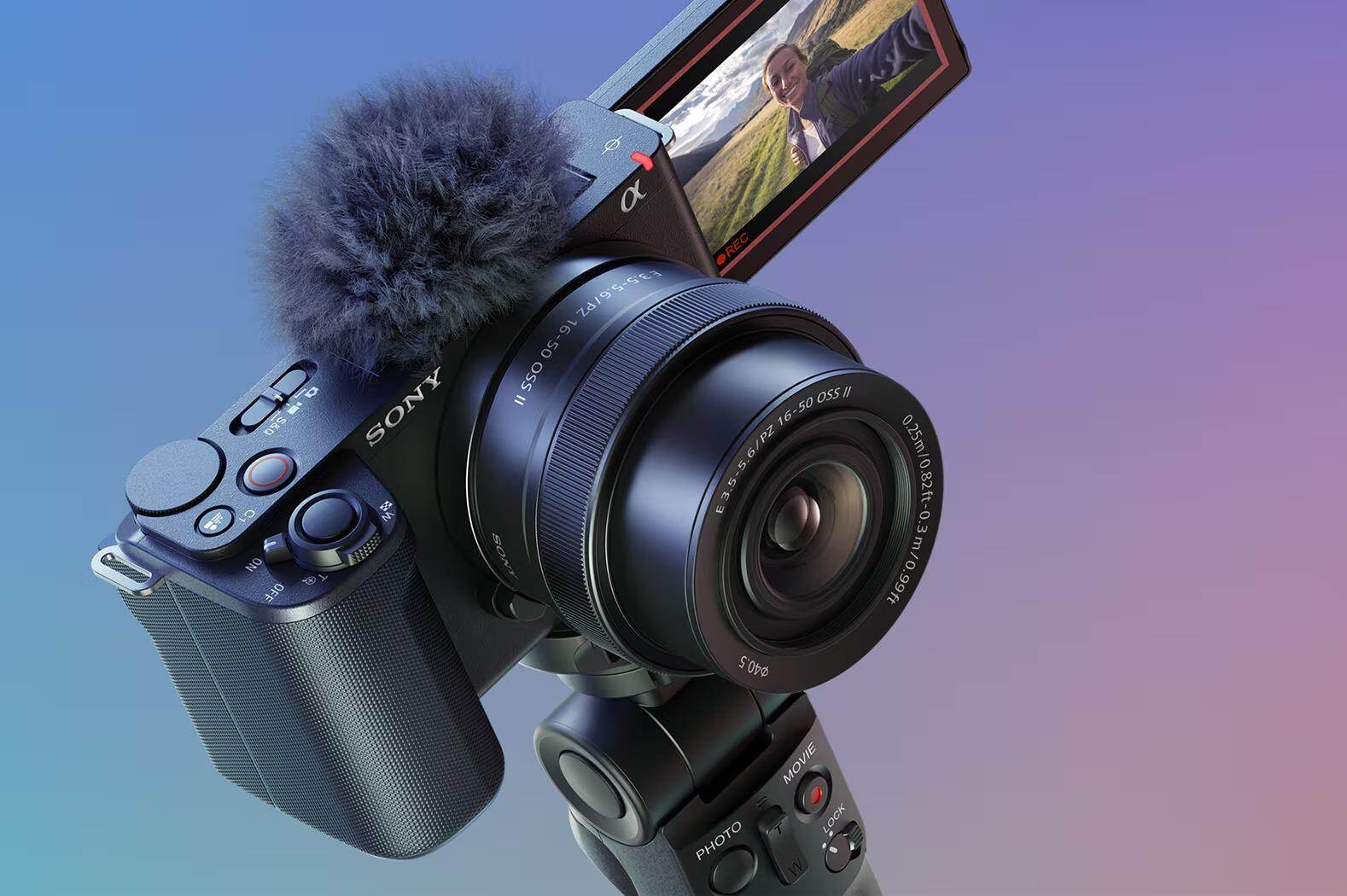
Want the flexibility of a mirrorless camera without carrying a full-size professional body? That's where the Sony ZV-E10 II becomes helpful. Its 26MP APS-C sensor, interchangeable E-mount lenses, and 4K recording make it suitable for creators who want their travel camera to handle both photographs and video.
Key features:
- Interchangeable lenses: Lets you switch between wide lenses for talking-to-camera shots and other lenses. This comes in handy for portraits, landscapes, or distant subjects as your travel style changes.
- APS-C sensor: Produces detailed footage with good low-light performance, helping your vlogs look polished across different environments.
- Subject recognition: Helps keep people and other subjects in focus, reducing the need to constantly adjust focus while recording yourself.
- Three-capsule microphone: Captures clearer on-camera audio without requiring an external microphone for every casual travel clip.
- USB-C power: Makes it easier to recharge or power the camera using a power bank while you're away from a wall outlet.
Why it's good for travel vlog:
The interchangeable-lens system of the ZV-E10 II is its biggest advantage. One compact lens can handle everyday sightseeing, while another can be added for portraits, landscapes, or distant subjects. But aside from that, its portability has been praised, along with its battery life, and autofocus, which make it practical for long days of exploring and filming
Things to consider:
The 292 g body does not tell the whole story. Once you add a lens, spare battery, microphone, and other accessories, the kit becomes considerably heavier than a pocket camera between 300–350 g.
Canon PowerShot V1
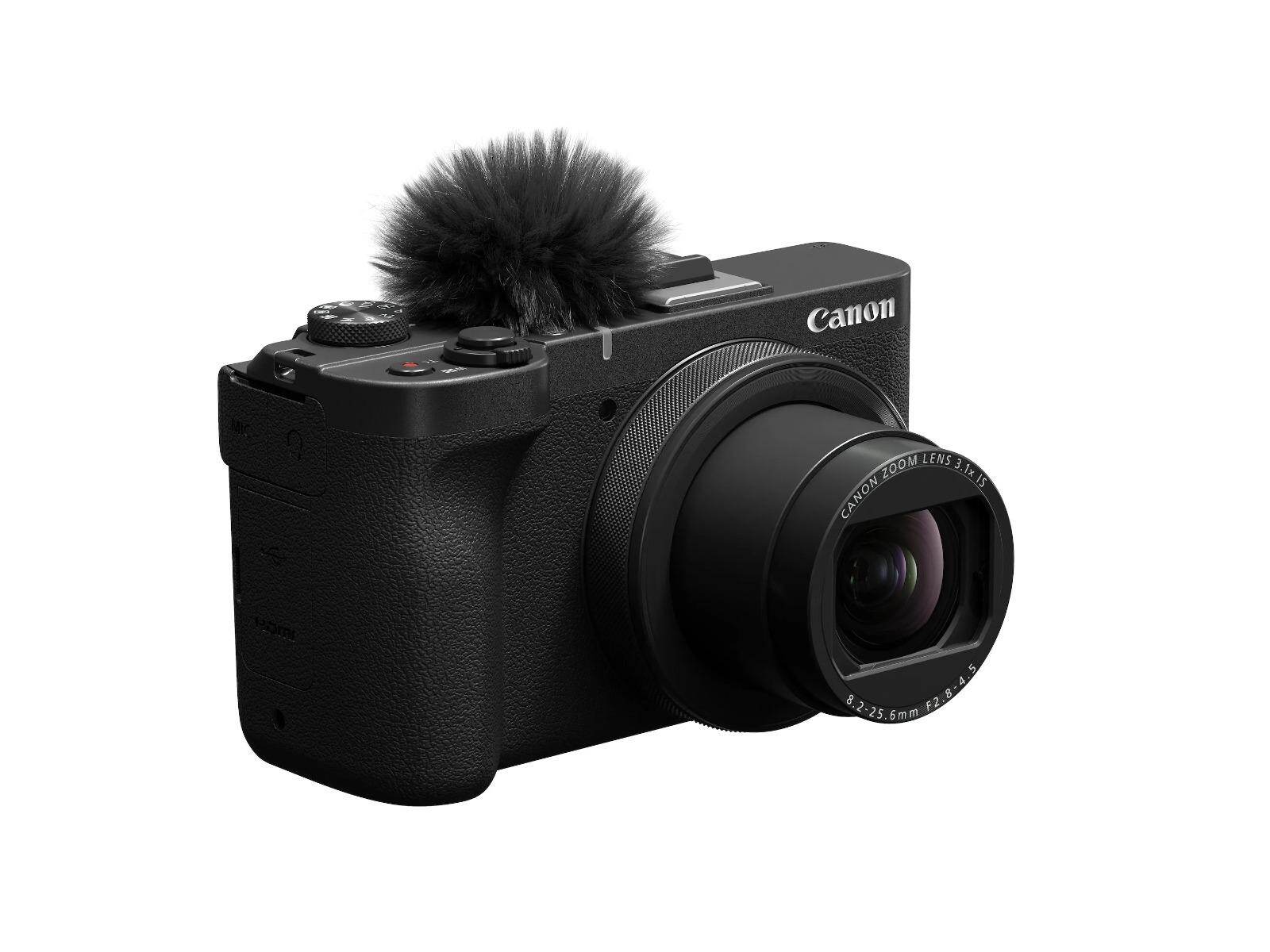
The Canon PowerShot V1 is designed specifically around content creation while keeping the convenience of a fixed-lens camera. Instead of carrying multiple lenses, travelers get a built-in wide-angle zoom equivalent to approximately 17–52mm for video. That makes it easier to move between selfie footage, street scenes, food shots, and general travel B-roll.
Key features:
- Built-in ND filter: Lets you control exposure in bright outdoor conditions so you don't need to carry and attach a separate filter.
- Dual Pixel CMOS AF II: Keeps your face and subjects in focus more reliably, so you can concentrate on your vlog instead of constantly checking focus.
- Built-in cooling fan: Helps the camera handle longer recording sessions, which is useful when filming extended travel segments.
- Mic and headphone ports: Give you more control over audio recording and monitoring when you want to improve your vlog's sound quality.
Why it's good for travel vlog:
The fixed lens makes it very convenient to use. You can leave the hotel with one camera and not worry about carrying a lens pouch. It also boasts a wide lens and stabilization, which comes in handy when you need to film yourself and still capture some of the surrounding scenery.
Things to consider:
At approximately 426 g, it is noticeably heavier than the Pocket 3 and ZV-E10 II body. If you're particular about pulling your camera out instantly while walking around, a pocket gimbal camera may be more convenient.
Fujifilm X-S20
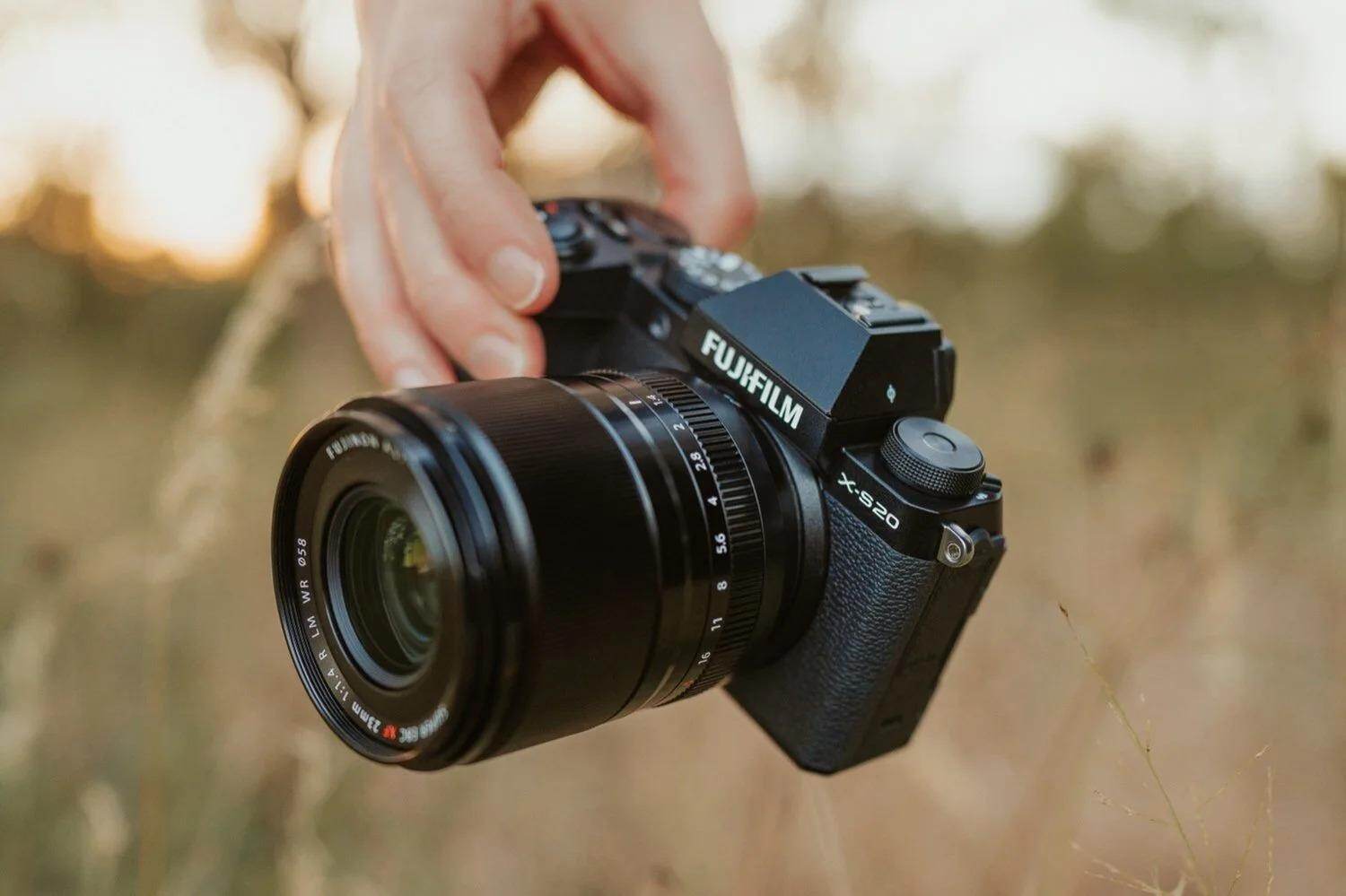
There are several travelers who want one camera to handle both serious photography and video. They'll find the Fujifilm X-S20 a strong choice. Its APS-C sensor, interchangeable lenses, in-body stabilization, and extensive video features give it considerably more flexibility than a pocket or action camera.
Key features:
- APS-C sensor: Delivers detailed images with strong image quality, giving travel footage a more polished look in different lighting conditions.
- 6.2K/30p recording: Gives you extra resolution for detailed footage and more flexibility when cropping or reframing shots during editing.
- Vari-angle touchscreen: Makes it easier to frame yourself from different angles, particularly when the camera is mounted low, high, or on a tripod.
- Subject detection: Helps maintain focus on people and other subjects, which is useful when you're moving around during a vlog.
Why it's good for travel:
The X-S20 is particularly useful if you'll be creating more than just vlog footage on your trip. You can photograph landscapes in the morning, film a talking-head segment in the afternoon, and capture stabilized B-roll at night.
Travels also highlight its combination of a comfortable grip, image stabilization, battery life, and video features as reasons it works well as a travel workhorse.
Things to consider:
This is not the camera to choose if your main goal is to keep your travel kit as small as possible. At 491 g before adding a lens, it is considerably heavier than the pocket and action cameras here. You also need to choose and carry lenses, which means additional weight and cost.
GoPro HERO13 Black
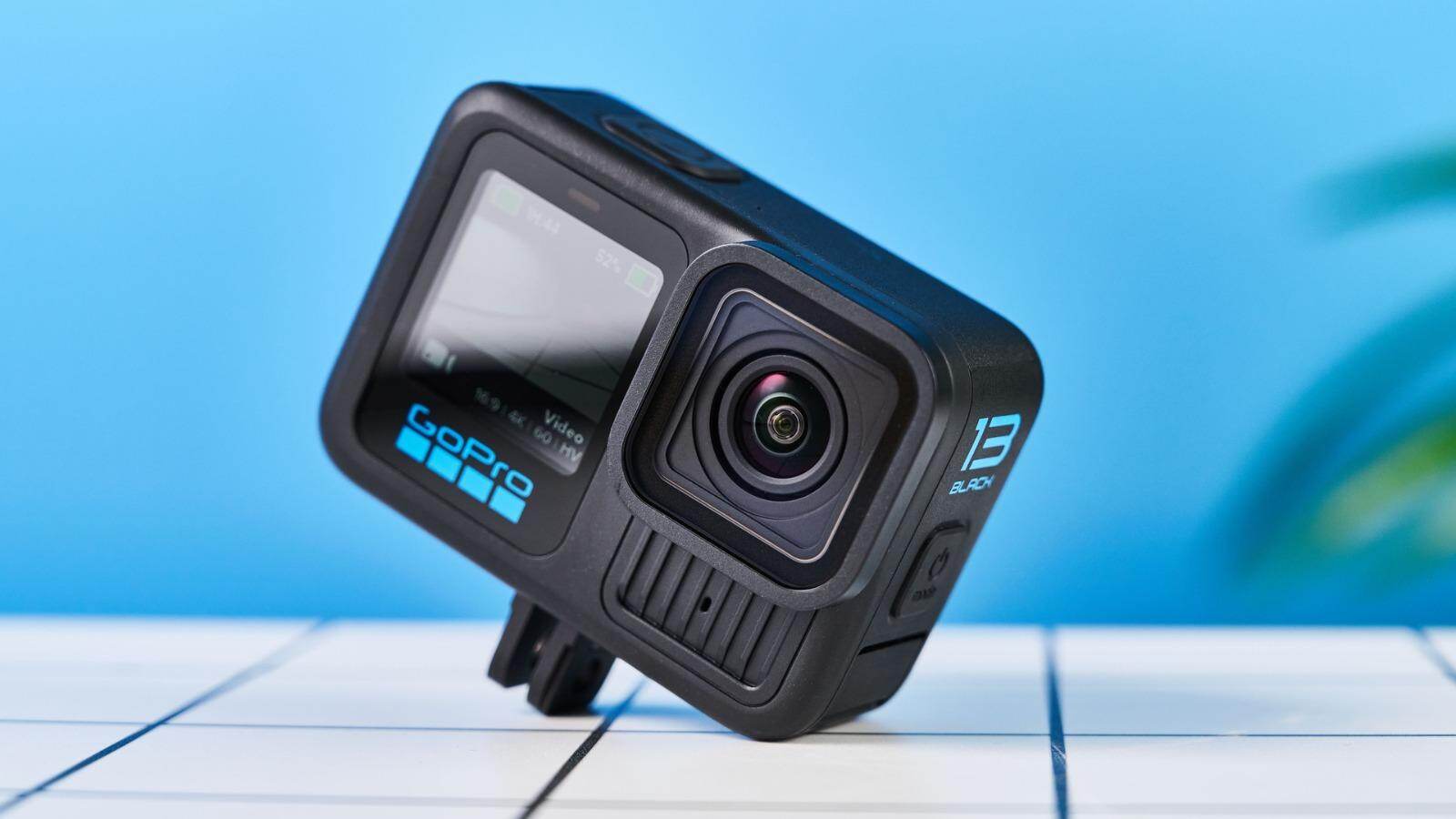
The GoPro HERO13 Black is built for travelers who expect their camera to encounter water, movement, dust, or rough conditions on the road. Rather than competing directly with mirrorless cameras on image flexibility, it focuses on portability, stabilization, mounting options, and adventure shooting.
Key features:
- Rugged design: Lets you take the camera into situations where you'd be hesitant to bring a larger camera, including outdoor adventures and water-based activities.
- Magnetic mounting: Makes it quick to attach the camera to compatible mounts, helping you switch between different shooting positions without carrying a full-sized tripod setup.
- Enduro battery: Provides over 1.5 hours of continuous recording at 5.3K30, and over 2.5 hours at 1080p30, giving you more time to film throughout a travel day before needing to recharge or swap batteries.
- HB-Series lens mods: Give you more creative options for wide, close-up, or stylized travel shots without changing to a completely different camera.
Why it's good for travel:
Its mounting flexibility is the biggest advantage. You can capture a cycling route, hiking trail, snorkeling session, or first-person activity without having to hold the camera continuously. The HERO13 Black remains popular for adventure-focused trips.
Things to consider:
The wide-angle action-camera look might not be ideal for every situation. Indoor talking-head footage, portraits, and cinematic shots may be not that suitable for it.
Battery performance also depends heavily on resolution, frame rate, stabilization, and temperature, so carrying an extra battery is sensible for full-day adventures.
DJI Osmo Action 5 Pro
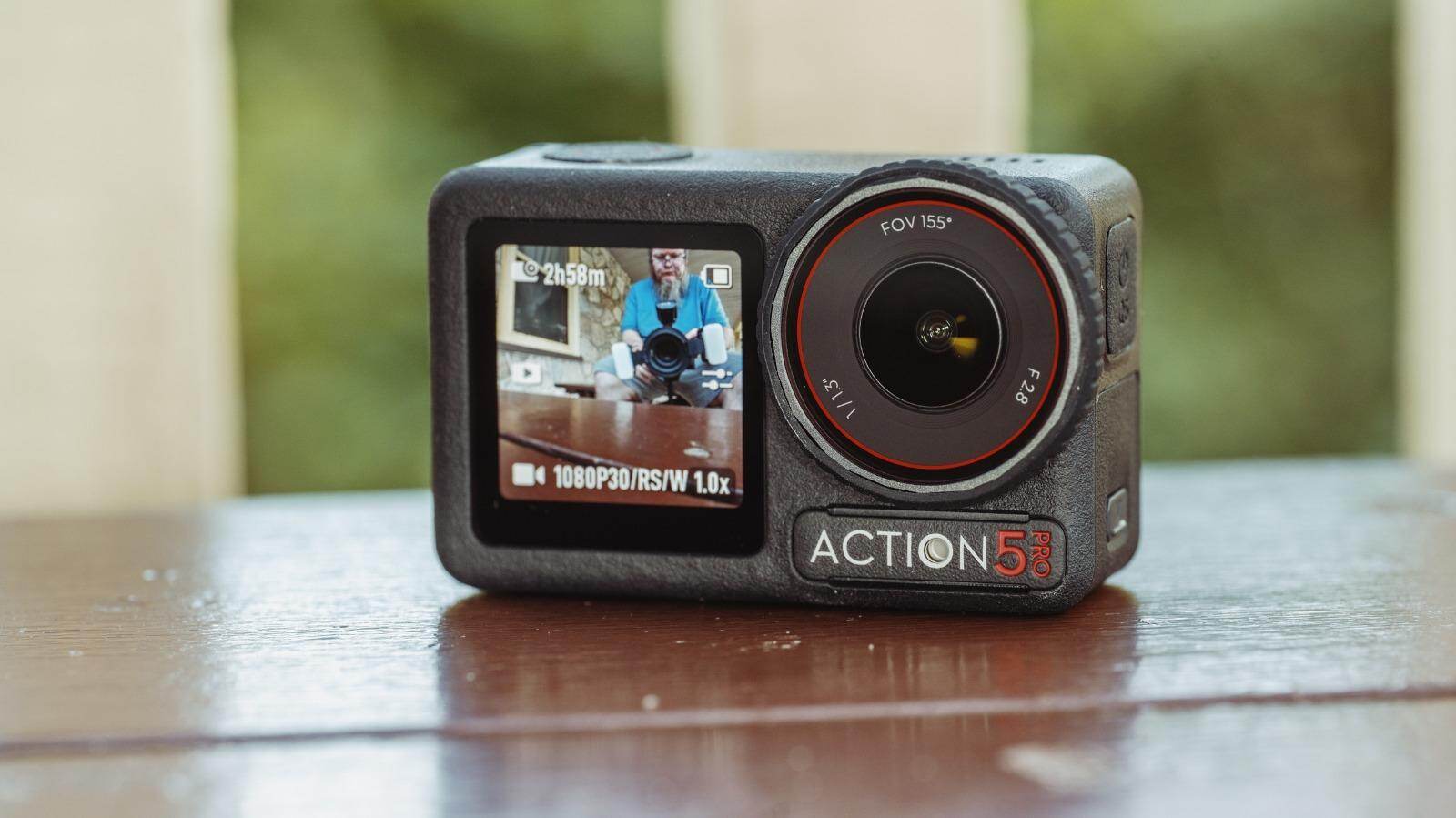
The DJI Osmo Action 5 Pro is another strong choice for adventure-focused travelers, particularly those who expect to spend time around water. At 146 g, it is lighter than the HERO13 Black, while DJI rates it for up to 240 minutes of operating time under its specified test conditions.
Key features:
- RockSteady and HorizonSteady: Keeps footage smooth during movement while helping maintain a level horizon, making it particularly useful for walking, cycling, hiking, and other active travel shots.
- Large 1/1.3-inch sensor: Helps capture more detailed footage in challenging lighting, making it more versatile when moving between bright outdoor scenes and dimmer locations.
- 20 m waterproofing: Lets you film underwater and around pools, beaches, and rainy environments without needing a separate waterproof housing.
- Dual OLED touchscreens: Makes framing yourself easier whether you're recording from the front or checking your composition from behind the camera.
Why it's good for travel:
TechRadar praised the Osmo Action 5 Pro's combination of long battery life, waterproofing, stabilization, and compact size particularly useful for outdoor trips. You can take it on a hike without adding a heavy gimbal, and you can bring it into the water without needing the same level of protection a conventional camera would require.
Things to consider:
Like the HERO13 Black, it isn't the best choice for every type of travel footage, like portraits, food photography, and more.
It also makes more sense as a dedicated adventure camera than as a replacement for a mirrorless system if photography is an important part of your trip.
Option for Travel Creators Who Also Livestream
If your travel content includes hotel-room livestreams, remote interviews, or live broadcasts, OBSBOT Tiny 3 can complement your main travel camera. Its 63 g body, 4K video, AI Tracking 2.0, two-axis gimbal, and intelligent directional microphone system make it convenient for setting up hands-free livestreams or video calls while traveling.
How to Pack a Travel Vlogging Camera Kit
A good travel kit should be small enough that you actually carry it. When packing a minimal travel vlogging kit, start with:
- Camera + one lens or a camera with a built-in lens
- One spare battery
- Memory card
- USB-C charging cable and a compact wall adapter
- Small camera bag
You do not need every accessory available for your camera. Extra gear increases weight, which also means more items that you may lose.
So what accessories are actually worth carrying? The most useful ones include:
- Mini tripod: Useful for talking-to-camera shots, hotel-room footage, and group photos.
- Extra battery/power bank: Essential for long sightseeing days.
- Microphone: More valuable than many creators realize, especially in windy or crowded locations.
- ND filter: Useful when shooting video outdoors in bright sunlight and trying to maintain a cinematic shutter speed.
- Small camera bag: Protects the camera while keeping your setup organized.
FAQs About Travel Vlogging Cameras
What is the best lightweight camera for travel vlogging?
The DJI Osmo Pocket 3 is one of the best compact cameras for travel vlogging on this list. It weighs only 179 g and combines a 1-inch sensor with a built-in 3-axis mechanical gimbal. For adventure travel, the 146 g DJI Osmo Action 5 Pro may be a better choice, as it is lighter and significantly more rugged, particularly for water-based activities.
Which camera do travel vloggers use?
Travel vloggers use a variety of cameras, depending on whether they prioritize portability, image quality, or durability. For example, Kara and Nate use the Sony α7 III mirrorless camera for travel videos, while Lost LeBlanc's travel camera setup includes the Canon EOS-1D X Mark III, Panasonic Lumix GH5 II, and GoPro HERO13 Black.
What's the best travel vlogging camera for beginners?
As a beginner, you should prioritize ease of use over advanced specifications. The DJI Osmo Pocket 3 is a strong starting point for everyday travel because its gimbal, compact design, rotating screen, and subject tracking reduce the amount of equipment and manual setup required.
Is an action camera good for travel vlogging?
Absolutely. Action cameras come in handy for hiking, cycling, swimming, skiing, and other activities where a conventional camera may be difficult or risky to use. They also provide strong stabilization and mounting flexibility.