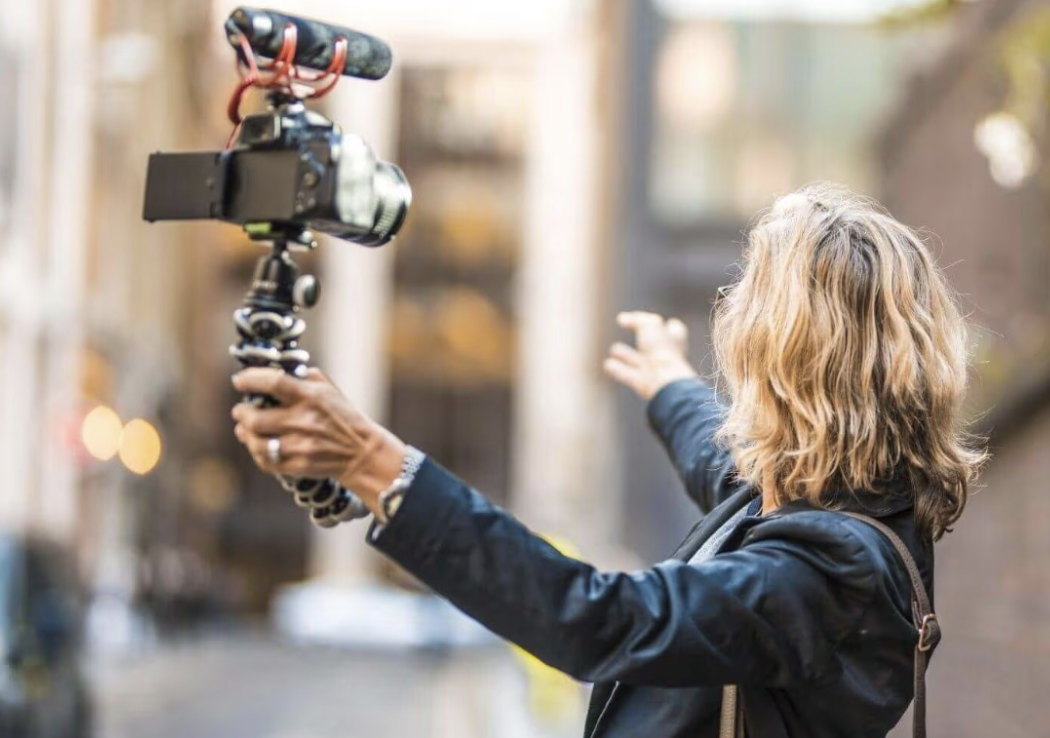
9 Best Vlogging Cameras with Flip Screen in 2026

Many new vloggers struggle with video-making because they don't know how to frame when they start a vlog. In most cases, their faces are cut off in the footage once they complete shooting. In some cases, the videos come out very blurry. This happens because you can't see yourself while filming, especially if you are not using a 4K vlogging camera with a preview screen. This is why it's recommended to use a vlogging camera with flip screen. These screens can flip, tilt, and rotate, so you can check the lighting, framing, and everything else. With this article, we are sharing the 9 best cameras with a flip screen.
Part 1: How to Choose the Right Vlogging Camera with Flip Screen
1. Flip Screen Type and Rotation
Not all flip screens are the same. Some tilt up 180 degrees. Others fully rotate 270 degrees to the side. Some professional cameras even allow multi-angle movement. If you film yourself often, choose a screen that flips fully forward. A side-opening screen is usually better than one that flips upward because it works better with tripods and microphones.
2. Video Resolution
4K is the standard for a flipscreen camera. Many creators also look for 6K or even 8K options. However, 4K is more than enough for YouTube, TikTok, and Instagram. If you are just starting, 4K@30fps or 60fps is perfect. Higher resolution gives more detail, but it also takes more storage space.
3. Autofocus Performance
Fast and accurate autofocus is very important for vloggers. When you move around, the camera should quickly adjust focus to your face. Look for cameras with face tracking or AI subject tracking.
4. Microphone Quality
A good video is important, but clear audio is even more important. Choose a camera with a microphone input so you can connect an external mic when you purchase a camera with flip screen for vlogging.
5. Battery Life
Long battery life means you can film longer without stopping. If you plan to vlog all day, make sure the camera supports USB-C charging or has spare batteries available.
Part 2: 9 Best Vlogging Cameras with Flip Screen
Quick Comparison Table
| Camera | Video Resolution | Sensor | Screen Type | Stabilization | Price |
| OBSBOT Tail 2 | 4K@60fps 1080p@120fps |
1/1.5″ CMOS | PTZR Rotating Lens Display | Gimbal-based Stabilization | $1,199 |
| Insta360 Ace Pro 2 | 8K@30fps 4K@120fps |
1/1.3" 8K Sensor | 2.5" Flip Touchscreen | FlowState Stabilization + 360° Horizon Lock | $518.99 |
| DJI Osmo Pocket 3 |
4K@120fps |
1-inch CMOS sensor | 2" Rotating Touchscreen | 3-axis Mechanical Gimbal Stabilization | $799 |
| Sony ZV-E10 II | 4K@60fps 4K@30fps |
APS-C 26.0MP Exmor R CMOS | 3.0" Side Flip Screen | Active Mode Electronic Stabilization | $1,199.99 |
| Canon PowerShot V1 | 4K@60fps 1080p@120fps |
1.4-Type 22.3MP CMOS | Flip-out LCD Screen | Optical IS + Movie Digital IS + Subject Tracking IS | $1,029.00 |
| Panasonic LUMIX G100D | 4K@30fps Full HD@60fps |
20.3MP Micro Four Thirds Sensor | 3" Free-angle Touchscreen | 5-axis Hybrid I.S. | $749.99 |
| FUJIFILM X-M5 | 6.2K@30fps 4K@60fps 1080p@240 fps |
26.1MP X-Trans CMOS 4 (APS-C) | Vari-angle LCD | Digital Image Stabilization | $1,319.95 |
| Sony ZV-1F |
4K@30fps |
1-inch Exmor RS CMOS | 3.0" Side Flip Screen | Electronic Image Stabilization (Active Mode) | $499.99 |
| Canon EOS M50 Mark II |
4K@24fps |
APS-C 24.1MP CMOS | 3.0" Vari-angle Touchscreen | Combination IS (5-axis Digital Movie IS) | $599.99 |
1. Best Overall: OBSBOT Tail 2 Live Production Camera
Breaking away from traditional stationary designs, the OBSBOT Tail 2 introduces intelligent PTZR automation tailored for solo operators who cannot afford to manage hardware while filming. It bridges the gap between hands-free AI convenience and studio-grade manual control, making it an invaluable asset for live streamers, educators, and event videographers seeking automated precision.
Key Features:
- Top-Notch Video: Shoots clear 4K@60fps and 1080p@120fps with smooth motion and sharp details.
- Reliable Vertical Shooting: The PTZR lens rotates 90° for easy vertical videos without cropping.
- AI Tracking 2.0: Automatically follows your movement, and "Only Me" mode locks onto one subject for solo filming.
- Good Low-Light Performance: The 1/1.5'' CMOS sensor captures more light for clearer images in dim conditions.
- Flexible Zoom & Framing: 5x optical zoom and 12x hybrid zoom help you shoot distant subjects without losing quality.
2. Best Budget: Insta360 Ace Pro 2

The Insta360 Ace Pro 2 is a rugged action-style choice for vloggers who need a front-facing screen. Its flip touchscreen makes it easy to frame yourself while filming outdoors, traveling, or moving fast. This affordable flip screen camera is built for creators who want stable footage and simple controls.
Key Features:
- The flip touchscreen makes solo framing fast.
- FlowState stabilization keeps walking footage smooth.
- The wind guard reduces harsh outdoor audio noise.
- Gesture control lets you record hands-free easily.
- Voice Control 2.0 works when the camera is mounted.
- Magnetic mounting swaps accessories in seconds.
3. Pocket Gimbal Choice: DJI Osmo Pocket 3

Say goodbye to shaky handheld videos and heavy camera bags. This pocket-sized powerhouse fits directly into your palm while carrying a massive 1-inch sensor and a mechanical 3-axis gimbal. Travel vloggers can instantly pull it out to capture cinematic, smooth footage on a whim, making it a perfect tool for spontaneous daily storytelling.
Key Features:
- The 2-inch rotating touchscreen easily faces forward for vlogging.
- The 1-inch CMOS sensor delivers strong low-light performance and detail.
- Built-in 3-axis mechanical stabilization creates ultra-smooth footage.
- ActiveTrack 6.0 automatically keeps subjects centered in frame.
- 4K video up to 120fps supports slow motion and cinematic shots.
- Fast charging and long battery life support all-day shooting.
4. Best Compact Mirrorless: Sony ZV-E10 II

If point-and-shoot cameras feel too restrictive for your growing YouTube channel, this APS-C mirrorless body is the logical next step. By combining interchangeable E-mount lenses with Sony's industry-leading autofocus tracking, it gives you complete artistic control over your background blur and image depth. Online brands and lifestyle creators can easily adapt this modular setup for anything from tight desk setups to outdoor walk-and-talk videos.
Key Features:
- The side flip screen faces forward.
- Vertical interface automatically adjusts for portrait filming.
- Interchangeable E-mount lenses expand creative flexibility.
- Cinematic Vlog Setting simplifies dramatic storytelling.
- Active stabilization reduces shake during handheld clips.
- Fast hybrid autofocus tracks faces accurately.
5. Best for Beginners: Canon PowerShot V1

Canon designed this quirky, vertical pocket camera specifically to remove the technical headaches of traditional gear setups. There are no confusing menus or heavy lenses to swap out; you simply pull out the built-in stand, flip up the screen, and start talking. Its straightforward interface and reliable overheating protection make it incredibly approachable for casual users or complete beginners who want an all-in-one vlogging tool.
Key Features:
- The flip-out LCD supports front-facing solo recording.
- The built-in cooling fan prevents overheating issues.
- Canon Log 3 supports advanced color grading.
- Dual Pixel AF II tracks eyes reliably.
- Built-in ND filter helps in bright sunlight.
- Tally light confirms recording for beginners.
6. Best for Audio Quality: Panasonic Lumix G100D

Bad audio ruins good video, which is why this Micro Four Thirds camera prioritizes high-fidelity sound just as much as its 4K visuals. Utilizing specialized OZO tracking technology, the built-in microphones isolate your voice automatically, saving you from carrying bulky external audio receivers in busy crowds. It is a lightweight, audio-centric solution tailored specifically for noisy urban travel and bustling street vlogs.
Key Features:
- The free-angle touchscreen flips forward for vlogging.
- Frame markers guide social media composition.
- REC frame indicator confirms active recording.
- OZO audio tracks voices clearly in crowds.
- Hybrid image stabilization smooths handheld footage.
- LUMIX Sync app enables quick smartphone transfers.
7. Best for Creators on the Move: Fujifilm X-M5

This ultra-compact mirrorless camera skips the tedious editing phase by letting you apply gorgeous, analog-style color profiles right while you record. It is built natively for modern, fast-paced social media workflows, allowing creators to quickly export vertical clips straight to a smartphone. Lifestyle influencers and mobile content teams will appreciate how fast they can publish highly stylized, professional content on the fly.
Key Features:
- The vari-angle LCD flips forward for selfies and vlogs.
- The Film Simulation dial creates looks instantly.
- Short Movie mode records vertical clips easily.
- Three built-in microphones capture clearer voice audio.
- Directional audio modes match different filming situations.
- XApp transfers files quickly to your phone.
8. Best Ultra-Lightweight Entry Point: Sony ZV-1F

Representing the ultimate pocketable entry-level solution in Sony's lineup, the ZV-1F, a cheap vlogging camera with flip screen, strips away technical complexities for pure point-and-shoot simplicity. Featuring a fixed ultra-wide 20mm lens, this camera is engineered specifically to capture expansive background context along with your face at arm's length. It serves as an uncomplicated bridge for smartphone storytellers looking to upgrade their image quality without managing multiple heavy lenses.
- The 3.0" side flip touchscreen swings out seamlessly to avoid interference with accessories.
- A fixed 20mm prime focal length ensures you and your background easily fit in the frame.
- The dedicated Background Defocus button creates smooth background blur with one quick touch.
- Face Priority AE automatically keeps your face brightly lit even when walking through heavy shadows.
- Product Showcase Mode swiftly shifts focus from your eyes to an item held up to the lens.
9. Best Classic Vlog Upgrade: Canon EOS M50 Mark II

The Canon EOS M50 Mark II stands as a time-tested, beloved favorite among social media creators who value rich, vibrant skin tones straight out of the box. Mixing an intuitive touch-first experience with interchangeable lens capabilities, this mirrorless body brings a traditional camera feel into the modern streaming era. With native support for vertical movie recording and wireless YouTube live-broadcasting, it remains a robust choice for multi-platform content producers.
- The 3.0" Vari-angle touchscreen twists completely around to support low, high, and front-facing viewports.
- Canon's signature color science delivers natural skin tones with minimal color grading needed.
- Dual Pixel CMOS AF works smoothly with precise Eye Detection for stable tracking.
- Built-in Wi-Fi enables clean, wireless live-streaming setups directly onto YouTube channels.
- It saves vertical video data automatically, letting you upload straight to TikTok or Shorts without manual cropping.
Part 3: FAQs About Vlogging Camera with Flip Screen
1. Why do vloggers need a flip screen?
A flip screen allows vloggers to see themselves while recording. This helps with framing, focus, and lighting. Without it, you might record a video where your face is cut off or blurry. A small vlogging camera with flip screen makes solo filming much easier and saves time because you do not need to redo your shots.
2. Is 4K necessary for vlogging?
Yes, 4K is highly recommended if you need the best vlogging camera with flip screen. Most social media platforms support 4K, and viewers expect high-quality video. While 1080p still works, 4K gives sharper details and more flexibility for editing. Many new vlogging cameras with flip screen models now include 4K as a basic feature.
3. What is better: a flip-up screen or a side flip screen?
A side flip screen is usually better. When the screen flips to the side, it does not get blocked by microphones or tripods. Flip-up screens can sometimes be blocked by accessories mounted on top of the camera. If you use external mics, choose a side-articulating vlogging camera.
4. Are mirrorless cameras better than compact cameras for vlogging?
Mirrorless cameras usually offer larger sensors and better image quality. They also allow you to change lenses. However, compact cameras are lighter and easier to carry. If you are serious about content creation, a mirrorless vlogging camera might be better. If you travel often, a compact model may be more convenient.
5. How much should I spend on a vlogging camera?
It depends on your goals when you purchase a 4K flip screen camera. Beginners can start with a camera around $600–$900. Intermediate creators may spend around $1000. Professionals might invest $1500 or more. The good news is that there are many good vlogging camera options at different price levels according to your goals.
6. Is a flip screen good for vlogging?
Yes, it is highly recommended. A flip screen allows you to see yourself while filming, which helps you check your framing, focus, and lighting in real-time so your face doesn't get cut off or blurry.
7. What are cameras with flip screens called?
They are commonly referred to as flipscreen cameras or cameras with a side-articulating / free-angle / vari-angle screen.
8. What camera do most vloggers use?
Most vloggers use dedicated 4K vlogging cameras ranging from ultra-portable pocket options like the DJI Osmo Pocket 3 to compact mirrorless systems like the Sony ZV-E10 series and Canon EOS M series, which offer interchangeable lenses and excellent tracking performance.
Conclusion
A good vlogging camera with flip screen actually improves your confidence while recording, speeds up your workflow, and reduces mistakes. Many cameras offer great features like built-in AI tracking, high-frame-rate slow motion, and even live streaming support straight from the camera. These advancements mean that today's vlogging tools can act as portable studios, not just simple recorders. Whether you're just starting or ready to upgrade, picking the right vlogging camera will help you capture better content, more consistently, and with fewer frustrations.