12 Best Cameras to Shoot Movies in 2026

Cinema cameras work differently from regular cameras. They give you the latitude, the color science, and the dynamic range to shape a story visually, not just document it. No compromises, no workarounds. The filmmakers who produce great footage treat camera selection as a decision with proper requirements, tested performance, and measurable results on screen.
Picking the right camera is most filmmakers' priority, yet significant money is wasted on gadgets that don't match the project. This guide lists the 12 best cameras to shoot movies for different people.
- Quick Comparison: All 12 Cameras
- Best Cameras to Shoot Movies for Individuals and Vloggers
- Best Cameras to Shoot Movies for Indie Filmmaking and Professionals
- Best Cameras to Shoot Movies for High-End Cinema Production
- How to Choose the Best Cameras to Shoot Movies?
- FAQs about the Best Cameras to Shoot Movies
Quick Comparison: All 12 Cameras
| Camera | Resolution & Frame Rate | Sensor Size | Recording Codecs | Autofocus | Image Stabilization |
|---|---|---|---|---|---|
| OBSBOT Tail 2 | 4K@60fps / 1080p@120fps | 1/1.5" CMOS | H.264 / H.265 | All-pixel PDAF | 3-axis gimbal (PTZR) |
| Sony ZV-E10 II | 4K@60fps / 1080p@120fps | APS-C (23.5×15.6mm) | XAVC HS 10-bit 4:2:2 | 759-pt Phase Detect + AI | Active SteadyShot (digital) |
| DJI Osmo Pocket 3 | 4K@120fps / 2.7K@60fps | 1-inch CMOS | H.264 / H.265 10-bit | PDAF + Laser AF | 3-axis mechanical gimbal |
| Fujifilm X-M5 | 6.2K@30fps / 4K@60fps | APS-C (23.5×15.6mm) | ProRes (ext.) / H.265 10-bit | Phase Detect + AI Subject | 5-axis IBIS (7 stops) |
| Panasonic Lumix S9 | 6K@30fps / C4K@60fps | Full Frame (35.6×23.8mm) | H.265 10-bit 4:2:2 | Phase Hybrid AF | 5-axis IBIS |
| Sony FX3 | 4K@120fps / 1080p@240fps | Full Frame (35.6×23.8mm) | XAVC HS / XAVC S-I 10-bit | 759-pt PDAF + Eye AF | 5-axis IBIS + OIS |
| Blackmagic PYXIS 6K | 6K@30fps / 4K@60fps | Full Frame (35.9×24mm) | BRAW / ProRes | Contrast AF (no PDAF) | None (external required) |
| Canon EOS R5 Mark II | 8K@60fps / 4K@120fps | Full Frame (36×24mm) | RAW / C-RAW / H.265 10-bit | Dual Pixel CMOS AF II | IBIS + Lens IS (8 stops) |
| Panasonic Lumix S5 IIX | 6K@30fps / C4K@60fps | Full Frame (35.6×23.8mm) | ProRes / H.265 10-bit 4:2:2 | Phase Hybrid AF (779-pt) | 5-axis IBIS (6.5 stops) |
| ARRI Alexa 35 | 4.6K Open Gate / 4K@120fps | Super 35 (27.99×19.22mm) | ARRIRAW / ProRes | No built-in AF | Gyro-based (external) |
| Sony Venice 2 | 8.6K@30fps / 4K@60fps | Full Frame (36×24mm) | X-OCN RAW / ProRes | Phase Detect + Eye AF | OIS (with OSS lenses) |
| Fujifilm GFX ETERNA 55 | DCI 8K@30fps / 4K OG@48fps | Medium Format (43.8×32.9mm) | ProRes 422 HQ / H.265 10-bit | Phase + Contrast Hybrid AF | Variable ND + OIS (GF lens) |
Best Cameras to Shoot Movies for Individuals and Vloggers
If you're new to filmmaking, working solo, or want gear that is easy to carry and set up, this category fits perfectly. A best camera for shooting film does not need a high price tag, it just needs reliability, solid video performance, and ease of use.
1. OBSBOT Tail 2 Live Production Camera - $1,199
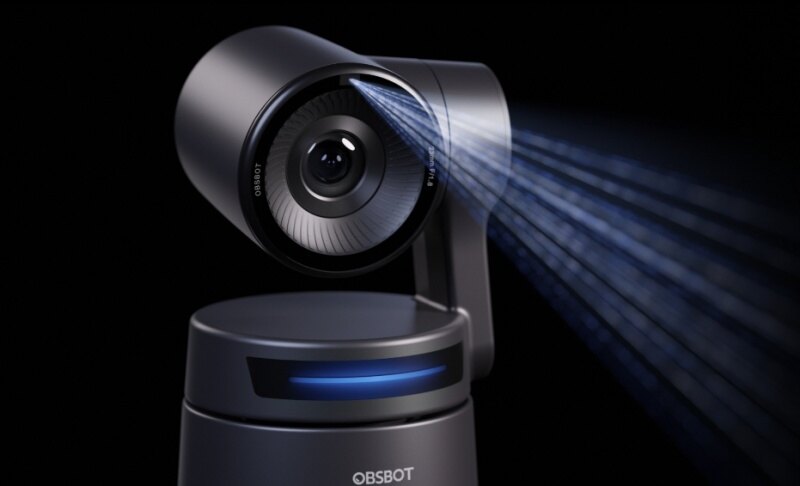
One stunning feature is that OBSBOT Tail 2 can physically follow you. Its AI-powered PTZR design allows it to pan, tilt, zoom, and rotate, making it ideal for solo filmmakers.
Features:
- 4K@60fps and 1080p@120fps recording with a 1/1.5" CMOS sensor (50MP)
- AI Tracking 2.0 with 'Only Me' mode; locks onto you even in a crowd
- 5x optical zoom, 12x hybrid zoom with three-axis gimbal stabilization
- 5,000mAh battery for up to 5 hours
User Review: "The footage from this thing punches well above its weight class. At 4K60, it's sharp, natural, and genuinely usable alongside DSLR b-roll. The 5x optical zoom is really where this thing shines. I was tracking a performer from 40 ft out in a low-lit bar, and the framing held beautifully with no weird refocusing or delay." — Magnetic Magazine.
2. Sony ZV-E10 II - $1199

The ZV-E10 II packs the same 26MP sensor as the pro-level Sony a6700 into a vlogger-focused body. Sony's autofocus, 759-point phase-detection with real-time Eye AF, tracks subjects through complex movement.
Features:
- 26MP APS-C Exmor R; 5.6K oversampling for sharp 4K output
- 4K@60fps, 10-bit 4:2:2, XAVC HS
- Built-in 3-capsule directional mic, flip-out touchscreen, tally light
User Review: "For brute-force technical performance, no camera at this price touches Sony. The autofocus is class-leading, and the image quality out of this small body is genuinely exceptional." — DPReview community.
3. DJI Osmo Pocket 3 - $499

No camera moves like the Osmo Pocket 3. If smooth, cinematic footage and a setup you can carry in your pocket. It not only performs well, but it also removes an entire layer of complexity from your shoot.
Features:
- 1-inch CMOS; 4K@120fps for slow-motion capture
- 3-axis mechanical gimbal; the smoothest stabilization in its class
- D-Log M + 10-bit color, rotating 1.6" touchscreen
- Creator Combo includes DJI Mic 2 wireless microphones
User Review: "The Osmo Pocket 3 stabilization was undeniably superior — smoother, more cinematic footage than a mirrorless camera can produce handheld—the 1-inch sensor produced clean images that impressed me at this size." — The Film Alliance.
4. Fujifilm X-M5 - $899.95

The X-M5 is the best camera for shooting short films. Fujifilm's 20 Film Simulations, including ETERNA/Cinema and ETERNA Bleach Bypass, are built on analog film and give footage a warmth and texture.
Features:
- 26MP APS-C X-Trans sensor; 6.2K output, F-Log2 for 13+ stops of dynamic range
- 5-axis IBIS, 7 stops stabilization, smooth handheld without a gimbal
- External ProRes via USB-C, headphone jack for audio monitoring
User Review: "I had other cameras and hardly used them. The Film Simulation feature cannot be overstated — it delivers results in-camera that other brands need expensive color work to match." — DPReview community.
5. Panasonic Lumix S9 - $1,399.99

The Lumix S9 puts a frame sensor in the compact mirrorless body. The standout feature is Real-Time LUT, load your own color grade into the camera, and see the finished look on screen while you shoot. It saves hours in post and makes it great for fast-turnaround content.
Features:
- 24.2MP full-frame sensor; smallest full-frame mirrorless body available
- 6K@30fps / C4K@60fps, 10-bit 4:2:2, V-Log (14+ stops)
- 5-axis IBIS, Phase Hybrid AF
User Review: "If someone asked me what camera to buy to start a YouTube channel, the S9 would be on my list. The Real-Time LUT changes how you think about color on set." — DPReview.
Best Cameras to Shoot Movies for Indie Filmmaking and Professionals
Raw recording, serious dynamic range, and professional codecs, all at prices working filmmakers can actually afford without taking out a loan.
6. Sony FX3 - $3,999

The Sony FX3 remains the benchmark video camera for indie-level filmmaking. No other full-frame cinema camera at this price combines a fan-cooled, unlimited recording design with Sony's autofocus, and that combination matters more than most people realize.
Documentary shoots run long. Interviews go off-script. Narrative setups change without warning. This camera handles it all.
Features:
- Full-frame BSI sensor, ISO 80–409,600, dual base ISO 800/12,800
- K@120fps, 1080p@240fps, strong slow-motion options
- XAVC HS 4:2:2 10-bit, S-Log3, Cinema Line color science + included XLR handle
User Review: "For cinematic short films and web series, I keep recommending the FX3. It is the low-budget filmmaker's champion, the best bang for your buck in low-light situations." — Wolfcrow.
7. Blackmagic PYXIS 6K - $3,295

The Blackmagic PYXIS 6K is the best camera for shooting film if your post-production workflow lives inside DaVinci Resolve. Its box-style, modular design is built from the ground up for rigging, every side features mounting points, and its internal Blackmagic RAW recording delivers cinema-grade dynamic range that stands toe-to-toe with cameras costing twice as much.
Features:
- Full-frame 6K sensor, internal BRAW and ProRes recording.
- 4-inch full HD touchscreen, dual XLR audio, full-size SDI + timecode I/O.
- Modular box body built for rigging, with dozens of 1/4" and 3/8" mounting points.
- Native DaVinci Resolve integration for seamless capture-to-grade pipeline.
User Review: "Purpose-built for film production with native pro interfaces like dual XLR, full-size SDI, and CFexpress recording." — Y.M.Cinema Magazine.
8. Canon EOS R5 Mark II - $4,399

The R5 Mark II gives more resolution headroom than other hybrid cameras. For filmmakers who cannot afford a focus puller, this autofocus system is a safety net on paid productions.
Features:
- 45MP full-frame sensor; 8K@60fps RAW internal recording
- 4K@120fps oversampled slow-motion; sharp and detailed
- 6,072-point Dual Pixel CMOS AF II; best autofocus in a hybrid camera
- Up to 8-stop combined IS (IBIS + lens), weather-sealed body
User Review: "Canon's R5 Mark II offers remarkable 8K video in a hybrid body. The AI autofocus recognizes and tracks subjects with precision that feels uncanny — one of the most exciting filmmaking tools launched in recent years." — Caldera Film.
9. Panasonic Lumix S5 IIX - $2,199

The Panasonic Lumix S5 IIX takes everything that already worked about the S5 II and adds the things working filmmakers actually asked for: ProRes recording, USB-SSD capture, and wireless IP streaming, all built in from the start.
Features:
- 24.2MP full-frame; 6K@30fps, C4K@60fps, 10-bit 4:2:2
- ProRes, ALL-Intra, HDMI RAW, USB-SSD, wired/wireless IP streaming
- 779-point Phase Hybrid AF; Panasonic's most reliable autofocus to date
- 5-axis IBIS with 6.5 stops of stabilization, excellent for handheld camera film shooting
User Review: "The S5 IIX is the first Lumix with genuine Phase Hybrid AF. With ProRes recording, wireless IP streaming, and twice the 4K data rate, it is ideal for filmmakers who also need live broadcast in one body." — No Film School.
Best Cameras to Shoot Movies for High-End Cinema Production
These are the cameras appearing in Netflix series, film festival winners, and Hollywood features. They are made for DPs and owner-operators who know exactly what they need and won’t settle for anything less than the best in color science, dynamic range, and image quality.
10. ARRI Alexa 35 around $58,650

The ARRI Alexa 35 is preferred over Cannes 2025, SXSW 2025, and Sundance 2026. Highlights roll off the way film does. Shadows hold detail without breaking into noise. It is the kind of camera that makes every other decision on set feel easier.
Features:
- 4.6K Super 35 sensor with 17 stops of dynamic range.
- ARRIRAW and ProRes internal recording with REVEAL Color Science AWG 4
- Up to 4.6K@120fps for high-frame-rate cinematography
- XR Capture technology unlocks previously impossible exposures in dark scenes
- Proven on thousands of major productions worldwide.
User Review: "At Cannes 2025, the ALEXA 35 cemented its royalty status. Unmatched dynamic range, true-to-life color science, and rugged reliability, these qualities keep pushing it to the forefront of digital cinematography." — Y.M.Cinema Magazine.
11. Sony Venice 2 around $55,000

The Sony Venice 2 is the best video camera for filming movies at maximum resolution and full-frame versatility. Its 8.6K sensor captures more pixels than any other cinema camera at this level, and the Rialto extension system lets you detach the sensor block and mount it in places the full body simply cannot fit, a huge advantage on complex Hollywood rigs.
Features:
- Rialto Extension System; sensor detaches for unique rigging configurations
- Built-in ND filter wheel (0.3 to 2.1 ND) for seamless exposure control on set
- 4K@60fps, 6K anamorphic mode
User Review: "The Venice 2 takes the prize for the largest resolution among cinema cameras. The detail and tonal range captured at 8.6K in X-OCN format give colorists more freedom than any other camera at this level." — Bokeh Rentals.
12. Fujifilm GFX ETERNA 55 - $16,499.95

The GFX ETERNA 55 changes the way large-format filmmaking looks. It is Fujifilm's first serious step into dedicated cinema, and it earns its place immediately, with 14+ stops of dynamic range and 20 built-in Film Simulations that give you a distinct visual language straight out of the camera.
Features:
- 102MP medium-format sensor (43.8x32.9mm)
- DCI 8K@30fps and 4K Open Gate 4:3@48fps for anamorphic and spherical lenses
- Internal Apple ProRes 422 HQ and HEVC 10-bit recording; 12-bit RAW via HDMI out.
- Built-in variable ND (ND0.6–ND2.1) and 20 Film Simulations, including ETERNA and Velv
User Review: "Large-format cinema has historically been locked behind rental-only systems. The ETERNA 55 changes that entirely, putting medium-format image quality within reach of working owner-operators." — CineD
How to Choose the Best Cameras to Shoot Movies?
Picking the best camera to shoot a short film is not about specs. It is about matching the tool to the job. Here is how to make the right choice:
- Resolution and Frame Rate: 4K at 60fps covers the vast majority of delivery formats, streaming platforms, social media, and broadcast. But if you need room to crop in post or are targeting a cinema screen, 6K or 8K gives you that flexibility.
- Sensor Size: APS-C keeps things light and affordable. Full-frame gives you better low light and more control over depth of field. Medium-format is in a league of its own; nothing else produces that shallow, immersive look.
- Recording Codecs: H.264 and H.265 get the job done, but compress heavily. ProRes and BRAW hold onto far more detail, making color grading significantly easier. RAW gives you the most flexibility of all, just make sure your editing machine can keep up.
- Autofocus: If you shoot solo, reliable AF is not optional. Sony and Canon lead here. Blackmagic still requires more manual oversight.
- Image Stabilization: Five-axis IBIS lets you shoot handheld and actually walk away with clean footage. But if you want truly smooth movement, a mechanical gimbal outperforms any in-body system.
- Weight and Thermal Management: A hot camera will ruin your shoot in the long run! Get confirmation on whether your camera has unlimited recording capabilities, especially if it's going to be used for a demanding production.
- Connectivity: SDI/NDI is required for live production, while RAW HDMI enables bypassing the limits of the internal recording codecs. Finally, USB Type-C SSD pass-through allows you to keep storage costs low on long-form shoots.
FAQs about the Best Cameras to Shoot Movies
Q1: What is the best camera for shooting a movie?
Every filmmaker has a different budget, a different workflow, and a different story to tell, and the right camera shifts accordingly. Solo creators get real value from the OBSBOT Tail 2, DJI Osmo Pocket 3, or Sony ZV-E10 II, indie filmmakers swear by the Sony FX3 or Blackmagic PYXIS 6K, and anyone who has shot on the ARRI Alexa 35 will tell you there is nothing else like it.
Q2: Which Is Better? 4K or 8K camera?
Chasing 8K before you need it does not make your film better. It increases your storage bills and slows your editing machine. 4K comfortably covers streaming, social media, and even cinema delivery. 8K only starts making sense when you genuinely need cropping flexibility or are delivering to a large-format cinema screen.
Q3: What cameras are used in filming movies?
Hollywood, major streaming networks, and other high-quality production companies use the Alexa 35 and Alexa Mini LF. Filmmakers and TV commercials consider the Sony Venice 2, and Indie filmmakers most often use the Sony FX3, Blackmagic URSA Mini Pro 6K, or Canon EOS R5 Mark II when shooting documentaries or commercials.
Q4: Why is 35mm so expensive?
Film stock prices have risen sharply, and chemical processing costs have followed as many local labs have closed. A wave of first-time film shooters has added even more pressure to supply if you are looking for the best film for point-and-shoot use; budget carefully.
Conclusion
The best camera to shoot movies is the one that fits who you are as a filmmaker. If you are a solo creator or vlogger, the OBSBOT Tail 2 or the DJI Osmo Pocket 3 gets you professional footage. Indie filmmakers will find the most cinematic value in the Sony FX3 or Blackmagic PYXIS 6K.
Professionals seeking high-quality images should consider the ARRI Alexa 35 for its unmatched color science or the Fujifilm GFX ETERNA 55 for a large-format alternative at a fraction of the cost.
Pick the tool that serves your story, and the rest follows!