Best Compact Cameras in 2026: 8 Top Picks and How to Choose

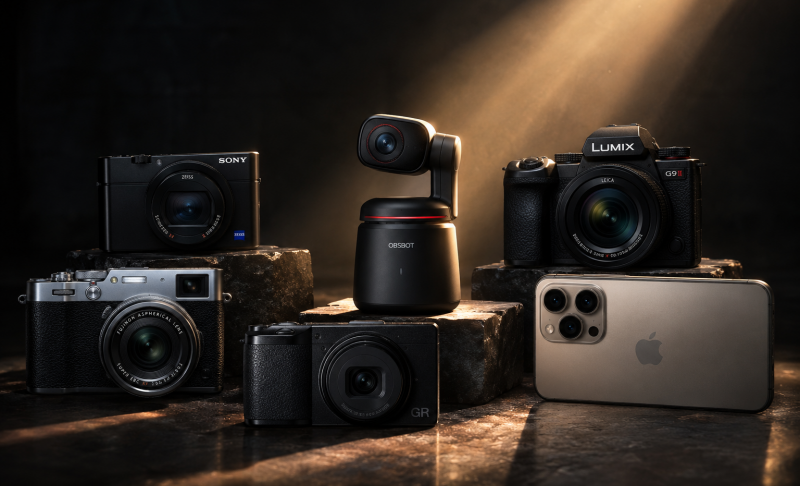
A good compact camera still beats a phone in the situations that matter most: low light, optical zoom, manual control, and natural background blur. It is also small enough to carry every day. This guide compares eight of the best compact cameras for street photography, travel, vlogging, live streaming, and casual shooting. It covers the specs that matter and the trade-offs each camera comes with.
Part 1: 6 Best Compact Cameras
Quick Comparison Table
| Model | Sensor | Lens | Weight | Best For | Approx. Price |
|---|---|---|---|---|---|
| OBSBOT Tail Air |
1/1.8" CMOS, 8.4MP |
Fixed 23mm f/1.8 | 344.5g | Live streaming, solo creators | $598 |
| Ricoh GR IV |
APS-C, 25.7MP |
Fixed 28mm f/2.8 | ~262g | Street photography | $1,499.95 |
| Leica Q3 |
Full-frame, 60.3MP |
Summilux 28mm f/1.7 ASPH | 743g | Premium everyday photography | $7,350 |
| Fujifilm X100VI | APS-C, 40.2MP |
Fixed 23mm f/2 (35mm equiv) |
521g | Travel, documentary | $1,799 |
| Sony RX100 VII | 1", 20.1MP |
24-200mm f/2.8-4.5 |
302g | Pocket-size all-rounder | $1,199.99 |
| Canon PowerShot G7 X Mark III | 1", 20.1MP | 24-100mm f/1.8-2.8 | ~304g |
Vlogging, YouTube streaming |
$929.99 |
| Sony ZV-1 II | 1", 20.1MP | 18-50mm f/1.8-4 | 292g |
Vlogging, content creation |
$999.99 |
| Kodak PIXPRO FZ55 | 1/2.3", 16MP |
28-140mm f/3.9-6.3 (5x zoom) |
106g | Budget, casual shooting | $159.99 |
Prices are approximate US prices at the time of writing. They change often, so check current listings before you buy.
1. OBSBOT Tail Air Streaming Camera: Best for Live Streaming
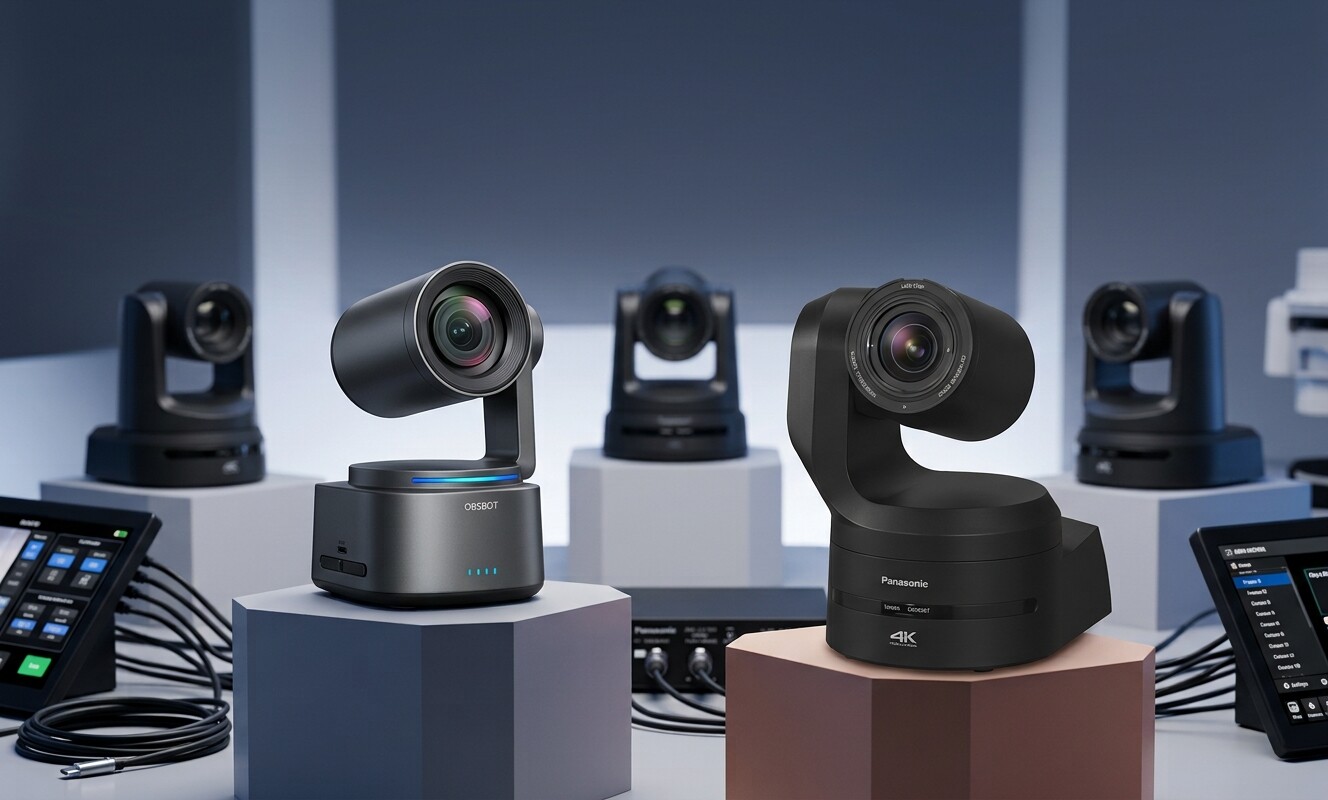
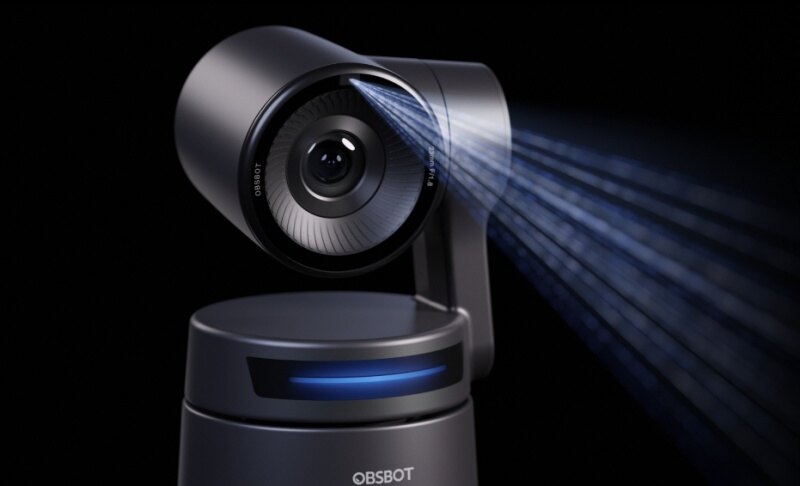
The OBSBOT Tail Air is an AI-powered PTZ streaming camera specifically designed for live streaming and solo content creation. It balances 4K video quality with intelligent auto-tracking to provide a hands-free production solution for streamers, educators, and online creators who shoot alone.
Key Features
- Sensor and lens: 1/1.8" CMOS with 8.4MP and large 2μm pixels, paired with a fixed 23mm f/1.8 lens.
- Video: 4K at 30fps and 1080p at 60fps, with NDI|HX3 support for low-latency streaming workflows (a license key is included in some bundles).
- AI features: Subject tracking and Gesture Control 2.0 for hands-free zoom and recording.
- Connectivity: Micro HDMI, USB-C, and Wi-Fi, with Ethernet through an adapter.
Why choose it: It handles tracking and framing for you at a reasonable price, which makes it a practical option for anyone who streams, teaches, or records without a crew.
Keep in mind: Zoom is 4x digital, not optical, and it is a streaming camera rather than a stills camera.
2. Ricoh GR IV: Best for Street Photography
The Ricoh GR IV is a fixed-lens APS-C compact camera specifically designed for street and documentary photography. It balances an ultra-pocketable form factor with a newly developed 25.7MP sensor to provide a fast, decisive shooting tool for professional and serious amateur photographers.

Key Features
- Sensor and processor: 25.7MP BSI CMOS APS-C sensor with the GR ENGINE 7 processor.
- Autofocus: Image-plane phase-matching AF, plus Snap Focus for instant shooting at a preset distance.
- Speed: 0.6-second startup, the fastest in the GR line.
- Stabilization: 5-axis shake reduction rated up to 6 stops at the center of the frame.
- Build: Magnesium alloy body, with Bluetooth and Wi-Fi and the GR WORLD app for transfer and remote shutter.
Why choose it: It is the most pocketable APS-C camera on this list, so it goes where larger cameras stay home.
Keep in mind: There is no viewfinder, no weather sealing, and no 4K video.
3. Leica Q3: Best Premium Compact Camera
The Leica Q3 is a full-frame fixed-lens compact camera specifically designed for photographers who demand the highest image quality in a carry-everywhere body. It balances a 60.3MP sensor with the legendary Summilux 28mm f/1.7 ASPH lens to provide a complete, uncompromising photographic instrument for discerning professionals and serious enthusiasts.

Key Features
- Resolution options: 60MP, 36MP, and 18MP output, plus crop modes that simulate 35mm, 50mm, 75mm, and 90mm.
- Autofocus: Hybrid system combining phase detection, contrast detection, and Depth from Defocus.
- Video: 8K/30p and 4K/60p, including ProRes 422 HQ.
- Build: IP52 weather sealing, a tiltable 3" LCD, and a 5.76MP OLED viewfinder.
Why choose it: It offers the highest image quality you can get in a fixed-lens body.
Keep in mind: It costs several times more than the other cameras here, and at 743g it is a coat-pocket or bag camera, not a jeans-pocket one.
4. Fujifilm X100VI: Best for Travel and Everyday Carry
The Fujifilm X100VI is a fixed-lens APS-C compact mirrorless camera specifically designed for travel, street, and documentary photography. It balances a 40.2MP sensor and 6-stop in-body image stabilization with Fujifilm's iconic film simulation engine to provide a refined, joy-of-use shooting experience for photographers who want both capability and character.

Key Features
- Sensor: 40.2MP X-Trans CMOS 5 HR with the X-Processor 5.
- Stabilization: 5-axis in-body stabilization rated up to 6 stops.
- Video: 6.2K/30p and 4K/60p in 10-bit 4:2:2, with F-Log options.
- Handling: Hybrid optical/electronic viewfinder, a built-in 4-stop ND filter, and 20 film simulation modes.
Why choose it: It combines strong image quality with controls that are enjoyable to use.
Keep in mind: It is larger than the GR IV, and the fixed lens means you zoom with your feet.
5. Sony RX100 VII: Best Pocket Zoom Camera
The Sony RX100 VII is a 1-inch sensor zoom compact camera specifically designed for photographers and videographers who need maximum versatility in a pocket-sized body. It balances an 8x optical zoom range with Sony's flagship-grade autofocus system to provide a capable, all-in-one solution for travel, sports, and hybrid shooting.

Key Features
- Autofocus: 357 phase-detection points plus 425 contrast-detection points, with Real-time Eye AF for people and animals.
- Burst shooting: Blackout-free 20fps.
- Video: 4K/30p with full pixel readout, plus a 3.5mm microphone input.
- Viewfinder and screen: Pop-up OLED EVF and a 180° tiltable touchscreen.
Why choose it: It is the easiest way to get serious zoom range in a camera that fits a coat pocket.
Keep in mind: The sensor is smaller than APS-C, and the model is several years old, so compare prices against newer options.
6. Canon PowerShot G7 X Mark III: Best for YouTube Streaming on a Budget
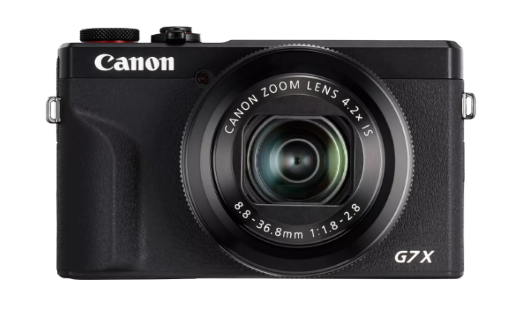
The Canon PowerShot G7 X Mark III is a pocket-size compact aimed squarely at creators. It pairs a 1-inch stacked CMOS sensor with a bright 24-100mm f/1.8-2.8 zoom lens. It came out in 2019, but it is still one of the easiest ways to get better video and background blur than a phone gives you, without carrying a bigger camera.
Key Features
- Video: 4K/30p, a 3.5mm microphone input, and support for streaming directly to YouTube.
- Lens: The f/1.8 aperture at the wide end helps in dim rooms and gives more background separation than most compacts.
- Handling: Flip-up touchscreen and a compact body.
Why choose it: It is a straightforward vlogging and streaming camera with a fast lens.
Keep in mind: It has no viewfinder, and its design dates from 2019.
7. Sony ZV-1 II: Best for Vlogging
The Sony ZV-1 II is a 1-inch sensor vlogging compact camera specifically designed for content creators and social media video producers. It balances an ultra-wide 18-50mm zoom lens with Sony's advanced autofocus and vlog-specific features to provide a capable, grab-and-go creative tool for vloggers, influencers, and short-form video creators.

Key Features
- Lens: ZEISS Vario-Sonnar T* 18-50mm f/1.8-4.
- Autofocus: Sony's Fast Hybrid AF with Real-time Tracking and face recognition.
- Video: 4K/30p, a Cinematic Vlog mode, and built-in Product Showcase and Background Defocus settings.
- Connectivity: Flip-out 3" touchscreen, 3.5mm microphone input, Multi Interface Shoe, and USB-C webcam and streaming support.
Why choose it: It offers a complete vlogging setup in a small body without needing a bigger rig.
Keep in mind: The zoom range is short, so it is not the best choice for distant subjects.
8. Kodak PIXPRO FZ55: Best Budget Compact Camera
The Kodak PIXPRO FZ55 is a beginner-friendly point and shoot digital camera specifically designed for casual everyday photography. It balances a 16MP sensor with a 5x optical zoom in an ultra-slim, lightweight body to provide a simple, accessible shooting experience for first-time camera buyers, families, and anyone upgrading from a smartphone.

Key Features
- Sensor and lens: 16MP 1/2.3" CMOS with a 28-140mm (5x) optical zoom.
- Video: Full HD 1080p at 30fps.
- Extras: Face and smile detection, plus digital image stabilization.
- Size: Just 106g, with a rechargeable battery charged in the camera.
Why choose it: It is inexpensive, light, and easy to use.
Keep in mind: The small sensor and slow lens struggle in low light, so it works best outdoors or in well-lit rooms.
Part 2: How to Choose the Right Compact Camera
Finding the right compact camera means balancing features with your shooting style. Different users—travel, beginners, creators—will require very different sets of features.
Image Quality
The size of the sensor is crucial. Larger sensors, for example, 1-inch, APS-C, or full-frame, are generally capable of producing cleaner images in low-light conditions, offer better dynamic range, and have the ability to blur backgrounds more effectively than smaller sensors.
Lens Performance
A wide aperture can be helpful in getting good results in low light and also allows for a softer background. Zoom lenses offer going from wide to telephoto in one lens, but prime lenses typically give sharper images and are less complicated.
Design and Durability
Check if the camera feels well-built, whether it is resistant to different weather conditions (if offered), and whether the grip is comfortable. Cameras of a higher price level usually feature metal bodies and better-quality controls.
Usability
The use of touchscreens, easy-to-use menus, dependable autofocus, and screens that flip up/down all help in making a camera enjoyable to use. In fact, for beginners, easy operation might be more important than the raw specifications.
Portability
The best compact cameras are those that you will be tempted to carry with you every day. Even the best specifications lose their meaning if the camera sits at home simply because it is bulky.
Accessories Worth Buying
- Memory cards: Fast SD cards from reputable brands, plus a spare.
- Power: A spare battery or a USB power bank, especially for video and streaming.
- Audio: An external microphone if you record speech.
- Protection: A padded pouch or wrist strap, and a microfiber cloth and blower for cleaning.
Part 3: FAQs About Compact Cameras
1: Is a compact camera better than a smartphone?
In some situations, yes. Compact cameras with 1-inch or larger sensors capture more light, offer optical zoom, and give you real manual control. Phones are more convenient and process images automatically. A compact camera is worth it if you care about low-light quality, zoom, or a more deliberate way of shooting.
2: What is the best compact camera for beginners?
The Kodak PIXPRO FZ55 is the simplest and cheapest option. If you have more to spend, the Sony RX100 VII or Canon G7 X Mark III offer larger sensors and easier handling than most beginners expect.
3: What is the best compact camera for low light?
Choose a larger sensor and a fast lens. The Leica Q3, Fujifilm X100VI, and Ricoh GR IV lead this list. Among 1-inch cameras, the Canon G7 X Mark III's f/1.8 lens helps indoors.
4: What is the best compact camera for vlogging or live streaming?
For handheld vlogging, the Sony ZV-1 II and Canon G7 X Mark III are strong choices. For a fixed desk or studio setup where you want auto-tracking, the OBSBOT Tail Air is built for that job.
5: Does a fixed lens limit creativity?
Not really. A fixed lens keeps the camera smaller and encourages you to move and compose carefully. If you need flexibility, choose a zoom model such as the Sony RX100 VII.
6: Do I need a viewfinder?
It helps in bright light and for steadier handheld shots, but it is not essential. If you shoot mostly on the screen or record video, you can skip it.
Conclusion
The right compact camera comes down to how you shoot. The Ricoh GR IV is the best pocket camera for street photography, the Fujifilm X100VI is a strong everyday travel camera, and the Leica Q3 is the premium choice. The Sony RX100 VII is the most flexible zoom option, the Sony ZV-1 II and Canon G7 X Mark III suit vlogging, and the Kodak FZ55 is the budget pick. For hands-free live streaming, the OBSBOT Tail Air is the one built specifically for it. Choose based on sensor size, lens, video needs, and how easily you will carry the camera, not on spec sheets alone.