SDI Cameras for Live Production: Types, Features, and Top Picks

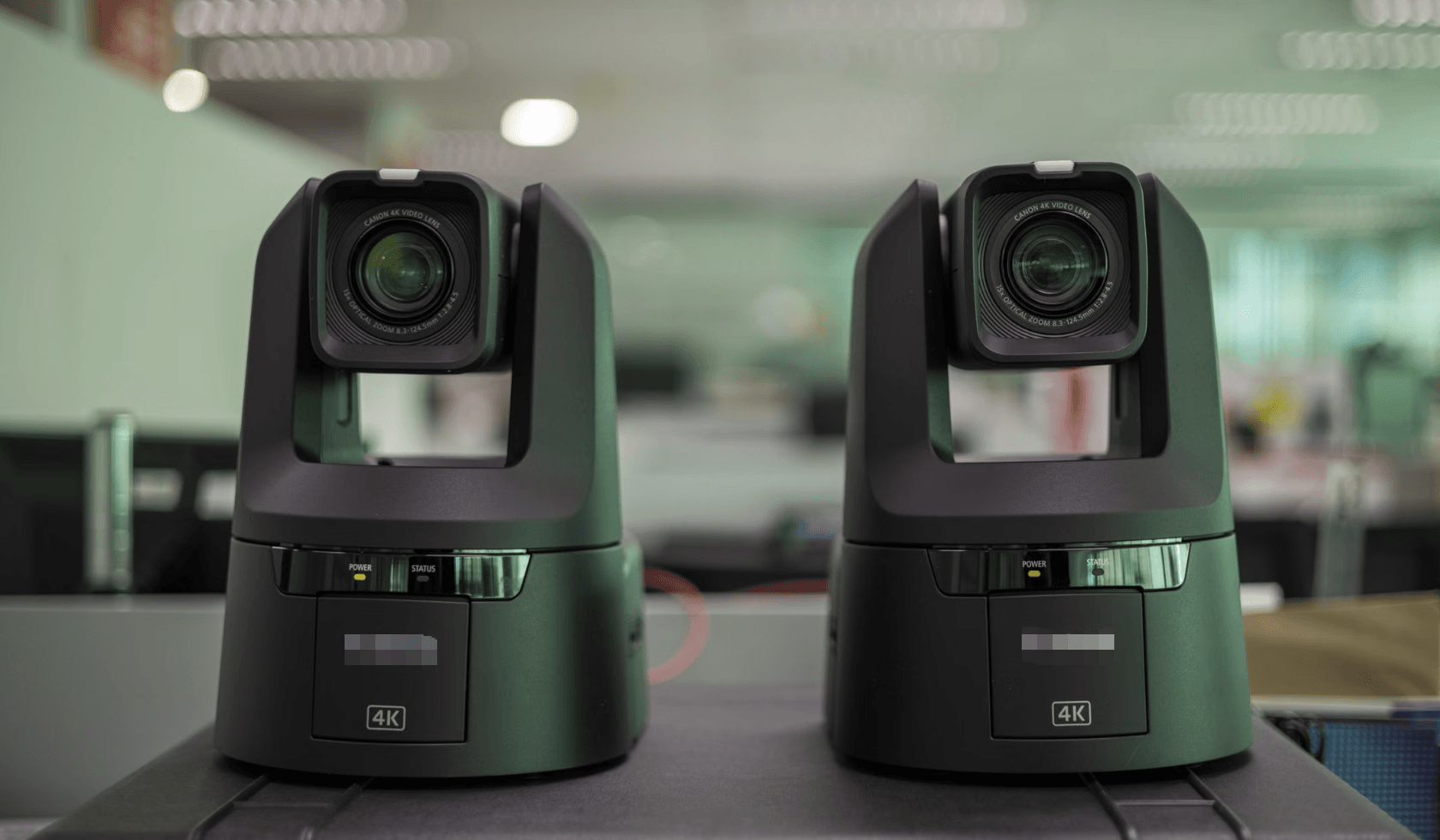
Whether it's a concert, a sporting event, or a corporate seminar, live production entails the best equipment for running high-definition video streams. SDI cameras work at the center of this setup as they ensure robust uncompressed video over distances that ordinary video-producing devices cannot handle. They are now referred to as the 'go-to' solution in live broadcasts and production environments where reliability goes hand in hand.
In this blog, we will simplify an SDI camera and its major features and introduce you to the top SDI cameras available today, designed to take your live productions to the next level.
Part 1: What Is an SDI Camera?
Professional video cameras that provide high-quality video signals through SDI connections are called SDI cameras. They are reliable and durable, ensuring high-quality video in harsh environments like live broadcasts and multi-camera productions.
These six features are some of the key highlights of SDI cameras:
1. Transmission of Video without Compression
Perhaps one of the most important benefits that SDI cameras offer is that they can transmit uncompressed video signals. It means that the video output is as high in quality as it can get, with zero loss of resolution, color depth, and clarity. Even over long distances, the video signal integrity of SDI cameras is kept intact, hence, every frame appears as sharp and detailed as it would be in the original capture.
Benefits:
- No Latency: The uncompressed video ensures that there is no latency between capture and transmission, which makes SDI cameras ideal for live productions where timing becomes critical.
- Rich Color Profiles: The uncompressed nature, therefore, brings about accurate and truer colors, which are essential for broadcasts with an audience who still expects image quality to be without blemish.
Real-world use: In live sports broadcasting, where even a small delay would ruin the experience, SDI cameras make sure that the video feed is instantaneous and of the best quality.
2. Long-Distance Signal Transmission
SDI cameras can send video signals over long distances, up to 300 meters or 984 feet with standard SDI cables and more with advanced types such as 3G-SDI, 6G-SDI, or 12G-SDI.
Benefits:
- Large Venues: In live events, such as concerts or sports arenas, cameras may be placed miles away from the control room or broadcasting station. SDI cables ensure completely seamless transmission over long distances without any demand for the use of signal boosters.
- Tight Connection: SDI has a locking mechanism to ensure that the connection is secure because it will not come loose by chance when its transmission occurs at a high-energy event or during the pulling of cables.
Real-world use: In live broadcast situations, such as television programs or concerts, SDI cameras are located many miles away from control rooms, yet they still transmit pristine video with no loss in signal quality over distance.
3. Robust Locking Connectors
BNC connectors, which SDI cameras use, are quite rugged and have a locking mechanism. In the case of HDMI, when pulled or jostled, the connections easily come out, and in the case of SDI, they do not get dislodged from their locks when the shot is happening.
Benefits:
- Durability: BNC connectors are designed to withstand rigorous conditions. They may be used either outdoors or in the event studio, and by the installation of the SDI cable lock, it is impossible that the connection would easily fail.
- Safety Against Unnecessary Detachment: During sports or any other type of live event, it can be a very hazardous matter if accidental detachment occurs. The locking of SDI cables prevents such risks.
Real-world use: Sports broadcasters believe in SDI's locking mechanism which will ensure that until the game reaches its climax, the video feed will be connected and stable.
4. Higher Video Resolutions
SDI cameras are capable of taking and transmitting HD or UHD video signals. This depends on the SDI standard, they can accept 4K level and higher resolutions.
Video Resolution Accepted with SDI:
- HD-SDI: Accepts resolutions up to 720p and 1080p.
- 3G-SDI: Full HD (1080p) @ 60fps is achievable using these standards.
- 6G-SDI and 12G-SDI: These new standards are meant to support 4K and in practice even 8K, with professional ultra-high-definition video production.
Benefits:
- Cinematic Quality: For live programs, events, or even filmmaking, 4K and UHD resolutions allow crisp detailed images that look high-end, and professional.
- Resilience to Future Upgrades: Given that most productions now go above 4K and even 8K in resolution, a resilient SDI camera ensures the equipment stays valuable and relevant over several years.
Real-world use: The ability to capture and transmit video at 1080p or even higher ensures a visually pleasing experience for the viewer, no matter how massive the screens are.
5. Multichannel Audio Integration
Unlike HDMI, SDI cameras can send multichannel audio alongside video on one cable, which is invaluable in the professional broadcast environment where audio high-quality synchronization is not negotiable.
Benefits:
- Up to 16 Channels: SDI supports up to 16 channels of embedded audio. This means that broadcasters can send many audio sources side by side with video feeds, including commentary, background music, or crowd noise.
- Perfect Sync: Because video and audio are transmitted together, there is no need for any additional equipment for the two to sync up.
Real-world use: For live sports or concert productions, where a variety of microphones and audio inputs must be transmitted in real-time, SDI's ability for multichannel audio keeps everything properly in sync and organized.
6. Flexible Frame Rates and Formats
SDI cameras allow the capture of wide frame rates that range from 24fps to use in cinematic production to 60fps and higher for producing smooth motion capture, sports, or live-action events. This diversity makes them suitable for a wide range of production requirements.
Supported Frame Rates:
- 24fps: Fairly common in film recording because of the traditional cinematic look it achieves.
- 30fps and 60fps: Mostly used in fast-moving productions like live sports, and news broadcasts.
- 120fps and Higher: Some SDI cameras capture a high frame rate for slow-motion video, thus providing creative alternatives.
Benefits:
- Flexibility: With various frame rates at their disposal, SDI cameras can switch between them, which enables them to be used in live television as well as high-speed sporting events.
- Smooth Motion: In a fast environment, such as in sports or when people are doing acrobatic stunts, higher frame rates keep this motion blur out, thus providing clear images.
Real-world use: For live sports broadcasters, high frame rate support of SDI cameras is very important. It allows capturing every moment of fast-moving action without video loss.
Part 2: Top SDI Cameras for Live Production
SDI cameras are flooded in the market and all packed with features designed to make live production smoother, more efficient, and higher in quality. Here are the top 4 SDI cameras for live production:
1. OBSBOT Tail 2 Live Production Camera
The OBSBOT Tail 2 is a remarkable addition to the realm of SDI cameras, crafted to meet the high demands of live production. Whether you're live streaming a concert, sporting event, or business seminar, this AI-powered PTZR camera delivers stunning 4K video at 60fps. With 5x optical zoom and 12x hybrid zoom, you can achieve both detailed close-ups and wide perspectives. Plus, AI Tracking 2.0 ensures accurate subject recognition throughout your broadcast.
Key Features of this SDI Camera:
- 3G-SDI Interface: With SDI integration, Tail 2 delivers high-quality video output while maintaining low latency and secure connections.
- Optical and Hybrid Zoom: Has 5x optical and 12x hybrid zoom for capturing close images as well as those from far distances.
- AI Tracking 2.0: Can detect over 30 types of animals and 200 objects and is very scalable in any given context.
- 90° Rotatable Gimbal: Able to flip between landscape and portrait orientations for short creative spurts.
- Connectivity Options: HDMI, SDI, Ethernet, and USB 3.0 make it a versatile choice for diverse live production environments.
Technical Specifications:
- Sensor: 1/1.5'' CMOS.
- Resolution: 4K UHD@60fps, Full HD 1080p@120fps.
- Zoom: 5x Optical Zoom/12x Hybrid Zoom.
- Audio: 1* MIC IN (3.5mm audio interface)、1* LINE IN (3.5mm audio interface)
- Outputs: 3G-SDI, HDMI, USB, Ethernet、RS-232、NDI.
2. JVC GY HM180
This is a compact SDI camera that provides broadcast-level performance in a portable form factor, with features such as producing 4K Ultra HD resolution over its HDMI output and 1080p output via 3G-SDI, meaning it can be used in numerous live production environments.

Key Features of this SDI Camera:
- Integrated 4K UHD: Capture stunning 4K Ultra HD footage at 30fps and full HD at 60fps through the 3G-SDI output. In this way, it can capture even the finest details.
- 12x Optical Zoom: This is implemented for sharp close-up shots without pixelation or distortion.
- Dual XLR Audio Inputs Inbuilt: Professional-grade inputs capture high-quality audio directly into the camera. It is ideal for live broadcasting setups that require crisp audio.
- Dual SD Card Slots: Allows continuous recording as it automatically switches to the second card when full and prevents loss of time during a live event.
Technical Specifications:
- Sensor: 1/2.3-inch CMOS.
- Resolution: 4K UHD @ 30fps, Full HD 1080p @ 60fps.
- Zoom: 12x Optical Zoom.
- Audio: Dual XLR inputs for professional audio capture.
- Outputs: 3G-SDI, HDMI, USB.
The JVC GY HM180 is the perfect solution for producers who want to connect compact form with top-notch 4K resolution, particularly for news, conferences, and educational streaming.
3. PTZOptics 30x
The PTZOptics 30x is one of the best pan-tilt-zoom PTZ cameras that are desired for live production and broadcasting. This model has a 30x optical zooming capability, it can shoot wide shots and close-ups in large spaces such as theaters, auditoriums, and sports arenas. The main features include 3G-SDI Output and advanced PTZ controls allowing remote operation.

Key Features of this SDI Camera:
- 30x Optical Zoom: Deliver high-quality close-ups without pixelation. Ideal for large venues.
- Simultaneous 3G-SDI and IP Streaming: It can share real-time transmission over SDI along with IP streaming, making the camera capable of multi-platform broadcasting.
- Low Light Sensitivity: Works well with high-quality video even when lighting is dim.
- Auto-tracking Capabilities: This allows the camera to track automatically a speaker or subject thereby reducing the manual operations required.
- Multiple Control Options: It carries RS232, RS485, and IP control, which is integral to remote live productions where camera operators are not readily available.
Technical Specifications:
- Resolution: 1080p @ 60fps
- Optical Zoom: 30x.
- Outputs: 3G-SDI, HDMI, IP Streaming.
- Control: RS232, RS485, IP (Visca over IP).
- Low Light Sensitivity: 0.5 lux minimum illumination.
PTZOptics 30x camera comes in handy during live event productions in which several angles from a scene have to be captured without having to hire multiple operators.
4. NEOiD PTZ NDI 20X
The advanced PTZ camera NEOiD PTZ NDI 20X is specially designed for Network Device Interface or NDI workflows, offering video streaming with ultra-low latency over an IP network. It provides the perfect balance between wide shots and tight shots for mid-sized venues and events due to its 20x optical zoom.

Key Features of this SDI Camera:
- NDI Integration: The built-in NDI|HX support enables clean video transfer over an IP network, minimizing the requirement for long runs of cabling and infrastructure.
- 20x Optical Zoom: Shots are captured from a distance without any degradation of the image captured. Simultaneous Outputs 3G-SDI, HDMI, and NDI outputs make it work well in diverse production environments.
- PoE: It can be Powered over Ethernet (PoE) thereby minimizing some installations to require separate power cables, which would make the installations a breeze.
- Low Light Performer: It is designed to shoot in low light conditions and makes clear video output comes from an environment that is dimly lit.
Technical Specifications:
- Resolution: 1080p @ 60fps
- Zoom: 20x Optical Zoom
- Outputs: 3G-SDI and HDMI, NDI|HX, IP Streaming
- Control: RS232, RS485, IP (Visca over IP)
- Low Light: Minimum 0.5 lux illumination.
- PoE: Supports Power over Ethernet.
The NEOiD PTZ NDI 20X is best to be used in church, school, and mid-size venue applications, primarily because of ease of installation, adaptability, and excellent-quality video.
5. Panasonic AW-UE20
A compact PTZ camera, the Panasonic AW-UE20 is solid in features with readiness for live event streaming and professional broadcasting. It allows 4K UHD resolution, superior low-light performance, and supports multiple outputs carrying 3G-SDI and HDMI, proving quite reliable in different kinds of production environments.

Key Features of this SDI Camera:
- 4K UHD @ 30fps: Captures ultra-high-definition video, with remarkably high clarity and detail, a thing necessary for live productions demanding the best quality.
- 12x Optical Zoom: Suitable for both wide-angle and telephoto coverage in the middle-sized venue.
- Simultaneous 3G-SDI and HDMI Outputs: Seamlessly sync within a single-box live production environment.
- Versatile PTZ Control: Offers RS232, RS485, and IP control, allowing remote operation in professional setups.
- Wide Dynamic Range (WDR): Ensure balanced exposure, even if there is mixed lighting in the location.
Technical Specifications:
- Resolution: 4K UHD @ 30fps, 1080p @ 60fps.
- Zoom: 12x Optical Zoom.
- Outputs: 3G-SDI, HDMI, IP Streaming.
- Control: RS232, RS485, IP (Visca over IP).
- Low-Light Performance: 0.4 lux minimum illumination.
- Power over Ethernet: Yes.
The Panasonic AW-UE20 is best for mid to large venues, with professional-grade video output and remote control via ease, thus, it's suitable for large conferences, events, and church services.
FAQs About SDI Cameras
1. What is an SDI camera?
An SDI camera provides output video in the form of Serial Digital Interface. It supports uncompressed transmission with low latency. In addition, the signal quality is stable, which makes it enough for live video production. However, they are better-suited for professional setups.
2. What does SDI stand for in cameras?
SDI means Serial Digital Interface. This is a digital video transmission standard which is common in professional cameras. It promises high-quality videos and audio to be sent over the cables. This setup seems similar to HDMI but it is recommended for long cable runs. This is why it’s better for broadcasts.
3. What is the difference between SD and SDI?
SD and SDI are not the same thing, as SD refers to Standard Definition video resolution, while SDI refers to a video transmission interface. SD describes image quality and resolution, whereas SDI defines how video signals are transferred. This distinction is important when choosing equipment for production.
4. What are the disadvantages of SDI?
SDI has limitations, including higher equipment and cabling costs compared to HDMI. It also requires proper installation and professional-grade cables, especially for higher resolutions like 4K. For smaller or mobile setups, SDI may be unnecessarily complex. In those cases, compact cameras or AI cameras with simpler outputs may be more practical.
5. Is SDI analog or digital?
SDI is a fully digital video interface. It transmits uncompressed digital video and audio over coaxial cable without the signal degradation seen in analog systems. This ensures consistent quality and synchronization over distance. As a result, SDI is widely used in professional video production rather than consumer electronics.
6. What are the benefits of using SDI?
SDI offers clear advantages such as stable signal transmission, low latency, and locking connectors for reliability. It supports long cable runs and embeds audio and metadata into a single cable. These benefits make it ideal for live broadcasting and multi-camera setups.
7. What is the maximum distance for SDI?
SDI supports long transmission distances, but the maximum range depends on the SDI standard used. SD-SDI can reach up to 300 meters, while HD-SDI and 3G-SDI typically reach about 100 meters over quality coaxial cable. Higher-bandwidth formats require shorter runs or signal repeaters. For extended distances, fiber-based solutions are often recommended.
Conclusion
Although it is the SDI camera selection that will define the quality and reliability of your live production, each one of the cameras listed above offers unique features, bringing with them detailed close-up shots through extreme optical zooms or compact models that easily fit into tighter spaces. Where long-distance signal transmission, multi-camera settings, or flawless low-light performance is required, an SDI camera fits the bill.