5 Best Zoom Cameras With Lens: From Basic to Pro

Smartphone zoom leaves you with grainy, pixelated images when you try to shoot distant subjects. Carrying a heavy camera body with multiple separate lenses is not a practical alternative for a weekend trip or a concert. A high quality fixed-lens system solves both problems at once. Finding the best camera with zoom lens allows you to capture crisp, long-range shots without breaking your back or compromising on image quality.
5 Best Cameras With Zoom Lenses
If you want to pull distant subjects closer without sacrificing image clarity, a dedicated zoom camera is highly effective. The table below breaks down the technical specifications of the top models to help you spot their core differences instantly.
| Model | Resolution | Sensor Size | Aperture | Zoom Range (Equiv.) | Focal Length | Image Stabilization | Size and Weight |
|---|---|---|---|---|---|---|---|
| Sony RX100 VII | 20.1 MP | 1-inch | f/2.8 - 4.5 | 8x | 24-200mm | Optical SteadyShot | 302g / Pocketable |
| Panasonic Lumix ZS99 | 20.3 MP | 1/2.3-inch | f/3.3 - 6.4 | 30x | 24-720mm | 5-Axis Optical OIS | 322g / Compact |
| Sony RX10 IV | 20.1 MP | 1-inch | f/2.4 - 4.0 | 25x | 24-600mm | Optical SteadyShot | 1095g / DSLR Style |
| Nikon COOLPIX P1100 | 16.0 MP | 1/2.3-inch | f/2.8 - 8.0 | 125x | 24-3000mm | Dual Detect Optical VR | 1410g / Heavy Bridge |
| Leica D-Lux 8 | 17.0 MP | Four Thirds | f/1.7 - 2.8 | 3.1x | 24-75mm | Optical Compensation | 397g / Small Form |
Sony Cyber-shot RX100 VII ($1,499)

The Sony RX100 VII redefines what fits inside a pocket by squeezing professional sports-camera speeds into a smartphone-sized form factor. Travel bloggers and family memory-keepers gain the ability to freeze fast action instantly without hauling a DSLR.
- Alpha-Level Subject Tracking: Utilizing the same Real-time Tracking algorithms found in Sony's flagship Alpha mirrorless systems, the 357 phase-detection points lock onto eyes and faces instantly. DPReview's field testing confirms this setup allows parents to track hyperactive toddlers or pets continuously.
- All-In-One Travel Coverage: The ZEISS Vario-Sonnar T* 24-200mm equivalent lens covers everything from sweeping wide-angle city architecture to tightly framed balcony details. This expansive range lets vacationers document an entire holiday itinerary without carrying multiple lenses.
- Pro-Grade Single-Take Burst Mode: The Single Burst Shooting feature captures seven rapid-fire images at up to 90 frames per second with a single press. As highlighted in hands-on reviews by PCMag, this capability helps sports parents isolate the precise millisecond a soccer ball makes contact with a foot.
Panasonic Lumix ZS99 ($698)

Budget-conscious vacationers will find a highly practical tool in the Panasonic Lumix ZS99, which provides extreme magnification without a premium price tag or bulky physical chassis. This design optimizes for daytime outdoor flexibility, giving cruise passengers and hikers massive focal reach during daytime excursions.
- Incredible 30x Optical Telephoto Power: Squeezing a 24-720mm equivalent focal range into a pocket-sized chassis gives cruise ship passengers and open-top bus tourists unparalleled viewing versatility. Camera Labs testing demonstrates that this massive physical pull lets you isolate a specific whale fin in the water or a distant lighthouse tower from miles away.
- Robust 5-Axis HYBRID OIS Stabilization: Built-in optical image stabilization actively counteracts the high-frequency hand tremors that ruin long-distance photography. Outdoor hobbyists can confidently shoot handheld at maximum zoom extensions during bright afternoon hikes.
- Innovative 4K Photo Mode: This continuous-capture utility extracts perfect 8-megapixel still frames directly from 30-frames-per-second video clips. It gives street festival attendees a bulletproof safety net to capture the exact peak of a fast-moving parade performance.
Sony Cyber-shot RX10 IV ($1,699)

For amateur wildlife enthusiasts and field sports photographers, the Sony RX10 IV functions as a complete, self-contained rig that eliminates the need to buy or carry multi-thousand-dollar telephoto lenses. Parents filming sideline soccer games and bird watchers tracking local species benefit from a single system that handles both wide-angle group shots and distant close-ups.
- Ultra-Fast 0.03-Second Hybrid Autofocus: Blending 315 focal-plane phase-detection points with contrast autofocus creates an instant focus lock on erratic targets. According to comprehensive technical evaluations by Imaging Resource, this blazing speed allows wildlife enthusiasts to track small birds weaving through thick branches without the lens hunting for focus.
- Bright, Action-Ready Maximum Aperture: Maintaining an impressive f/4 aperture at the maximum 600mm focal extension lets in significantly more light than standard travel cameras. This physical brightness allows track-and-field photographers to use high shutter speeds like 1/1000s under cloudy skies.
- Continuous 24-FPS Burst Buffering: The camera fires up to 24 frames per second with full continuous autofocus and auto-exposure tracking for up to 249 consecutive images. This means action photographers can record entire athletic sequences with total confidence.
Nikon COOLPIX P1100 ($1,049)

Which camera has the highest optical zoom? The Nikon COOLPIX P1100 claims this absolute crown with its staggering 125x optical lens range. Moon-watching hobbyists and safari tourists can document scenes completely invisible to the naked eye or standard consumer hardware.
- Unrivaled 3000mm Telescope Reach: The NIKKOR 24-3000mm equivalent lens delivers a level of magnification that makes standard gear look limited. Testing by photography experts at Photography Life indicates that moon-watching hobbyists can fill the entire frame with lunar craters.
- Dual Detect Optical Vibration Reduction: Providing a 5.0-stop shutter speed stabilization advantage, this advanced system smooths out frame drift effectively. It gives distant landscape watchers a steady view inside the electronic viewfinder.
- Dedicated Bird-Watching and Moon Modes: Pre-programmed scene optimization modes adjust exposure, aperture, and focus point sizes instantly for specific far-off subjects. This takes the guesswork out of complex menu adjustments for casual backyard birders.
Leica D-Lux 8 ($1,915)

If your primary goal is clean imagery in dark environments rather than reaching across massive distances, the Leica D-Lux 8 focuses heavily on light-gathering capability. Night street documentarians and indoor event photographers receive clean, noise-free image files that retain rich color gradations even in challenging ambient light.
- Large Four Thirds Sensor Architecture: The large image sensor size translates to significantly larger individual light-capturing pixels. Reviewers at Red Dot Forum emphasize that this design allows evening street documentarians to snap candid low-light scenes with rich dynamic range, preserving subtle details in dark shadows.
- Ultra-Bright f/1.7-2.8 Leica DC Vario-Summilux Lens: Squeezing massive light gathering capability into a highly premium compact optic makes low-light shooting effortless. The ultra-wide opening lets dim indoor event photographers maintain fast shutter speeds.
- Seamless DNG Raw File Workflow: Saving images in the universal Adobe Digital Negative format preserves all processing leeway directly from the high-quality glass. This gives creative editorial photographers complete tonal control during editing.
Bonus: OBSBOT Talent 2 Live Streaming Studio
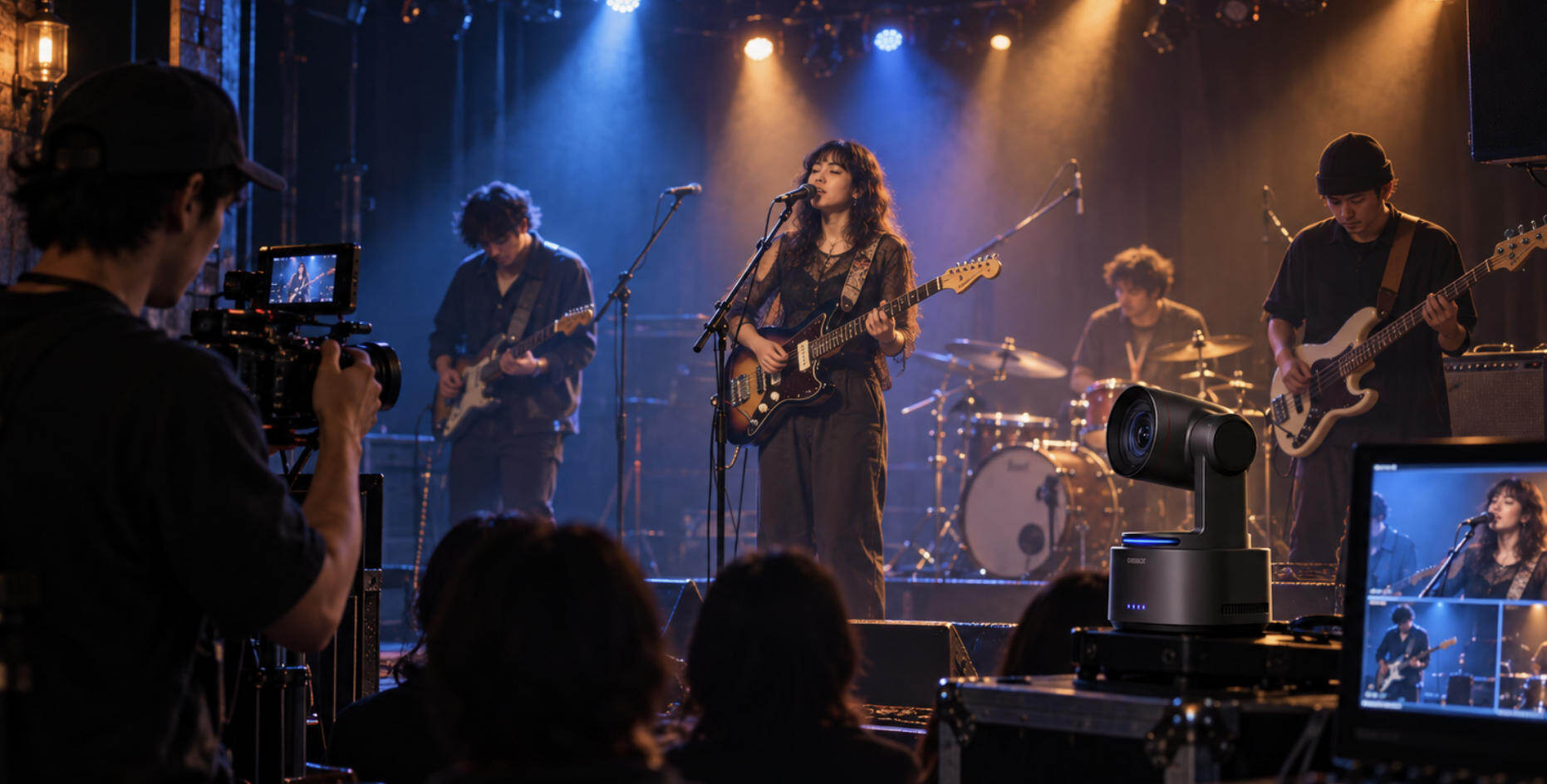
While a dedicated zoom camera is excellent for capturing distant wildlife, stage action, sports, or travel details, that footage often becomes harder to manage once you move into live production. OBSBOT Talent 2 gives creators a way to turn long-range camera feeds into a full multi-source live workflow, combining switching, monitoring, recording, streaming, and distribution in one portable production system instead of relying on a separate computer workstation at every location.
- Up to 16 Video Source Inputs: Combine 4 HDMI, 2 USB, and 10 IP sources so a long-range zoom camera can work alongside wide-angle cameras, mobile sources, IP feeds, and local media in one production.
- 4K and HD Source Flexibility: Support up to 6 4K video sources or up to 16 HD video sources across HDMI, USB, and IP workflows, helping preserve detail from high-quality zoom camera feeds.
- True 4K Multi-Platform Streaming: Stream to up to four platforms with both 16:9 landscape and 9:16 vertical output, useful for events, concerts, sports, and creator broadcasts.
- 7-Inch AMOLED Monitoring: The 800-nit Full HD touchscreen with 100,000:1 contrast and 100% NTSC color gives operators a clearer view when previewing distant subjects and switching between camera angles.
- ISO Recording for Post-Production: Record up to four independent 4K sources while streaming, preserving separate angles for highlight edits, recovery, and repurposed content after the live show.
- Reliable Field Production: 2.5GbE Ethernet, SIM-based cellular options, smart network bonding, active cooling, and hot-swappable NP-F power help keep location-based live productions running more steadily.
How to Choose a Camera With Zoom Lens
Selecting the right camera with a zoom lens depends heavily on matching a camera's physical architecture to your specific shooting environment.
- High-Altitude Wildlife & Birding Scenarios: Prioritize maximum optical reach and advanced image stabilization over small body size. Look for bridge models like the Nikon P1100 or Sony RX10 IV that offer at least 600mm to 3000mm focal ranges to capture animals without scaring them.
- Daytime Travel & Casual Sightseeing Scenarios: Focus on portability and a flexible focal range. A pocketable model like the Panasonic ZS99 provides a wide 24-720mm range, allowing you to shoot broad street scenes and distant structures without neck strain during long walks.
- Low-Light Concerts & Evening Street Scenarios: Prioritize a large sensor (1-inch or Four Thirds) and a wide maximum aperture (f/1.7 to f/2.8). The Leica D-Lux 8 shines here because its lens gathers enough light to keep images sharp and clean inside dim venues where long superzooms produce dark, noisy photos.
Best Settings for Different Scenarios
- Concert Venues: Set your camera to its widest available aperture setting (lowest f-number) to maximize light entry. Keep your zoom level near the wide end to prevent the aperture from narrowing, and utilize optical image stabilization to counteract hand shake in dark settings.
- Wildlife Trails: Switch your camera to Shutter Priority mode and select a minimum speed of 1/1000s to freeze animal movement. Extend your lens to its optical telephoto limit, turn on continuous tracking autofocus, and use a monopod or tripod if your lens exceeds 600mm equivalent.
- Travel Landscapes: Use a mid-range focal length between 24mm and 50mm to capture a natural perspective that matches human vision. Set your aperture to a balanced f/4 or f/5.6 sweet spot to ensure deep focus clarity from the foreground all the way to the background horizon.
FAQs About Camera with Zoom Lens
Is optical zoom better than digital zoom?
Yes. Optical zoom moves physical glass lenses to magnify a subject while preserving full image resolution. Digital zoom simply crops and stretches the central pixels, which lowers overall image quality and introduces blocky digital noise.
Does image stabilization matter for long zoom lenses?
Yes, it is vital. At long telephoto focal lengths, tiny hand tremors are heavily magnified, causing severe camera shake. Optical image stabilization actively counteracts this movement to keep your handheld shots sharp.
Does a variable aperture affect long zoom shots?
Yes. As you zoom in, a shrinking maximum aperture (like f/2.8 dropping to f/4.5) reduces light intake. This requires slower shutter speeds or higher ISO settings, making your images more prone to blur and noise in dim lighting conditions.
Conclusion
Selecting the best camera with a zoom lens requires matching your specific creative lifestyle to the physical engineering of the optical hardware. As detailed above, compact options like the Sony RX100 VII and Panasonic ZS99 prioritize casual travel portability, while bridge systems like the Sony RX10 IV and Nikon P1100 maximize telephoto focal reach for dedicated action, sports, and wildlife subjects. For evening street scenes, the premium Leica D-Lux 8 leads in low-light gathering capability. Ultimately, balancing sensor size, maximum physical aperture, and weight ensures you capture clean images without carrying unnecessary gear.