Best Bridge Camera: Picks for Every Budget and Use Case

The best bridge camera overall is the Sony Cyber-shot RX10 IV, prized for its 1-inch sensor and fast autofocus. For a new, budget-friendly option, the Panasonic Lumix FZ80D is the easiest recommendation. For raw zoom reach, the Nikon Coolpix P1000 still wins with its 125x optical zoom.
Looking for the best bridge camera and tired of guides that just repeat spec sheets? This guide cuts through that and tells you which models are still worth buying, and which one fits your shooting style.
5 Best Bridge Camera
| Camera | Megapixels | Zoom Range | Max Aperture | EVF | Stabilization | Autofocus |
|---|---|---|---|---|---|---|
| Sony RX10 IV | 20.1MP (1-inch sensor) | 25x (24-600mm) | f/2.4-4.0 | 2.36M-dot OLED | Optical SteadyShot | 315-point phase-detect, 0.03s |
| Panasonic Lumix FZ80D | 18.1MP (1/2.3-inch) | 60x (20-1200mm) | f/2.8-5.9 | 2.36M-dot OLED | Power O.I.S. | Contrast-detect, 39 points |
| Nikon Coolpix P1000 | 16MP (1/2.3-inch) | 125x (24-3000mm) | f/2.8-8.0 | 2.36M-dot | Dual Detect Optical VR | Contrast-detect, face/subject tracking |
| Nikon Coolpix P950 | 16MP (1/2.3-inch) | 83x (24-2000mm) | f/2.8-6.5 | 2.36M-dot OLED | Dual Detect Optical VR, 5.5 stops | Contrast-detect, face/subject tracking |
| Canon PowerShot SX70 HS | 20.3MP (1/2.3-inch) | 65x (21-1365mm) | f/3.4-6.5 | 2.36M-dot OLED | 5-stop Dual Sensing IS | Contrast-detect, eye-detect EVF switch |
Sony Cyber-shot RX10 IV — Best Rated Bridge Camera Overall (~$2700)

The RX10 IV sits in a category most other bridge superzoom cameras can't touch. It pairs a 1-inch, 20.1MP backside-illuminated sensor with a 24-600mm f/2.4-4.0 Zeiss lens, and that combination still beats nearly every small-sensor rival on image quality. Sony built it around a 315-point phase-detection autofocus system rated at 0.03 seconds, fast enough to track a bird launching off a branch or a kid sprinting across a soccer field. It also shoots 24fps bursts with full AF tracking, which is rare territory for any fixed-lens camera, let alone one with this much reach. Sony discontinued the RX10 IV in 2025, so you'll only find it used or in third party retailer now, but it remains the benchmark of best bridge camera for wildlife.
- 1-inch 20.1MP sensor with phase-detection AF (uncommon among bridge cameras with 1 inch sensors)
- 25x zoom (24-600mm equivalent) at a bright f/2.4-4.0 aperture
- 24fps continuous shooting with full AF/AE tracking
- Weather-sealed magnesium alloy body for outdoor and field use
- 4K video with full pixel readout, no pixel binning
Review from User:

Panasonic Lumix FZ80D — Best Budget Bridge Camera ($549.99)

If you are looking for the best budget bridge camera, this is the one to put in your cart. At roughly $549.99, the FZ80D delivers a 60x optical zoom (20-1200mm equivalent) and 4K video, a spec sheet that would normally come with a much bigger price tag. The catch is the 1/2.3-inch, 18.1MP sensor, the same tiny chip used in most smartphones, which means image quality drops noticeably at full zoom and in dim light. Still, for daylight shooting, travel snapshots, or a first step up from a phone, it's hard to beat the value.
- 60x optical zoom (20-1200mm equivalent), one of the longest in this price bracket
- 4K video at 30p with 4K Photo mode for extracting 8MP stills from footage
- 10fps burst shooting with Power O.I.S. stabilization
- Lightweight body at just 1.41lb including battery and card
- USB-C charging on the newer "D" revision
User Review:

Nikon Coolpix P1000 — Best Bridge Camera for Extreme Zoom ($999.95)

When someone asks for the best birding bridge camera with the longest possible reach, the P1000 is the answer almost every time. Its 125x optical zoom hits a 24-3000mm equivalent focal length, a range no other fixed-lens camera on the market matches, and Dynamic Fine Zoom can stretch that digitally even further. As Photography Life's in-depth review notes, the built-in Dual Detect Optical Vibration Reduction is what makes handholding a 3000mm shot remotely possible. The tradeoff is size and weight: this is a two-pound, DSLR-sized camera, and the small sensor means you'll want strong light to keep noise under control at the long end.
- 125x optical zoom (24-3000mm equivalent), the longest in the bridge camera class
- Dual Detect Optical VR rated near 5 stops of stabilization
- Fully articulating 3.2-inch, 921K-dot LCD for shooting at odd angles
- 4K UHD video at 30fps with RAW (NRW) photo support
- Hot shoe for external accessories, unusual at this price point
User Review:

Nikon Coolpix P950 — Best Birding Bridge Camera for Handling ($849.95)

The P950 trims the P1000's zoom down to a still-massive 83x (24-2000mm equivalent) in exchange for a noticeably lighter, easier-to-handle body. For most bird photographers, that's the right trade, since 83x already covers nearly any realistic birding distance without the P1000's extra bulk. It carries the same f/2.8 maximum aperture at the wide end as its bigger sibling, a 2.4-million-dot EVF, and Nikon's Dual Detect VR rated at 5.5 stops, which holds up well even at full zoom. If you want one of the more recommended bridge cameras for birding without lugging a P1000 around all day, this is it.
- 83x optical zoom (24-2000mm equivalent) with 166x Dynamic Fine Zoom
- 16MP 1/2.3-inch sensor with f/2.8-6.5 aperture range
- Dual Detect Optical VR rated at 5.5 stops of compensation
- 4K video and RAW capture, both upgrades over the older P900
- Lighter and more balanced in hand than the P1000
User Review:

Canon PowerShot SX70 HS — Best Bridge Camera for Wide-Angle Shooting ($699.00)

The SX70 HS earns its spot by covering the widest field of view in this lineup, starting at 21mm equivalent before zooming out to 1365mm on its 65x lens. That makes it a strong pick for travelers who photograph everything from cramped interiors to distant landmarks on the same trip. Canon built in a 20.3MP BSI sensor, a meaningful jump from the 16MP chip in its SX60 predecessor, paired with 5-stop Dual Sensing image stabilization. Autofocus is reliably fast in good light but slows down once the scene gets dark or low-contrast, a limitation shared by every small-sensor bridge camera on this list.
- 65x zoom (21-1365mm equivalent) with the widest starting focal length here
- 20.3MP BSI CMOS sensor, Canon's DIGIC 8 processor
- 10fps burst with single-shot AF, 5.7fps with continuous AF
- 5-stop image stabilization plus 5-axis Advanced Dynamic IS
- RAW capture in Canon's newer CR3 format, plus 4K video
User Review:

Bonus: OBSBOT Talent 2 Live Streaming Studio
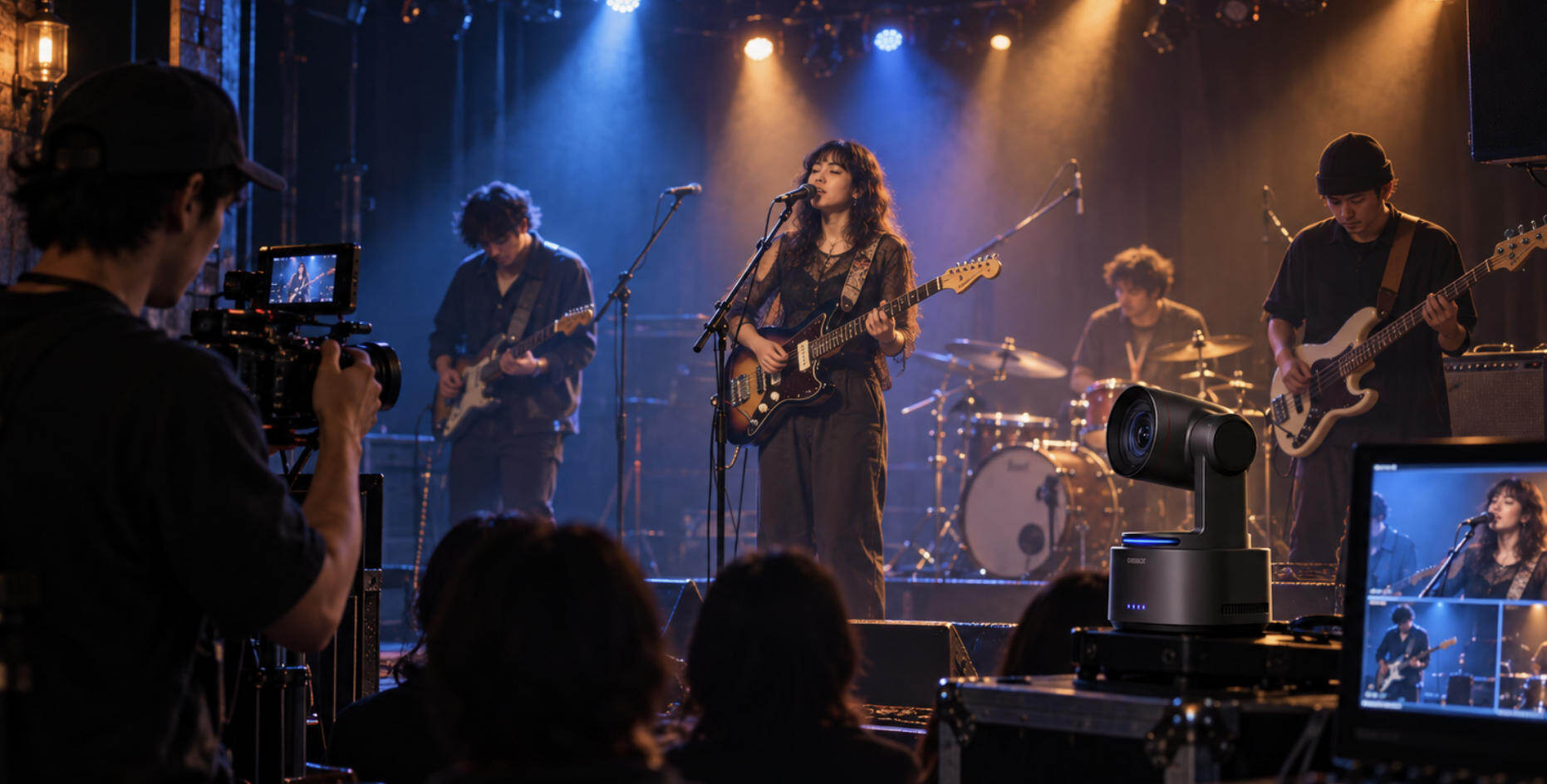
A bridge camera handles one job extremely well: capturing distant, still, or slow-moving subjects through a single lens. But if you're broadcasting an outdoor event, a birding livestream, or any shoot that needs more than one angle running at once, a single fixed-lens camera runs out of road fast. That's a different problem than zoom reach, and it calls for different gear.
OBSBOT Talent 2 is built for exactly this gap. It's an all-in-one multi-cam live production studio, combining an encoder, switcher, recorder, and monitor into a single handheld device, designed to manage multiple camera feeds at once rather than capture images itself. It lets a single operator cut between several live angles on the fly, automate the switching when no one is free to press buttons, and push the final stream straight to up to four platforms at once—without a laptop in sight.
- Up to 16 video inputs at once (4 HDMI, 2 USB, 10 IP over NDI, SRT, RTSP, and RTMP) for true multi-camera switching
- Smart auto-switch modes and multi-channel control—run cuts sequentially, randomly, or audio-followed, and operate from the touchscreen, any web browser, Stream Deck, or OSC/API with no separate switcher software needed
- Simultaneous streaming to up to 4 platforms in true 4K over Ethernet (up to 2.5GbE), Wi-Fi 6, or 4G/5G, with network bonding to keep the feed alive
- On-device overlays: picture-in-picture, lower thirds, scoreboards, countdown timers, and chroma key
- Dual hot-swappable NP-F batteries for streams that need to run for hours outdoors
If your wildlife or outdoor content is moving from still photography toward livestreaming or multi-angle video, this is the piece of gear that fills the gap a bridge camera was never designed to cover.
How to Choose the Right Bridge Camera for You
Picking the right model comes down to two things: knowing which specs actually matter for how you shoot, and matching that to your real-world use case.
What the Specs Actually Mean for You
- Zoom range: More zoom sounds better, but past 1000mm, atmospheric haze and hand shake start working against you. A 600mm lens you can hold steady beats a 3000mm lens that shakes.
- Sensor size: This is the single biggest factor in image quality. A 1-inch sensor (only the RX10 IV here) gathers far more light than the 1/2.3-inch chips in every other model, which shows up most in low light and when you crop tightly.
- Video specs: If you shoot video often, look past resolution and check for full pixel readout (RX10 IV) versus pixel binning, which softens fine detail.
- Weight and portability: The P1000 weighs over 3lb fully loaded. If you're hiking or traveling light, that weight adds up fast over a full day.
- Budget: New bridge cameras run from roughly $500+ (Panasonic) to $900+ (Nikon P1000), while a used Sony RX10 IV often costs more than either despite being years older, simply because nothing has replaced it.
Match Your Camera to Your Scenario
| Your Situation | Recommended Pick | Why It Fits |
|---|---|---|
| Backyard birding, want sharp results | Sony RX10 IV | 1-inch sensor and fast AF resolve feather detail better than any small-sensor rival |
| Tight budget, casual travel use | Panasonic FZ80D | Lowest price, 60x zoom covers most everyday situations in daylight |
| Distant wildlife, safari, or moon shots | Nikon Coolpix P1000 | Unmatched 125x zoom for subjects nothing else can reach |
| Birding trips with lots of walking | Nikon Coolpix P950 | 83x zoom in a lighter, more balanced body than the P1000 |
| Travel photography, mixed subjects | Canon SX70 HS | Widest starting focal length (21mm) plus solid telephoto reach |
| Multi-angle outdoor livestreaming | Bridge camera + OBSBOT Talent 2 | Adds switching, tracking, and streaming a single camera can't do alone |
FAQs About the Best Bridge Camera
How do bridge cameras compare to DSLRs for wildlife photography?
Bridge cameras win on reach and price: one body covers 600-3000mm equivalent without buying separate lenses. DSLRs win on image quality thanks to bigger sensors, especially in low light. Pick a bridge camera for daylight reach on a budget, a DSLR for serious low-light or print work.
How does a bridge camera compare to a mirrorless camera or smartphone overall?
Smartphones can't match real optical zoom past 5-10x. Mirrorless cameras offer better image quality, but a comparable telephoto lens alone often costs more than an entire bridge camera. Bridge cameras sit in between: less flexible than mirrorless, far more reach than a phone.
Is the Sony RX10 IV still available, and what replaced it?
Sony discontinued it in early 2025 with no successor. It's used-market only now, or in third-party retailers. No other brand has released a 1-inch sensor bridge camera to fill the gap.
Are bridge cameras worth buying, or should I wait for new releases?
Don't wait. The category has barely changed beyond minor refreshes like USB-C ports. If one of the picks above fits your budget and zoom needs, buy now.
Conclusion
Pick the best bridge camera that matches how you actually shoot, not the one with the biggest zoom number on the box. If wildlife and birding are your priority and budget allows it, hunt down a used Sony RX10 IV from a trusted reseller. If you're just starting out or traveling on a budget, the Panasonic FZ80D gets you shooting today for under $600.