Best DSLR Camera for Beginner: 4 Picks

Buying a beginner DSLR in 2026 is less about chasing the newest camera and more about choosing the right learning tool. Mirrorless cameras now get most of the attention, but DSLRs still offer an optical viewfinder, comfortable grip, long battery life, and a wide lens ecosystem. This guide covers practical DSLR choices across budget, outdoor, action, and full-frame learning needs, with clear tradeoffs so you can decide whether a DSLR still fits your first-camera plan.
Best DSLR Cameras for Beginners Compared
Start with what you shoot most. A beginner DSLR for family photos does not need the same autofocus system as a camera for sports or wildlife. The table below compares the specs that matter most for a first DSLR: use case, sensor, autofocus, video, and approximate price.
| Product | Best Use | Sensor | Autofocus | Video | Approx. Price |
|---|---|---|---|---|---|
| Canon EOS Rebel T7 | Low-cost DSLR basics | 24.1MP APS-C | 9-point AF | 1080p 30fps | $479 |
| Pentax KF | Outdoor still photography | 24.2MP APS-C | 11-point AF | 1080p | $797-$899 |
| Nikon D7500 | Sports, wildlife, action | 20.9MP APS-C | 51-point AF | 4K 30fps | $997 |
| Nikon D780 | Full-frame learning path | 24.5MP full-frame | 51-point AF | 4K 30fps | $1,497-$1,547 |
4 Best DSLR Cameras for Beginners
Best Budget DSLR for Beginners: Canon EOS Rebel T7

The Canon EOS Rebel T7 is a simple entry point for beginners who want DSLR fundamentals without a high price. Its best role is still photography: learning exposure, using an optical viewfinder, switching lenses, and building confidence with a real camera body.
Approx. Price: $479.
Key Features:
- 24.1MP APS-C CMOS sensor for detailed beginner photos.
- EF-S 18-55mm kit lens for family photos, travel, portraits, and everyday scenes.
- Optical viewfinder for traditional DSLR framing.
- Built-in Wi-Fi and NFC for easier image transfer.
- Scene Intelligent Auto mode for learning gradually before moving into manual settings.
Note: The T7 is a 2018-era DSLR with a DIGIC 4+ processor, ISO 100-6400 native range, 3 fps burst shooting, and a 9-point autofocus system. It is fine for daylight, portraits, and casual photography, but it is not ideal for dark venues, fast sports, wildlife, or serious video work.
Best Weather-Sealed Beginner DSLR: Pentax KF

The Pentax KF is a better fit for beginners who care more about outdoor still photography than video. Its weather-resistant body, matching WR kit lens, and in-body Shake Reduction make it useful for hiking, travel, landscape, and casual nature photography.
Approx. Price: $797-$899.
Key Features:
- 24.2MP APS-C sensor for detailed still images.
- Weather-resistant body design for outdoor shooting conditions.
- 18-55mm WR kit lens for a more complete weather-resistant starter setup.
- In-body Shake Reduction to reduce blur with compatible lenses.
- Vari-angle LCD for low-angle, high-angle, and tripod-based framing.
Note: The KF is mainly a still-photo camera. It does not offer 4K video, and its autofocus system is not the best choice for fast action.
Best DSLR for Sports and Wildlife Beginners: Nikon D7500

The Nikon D7500 is a stronger step-up DSLR for beginners who already know they want to shoot movement. It is more expensive than a basic starter body, but the autofocus system, shooting speed, weather sealing, and 4K video make it more capable for sports, pets, school events, and wildlife.
Approx. Price: $997.
Key Features:
- 20.9MP DX-format sensor with strong high-ISO flexibility.
- 51-point autofocus system with 15 cross-type points for moving subjects.
- 8 fps continuous shooting for action sequences.
- 4K UHD 30fps video for casual hybrid shooting.
- Tilting touchscreen for low-angle and waist-level framing.
Note: The D7500 is more camera than many beginners need. It makes sense if your subject moves quickly or if you want to use Nikon F-mount lenses over time.
Best Full-Frame DSLR to Grow Into: Nikon D780

The Nikon D780 is not the cheapest beginner DSLR, and it should not be treated like a casual starter kit. It belongs here for committed learners who want to start with a full-frame camera for portraits, events, low-light work, landscapes, or long-term lens investment.
Approx. Price: $1,497-$1,547.
Key Features:
- 24.5MP full-frame BSI CMOS sensor for stronger low-light flexibility and depth control.
- 51-point viewfinder autofocus system for traditional DSLR shooting.
- 4K UHD 30fps video for hybrid photo and video work.
- Tilting touchscreen for live-view shooting and flexible angles.
- Dual SD card slots for backup, overflow, or RAW/JPEG separation.
Note: Full-frame lenses cost more, and the camera body is larger than beginner APS-C models. Choose it only if you are comfortable investing beyond the first kit lens.
Bonus: Better for Hands-Free Video Creation - OBSBOT Tail Air
A DSLR is useful when you are behind the camera. But if you want to record tutorials, livestream lessons, film product demos, or capture yourself moving around a small studio, a fixed DSLR setup can become awkward fast.
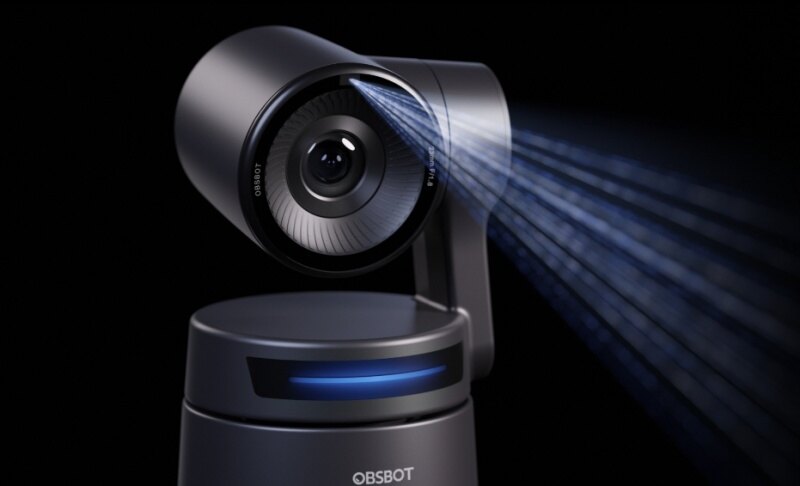
For that kind of beginner creator workflow, the OBSBOT Tail Air is a more natural video companion. It is not a DSLR replacement for still photography; it is an AI-powered PTZ streaming camera built for hands-free framing and live video capture.
Why it fits beginner creators:
- AI Auto Tracking: Keeps you framed while recording lessons, demos, or livestreams.
- 4K 30fps video: Delivers sharp footage for online content and streaming.
- PTZ control: Lets the camera pan, tilt, and follow movement without a camera operator.
- Flexible connections: Supports Micro HDMI, USB-C, Wi-Fi, RTMP, RTSP, and optional NDI workflows.
- Portable setup: Works well for small studios, classrooms, product tables, and travel creator kits.
Limitation: It is built for video and streaming, not DSLR-style still photography.
How to Choose a Beginner DSLR Camera
1. Choose by your main subject first
Your subject decides the camera. For family, travel, and everyday photos, a basic APS-C DSLR can be enough. For sports, pets, and wildlife, prioritize autofocus points, burst speed, and lens reach. For portraits or low-light work, sensor size and lens choice matter more than having the newest body.
2. Pick APS-C unless you already know you need full-frame
APS-C DSLRs are usually easier for beginners because the bodies and lenses are smaller and less expensive. Full-frame cameras make sense if you care about portraits, low-light work, events, or long-term lens investment, but the total system cost rises quickly.
3. Treat autofocus as a practical feature, not a spec sheet number
A simple 9-point autofocus system can work for still subjects, but it gives you less help with motion. If you want to photograph sports, kids running, pets, birds, or school events, a camera like the Nikon D7500 gives you more room to grow.
4. Be honest about video needs
The Canon EOS Rebel T7 and Pentax KF are better for still photography than video. The Nikon D7500 and Nikon D780 support 4K, but even they do not feel as modern for creator video as many mirrorless cameras. If video is your main goal, compare DSLR options with mirrorless and hands-free creator cameras before deciding.
5. Leave room in the budget for lenses
A DSLR body is only the starting point. A kit lens is useful for learning, but portraits, wildlife, sports, and low-light photography often need a second lens. Plan for an SD card, spare battery, camera bag, and lens cleaning kit as well.
6. If buying used, inspect the basics carefully
Used DSLRs can be excellent learning tools, especially when the price is right. Before buying, check shutter count, sensor condition, autofocus behavior, battery health, charger, lens glass, return policy, and whether the camera includes the accessories you actually need.
Should Beginners Still Buy a DSLR?
Yes, in the right situation. A DSLR still makes sense if you want an optical viewfinder, a larger grip, strong battery life, physical controls, and access to a broad lens ecosystem. It is also a good way to learn the fundamentals because the shooting experience feels slower and more intentional than a phone.
The main tradeoff is future direction. Most new camera innovation is now happening in mirrorless systems, especially autofocus, compact body design, and video features. If your goal is photography-first learning, a DSLR can still be satisfying. If your goal is vlogging, YouTube, livestreaming, or everyday hybrid content, mirrorless or dedicated video cameras may fit better.
FAQs About the Best DSLR Cameras for Beginners
What is the best basic DSLR camera for beginners?
The Canon EOS Rebel T7 is a practical basic DSLR for beginners who want to learn still photography at a lower price. It is simple and approachable, but its autofocus, burst speed, and video features are limited by modern standards.
Is it still worth buying a DSLR?
Yes, a DSLR can still be worth buying if your priority is photography fundamentals, long battery life, optical viewfinder shooting, and affordable lens options. If you want the newest autofocus or creator-focused video tools, mirrorless cameras are usually stronger.
Is Nikon or Canon better for beginners?
Canon is often easier for low-cost DSLR basics because the Rebel line is simple and familiar. Nikon is stronger if you want a more capable DSLR for action, wildlife, or full-frame growth, especially with models like the D7500 or D780.
What is a good used DSLR camera for beginners?
A good used beginner DSLR should come from a reputable seller and include a clear condition rating, reasonable shutter count, working battery, charger, and clean lens. Canon Rebel and Nikon D3000/D5000-series bodies can be good used choices, but condition matters more than the model name.
Should a beginner buy a DSLR or mirrorless camera?
Choose a DSLR if you want a traditional camera feel, optical viewfinder, and strong battery life. Choose mirrorless if you want newer autofocus, lighter bodies, stronger video features, and a more future-facing camera system.
Conclusion
The best DSLR camera for beginner photography depends on what you want to shoot and how much you plan to grow. Choose the Canon EOS Rebel T7 for low-cost basics, the Pentax KF for outdoor still photography, the Nikon D7500 for action and wildlife, or the Nikon D780 for a full-frame learning path. A DSLR is still a good teacher, but the right choice should match your subject, budget, and long-term camera goals.