6 Best Low Light Compact Cameras in 2026
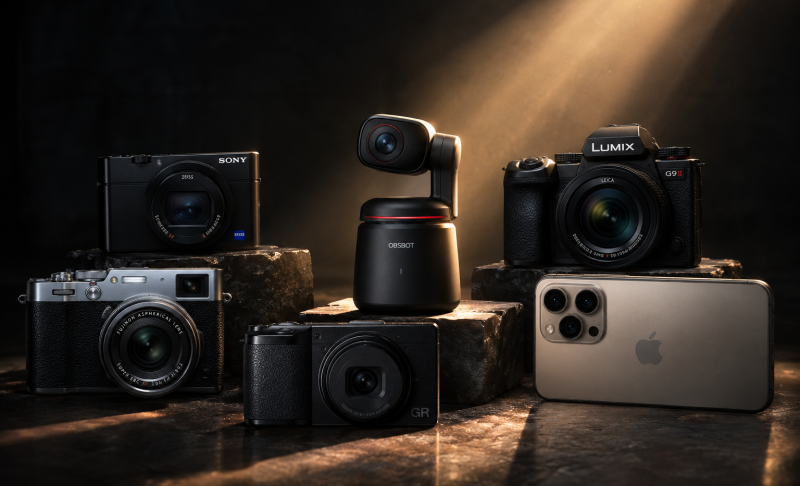
Shooting videos on the go can be difficult, and you might come across lighting issues as well. This is because dark scenes come with soft details, shaky footage, and noise. This is why the best low light compact camera helps you shoot clear videos everywhere without making your setup too huge or difficult to handle. This article includes the 6 best options, so you can find a camera with a low light point and shoot for better portability.
Part 1: 6 Best Low Light Compact Cameras
Low-light video depends on more than resolution. The best low light camera needs to gather enough light while keeping motion smooth without compromising on easy setup.
Quick Comparison Table
| Product | Resolution & FPS | Sensor | Aperture | Image Stabilization | Price |
|---|---|---|---|---|---|
| Sony RX100 VII | 4K@30fps 1080p@120fps |
1.0-type Exmor RS CMOS | f/2.8–f/4.5 | Optical SteadyShot Optical + electronic compensation for video |
$1,499.99 |
| Fujifilm X100VI | 6.2K@30fps 4K@60fps 1080p@240fps |
APS-C X-Trans CMOS 5 HR | f/2–f/16 | 5-axis IBIS, up to 6 stops | $1,799.95 |
| OBSBOT Tail Air | 4K@30fps 1080p@60fps |
1/1.8-inch CMOS | f/1.8 | 2-axis gimbal with 6-axis gyroscope | $599 |
| Panasonic Lumix G9 II | 5.8K@30fps 5.7K@60fps C4K/4K@120fps |
17.3 × 13.0mm Live MOS, Micro Four Thirds | Lens-dependent | 5-axis 8-stop B.I.S. 7.5-stop Dual I.S. 2 |
$1,899.99 |
| Ricoh GR IV | 1080p@60fps | 23.3 × 15.5mm APS-C CMOS | f/2.8–f/16 | 5-axis sensor-shift stabilization | $2,196.95 |
| Apple iPhone 18 Pro Max | 4K@120fps 1080p@120fps |
48MP fusion sensor | f/1.48, f/1.8, f/2.8, f/4.0 (Main) | 2nd-gen sensor-shift OIS on Main 3D sensor-shift OIS on Telephoto |
From $1,299 |
1. Best Pocket Zoom: Sony RX100 VII
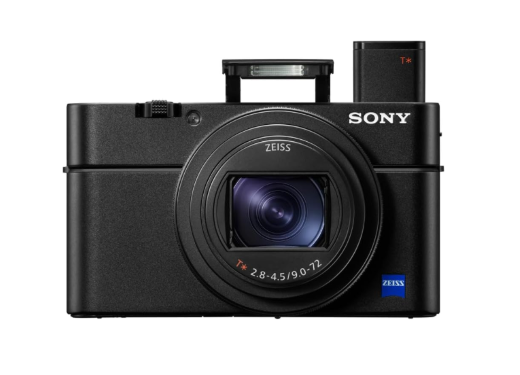
When evening light fades, dependable focusing and steady handheld control matter more than flashy extras in the best low light point and shoot camera. Built for fast everyday shooting, the Sony RX100 VII handles dim streets, indoor events, and travel scenes with ISO 100–12800 sensitivity and enhanced stabilization, helping reduce blur while keeping spontaneous low-light moments easier to capture.
Key Features:
- 24–200mm zoom frames both nearby and distant subjects
- 0.02-second autofocus reacts quickly to sudden movement
- Real-time Tracking follows moving subjects across the frame
- 20fps blackout-free shooting helps preserve decisive action moments
- Tilting touchscreen simplifies framing from difficult shooting angles
- External microphone input delivers cleaner audio for videos
2. Best Premium Compact for Low-Light Video: Fujifilm X100VI
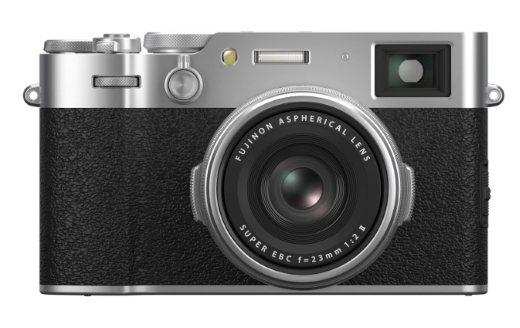
The Fujifilm X100VI suits photographers who work after sunset, offering up to 6.0 stops of in-body stabilization with reliable low-contrast autofocus and native ISO 125 sensitivity. This is the best small camera for low light, which has tactile dial controls. They make exposure changes quick, helping street and travel shooters react when lighting shifts from bright storefronts to darker scenes.
Key Features:
- Hybrid viewfinder switches optical and electronic framing instantly
- 2-way tilting LCD simplifies high and low angles
- 20 Film Simulations create distinctive colors in-camera
- Four-stop ND filter extends shutter control in daylight
- Deep-learning subject detection recognizes diverse moving subjects
- Frame.io integration sends captures directly to cloud workflows
3. Best Budget Option: OBSBOT Tail Air Streaming Camera
Made for creators recording concerts, worship services, interviews, and other dimly lit productions, this PTZ camera reduces the need for constant manual framing and is also the best cheap camera for low light. OBSBOT Tail Air is especially useful when one person must manage an entire stream, keeping production practical while leaving more attention for the scene itself after dark.
Key Features:
- 2μm Pixels: Enlarged 2μm pixels gather more light, helping produce brighter footage with finer detail and less visible noise in challenging dim environments.
- Dual Recording Modes: Records at 4K@30fps or 1080p@60fps, giving creators a choice between greater image detail and smoother motion during indoor or nighttime streams.
- ToF Autofocus: Uses infrared light to measure subject distance, improving focusing speed and accuracy when normal contrast-based focusing may struggle in darker scenes.
- Compact Design: Marketed as OBSBOT’s tiniest 4K PTZ camera, its compact body makes it easier to place in tight spaces, small studios, or discreet low-light streaming setups.
- Extended Use: Uses two removable batteries to extend operation beyond seven hours, supporting longer concerts, services, and nighttime productions.
4. Best for Advanced Video: Panasonic Lumix G9 II
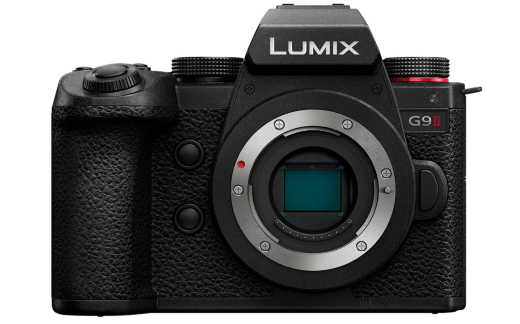
Low-light shooting becomes easier with 8.0-stop B.I.S., helping handheld frames stay sharp when shutter speeds drop. Phase Hybrid AF keeps moving subjects locked, while blackout-free burst shooting supports fast action after dark. Real-Time LUT adds finished color in-camera, making the LUMIX G9II flexible for demanding evening photography and video if you need an ultra-low-light camera.
Key Features:
- 60fps AFC bursts capture split-second action precisely
- Pre-burst shooting records moments before shutter release
- Dual I.S. 2 strengthens telephoto handheld stability further
- Eight-direction joystick speeds direct focus-area selection considerably
- LEICA Monochrome creates deeper black-and-white tonal contrast
- Slow-motion recording reveals fast movement with greater clarity
5. Best Small Camera for Simple Video: Ricoh GR IV
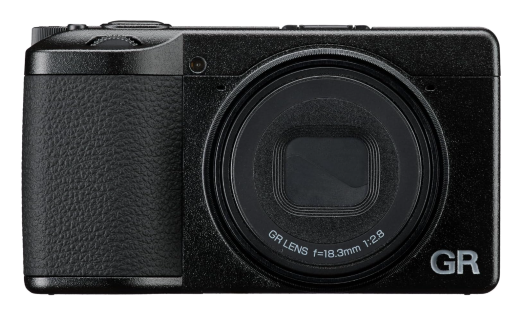
Night photography often demands quick reactions before a scene disappears. With ISO sensitivity reaching 204800 in the Ricoh GR IV and five-axis stabilization correcting up to six steps, it supports steadier handheld shooting in dim streets and indoor spaces. Faster processing and autofocus response also help photographers capture unplanned moments with confidence if you need one of the best cameras for low light point and shoot.
Key Features:
- 28mm-equivalent lens gives natural wide-angle street framing
- 7-element optical construction maintains sharpness across the frame
- Molded aspherical glass corrects aberrations for cleaner edges
- High-refractive low-dispersion elements improve color accuracy and contrast
- UV/IR protection filter improves long-wavelength red response
- New lens barrel shortens startup for snapshots
6. Best Smartphone for Low-Light Video: Apple iPhone 18 Pro Max

Low-light scenes benefit from faster capture, steadier focus, and smarter processing. Automatic low-light adjustments brighten indoor footage while preserving natural-looking detail. The iPhone 18 Pro Max adds smart focus tracking, Night mode, and longer battery endurance if you want such details in a Smartphone instead of a camera. This makes spontaneous evening photos and videos easier to capture without carrying separate camera gear.
Key Features
- Camera Control opens key shooting tools instantly
- 8-times optical-quality zoom extends distant framing flexibility
- Pro controls expose shutter speed and white balance
- Audio Mix separates music from unwanted background noise
- Dual Capture records front and rear views simultaneously
- Center Stage reframes groups without moving the phone
Part 2: How to Choose the Best Low Light Compact Camera?
A camera that looks excellent in daylight may struggle when the room becomes dark. For video, pay close attention to the sensor, aperture, stabilization, autofocus, recording formats, and audio system when you purchase the best inexpensive low light camera.
Sensor Size
Common compact-camera formats include 1/2.3-inch, 1-inch, Micro Four Thirds, and APS-C. In general, APS-C and Micro Four Thirds sensors have more surface area than 1-inch or phone sensors. Imagine taking a photo in a dark café: the larger sensor can usually produce less noise, smoother shadows, and better color at the same ISO setting indoors.
Resolution
A 20MP sensor can sometimes perform better in dim light than a 40MP sensor of the same size because each pixel may be larger. Larger pixels can collect more light and improve signal-to-noise ratio. For everyday use, 20–30MP is often enough for printing and cropping while still giving a good balance between detail, file size, and noise.
Aperture
Lower f-numbers, such as f/1.8, f/2, or f/2.8, let in more light than f/4 or f/5.6. Each full stop doubles or halves the amount of light entering. For example, f/2 lets in twice as much light as f/2.8. At a dim wedding, that extra light can help you use a faster shutter speed and reduce motion blur without raising ISO too much.
Image Stabilization
A system rated for 4–6 stops can let you use much slower shutter speeds than you could normally hold by hand. For example, if 1/60 second is your safe speed, several stops of stabilization may let you shoot near 1/8 or 1/4 second for a still subject. This helps with buildings or night streets.
Autofocus
A camera that can focus at -4 EV, -5 EV, or lower is designed to work in very dark scenes. Phase-detection autofocus is also useful because it can lock onto subjects quickly. Imagine photographing a child blowing out candles: strong low-light AF can find the face before the moment ends. Eye-detection and subject tracking are also helpful for people, pets, and events.
Portability
A pocket camera may weigh around 250–400 grams, while larger bodies can reach 500 grams. Size matters because a camera only helps if you actually carry it. A small body with an APS-C or 1-inch sensor can be a strong compromise. For travel or dinner outings, a shorter zoom may be worth it if the camera fits into a jacket pocket or small bag.
Part 3: FAQs About Best Low Light Compact Camera
1. What are the best cameras for low light video?
Cameras with larger sensors, bright lenses, strong stabilization, and reliable video autofocus usually handle darkness better. From this list, the OBSBOT Tail Air and Panasonic Lumix G9 II offer the strongest dedicated-camera video tools.
2. How to shoot better video in low light?
Open the lens aperture, use a suitable shutter speed, raise ISO only as needed, stabilize the camera, and add available light when possible. Keep high frame rates for scenes that truly need slow motion.
3. What is the best affordable compact camera for low light video?
For budget-focused video, the OBSBOT Tail Air is useful for indoor streaming and fixed setups. For handheld shooting, compare current prices on compact models because discounts can make older premium cameras much more affordable.
4. Is 4K better than 1080p for low-light video?
No, not always. 4K gives more detail, but low-light quality depends more on the sensor, lens, exposure, and processing. A clean 1080p recording can look better than noisy, underexposed 4K footage in darkness.
5. What camera settings are best for low-light video?
For natural motion, start near 1/50 second at 24p or 25p, open the aperture, then raise ISO as required. Use manual white balance when possible and turn stabilization on for handheld recording.
Conclusion
Picking the best low light compact camera for video depends on the kind of clips you create. A travel vlogger may prefer a pocket model with zoom, while a creator working indoors may care more about sound connections, subject tracking, or longer recording options. The 6 choices here serve very different jobs, from livestreaming and handheld filmmaking to quick mobile content. Before spending money, match the camera to your usual locations, movement, editing plans, and gear bag. The right choice should make nighttime and indoor recording simpler, steadier, and easier to manage.