A long zoom camera can bring a bird, athlete, aircraft, or distant landscape close without requiring a bag full of interchangeable lenses. Most cameras in this guide are bridge cameras, also called superzoom or ultra-zoom cameras. They combine a fixed lens, a substantial handgrip, and a zoom range that can move from wide-angle scenes to distant subjects in seconds.
However, the camera with the biggest zoom number is not automatically the best. A 600mm camera with a larger sensor and faster autofocus may deliver more usable wildlife images than a 3000mm camera in poor light. Weight, stabilization, burst speed, video features, price, and current availability all matter.
This guide compares seven long zoom cameras across different budgets and shooting needs. Models that are mainly available used or as remaining stock are identified separately.
How We Selected These Long Zoom Cameras
These recommendations are based on official specifications, current product positioning, focal-length coverage, sensor size, autofocus, continuous shooting, stabilization, video options, weight, price, and availability.
We did not rank cameras by optical zoom alone. A longer lens is valuable only when the camera can focus reliably, control shake, and produce acceptable image quality at the required distance. We also considered whether each model offers a genuinely different reason to buy it.
Maximum burst rates shown below may use fixed focus or exposure. Continuous autofocus performance can be slower. Prices are approximate US market prices and can change with retailer, condition, region, and stock.
Compare the Seven Long Zoom Cameras
| Camera | 35mm-Equivalent Range | Sensor | Maximum Burst | Weight | Maximum Video | Approx. Price (USD) | Availability |
|---|---|---|---|---|---|---|---|
| Sony RX10 V | 24–600mm | 20.1MP 1-inch | Up to 30 fps | Approx. 1,111g | 4K/60p; cropped 4K/120p | About $2,300 new | New |
| Nikon COOLPIX P1100 | 24–3000mm | 16MP 1/2.3-inch | Up to 7 fps | Approx. 1,410g | 4K/30p | About $1,100 new | New |
| Panasonic LUMIX FZ80D/FZ82D | 20–1200mm | 18.1MP 1/2.3-inch | Up to 10 fps | Approx. 640g | 4K/30p | About $500–$550 new | New |
| Kodak PIXPRO AZ528 | 24–1248mm | 16.35MP 1/2.3-inch | Up to 6 fps | Approx. 508g, body only | 1080p/30 | About $270 new | New |
| Nikon COOLPIX P950 | 24–2000mm | 16MP 1/2.3-inch | Up to 7 fps | Approx. 1,005g | 4K/30p | About $650–$750 used | Used or remaining stock |
| Canon PowerShot SX70 HS | 21–1365mm | 20.3MP 1/2.3-inch | Up to 10 fps | Approx. 608g | 4K/30p | About $500–$900 used | Limited used or remaining stock |
| Panasonic LUMIX FZ1000 II | 25–400mm | 20.1MP 1-inch | Up to 12 fps | Approx. 810g | 4K/30p | About $500–$900 used | Used or regional stock |
Best Long Zoom Cameras Available New
1. Sony RX10 V — The Strongest All-Rounder for Action and Image Quality
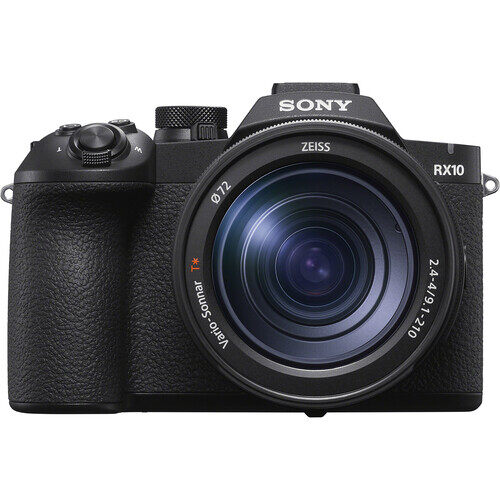
Choose the Sony RX10 V when getting the shot matters more than owning the longest lens. Its 24–600mm equivalent f/2.4–4 lens is shorter than the Nikon P1100's, but the 1-inch sensor, subject-detection autofocus, and fast electronic burst make it much better suited to birds in flight, field sports, and animals that do not remain still.
The relatively bright telephoto aperture also helps the camera maintain faster shutter speeds when the light begins to fade. Video users receive 4K/60p recording and a cropped 4K/120p option for slow motion.
The trade-off is straightforward: this is a premium, heavy bridge camera. It makes sense for someone who wants one capable photo-and-video camera, but not for a casual buyer who only occasionally needs extreme reach.
Advantages:
- Strong balance of image quality, autofocus, speed, and zoom
- Larger 1-inch sensor performs better than typical small-sensor superzooms
- Bright f/2.4–4 lens and capable 4K video options
Limitations:
- Its approximately $2,300 price overlaps with APS-C mirrorless camera and telephoto-lens packages that offer interchangeable lenses and a longer-term upgrade path
- 600mm may be insufficient for very small or exceptionally distant wildlife
- The approximately 1.1kg body is heavy for an all-day travel camera
2. Nikon COOLPIX P1100 — The Camera to Choose When Reach Comes First
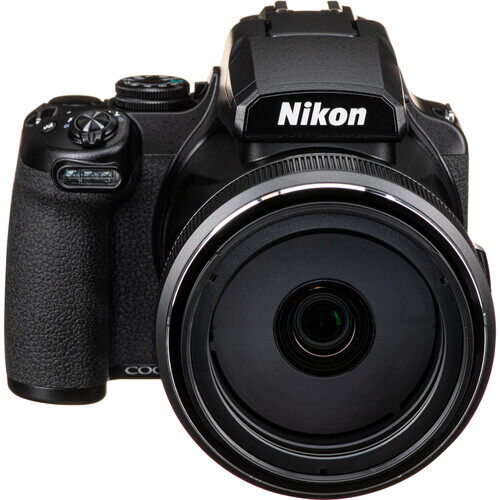
The Nikon COOLPIX P1100 is not a general-purpose travel camera pretending to be compact. It is a specialized reach tool built around a 24–3000mm equivalent 125x optical zoom.
At the long end, it can frame the moon, aircraft, distant wildlife, or birds that would remain tiny with a conventional telephoto lens. Nikon's optical vibration reduction helps, but it cannot remove subject movement, atmospheric haze, or the difficulty of keeping a small subject inside a 3000mm frame.
The 1/2.3-inch sensor and f/8 maximum aperture at full telephoto mean the P1100 works best in strong daylight. At approximately 1.41kg, it is also the heaviest camera here. A monopod or sturdy tripod is sensible for prolonged use.
Advantages:
- Extraordinary 24–3000mm equivalent range
- Dedicated bird-watching and moon modes
- RAW capture, optical stabilization, and 4K/30p video
Limitations:
- Large and heavy
- Small sensor and slow telephoto aperture limit low-light performance
- Maximum zoom requires careful technique and favorable air conditions
3. Panasonic LUMIX FZ80D/FZ82D — A Practical Budget Superzoom
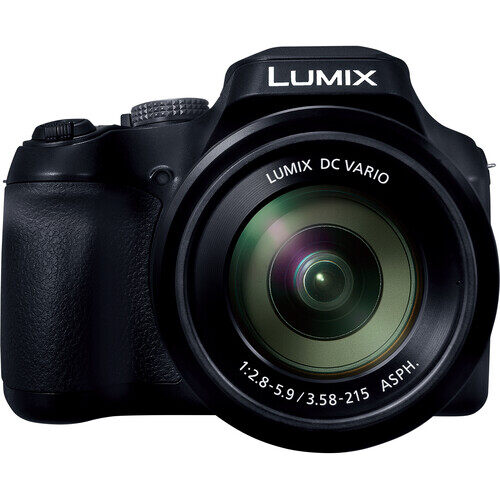
The Panasonic LUMIX FZ80D/FZ82D is the sensible starting point for someone who wants a new long zoom camera without moving into premium pricing.
Its 20–1200mm equivalent lens is unusually wide at the short end, making it useful for landscapes, buildings, groups, and travel scenes before zooming in for zoo animals, outdoor sports, or distant details. The electronic viewfinder is valuable in bright sunlight, while Power O.I.S. helps steady the frame.
The small sensor is the compromise. Images are most convincing in daylight, and aggressive noise reduction can remove fine detail at higher ISO settings. The 4K mode also uses a tighter field of view than still photography, so do not expect the full 20mm perspective when recording 4K.
Advantages:
- Very useful 20–1200mm range
- Good value for a new bridge camera
- Electronic viewfinder, optical stabilization, and 4K recording
Limitations:
- Small sensor struggles as light levels fall
- Fixed rear screen
- No Wi-Fi
4. Kodak PIXPRO AZ528 — The Lowest-Cost Route to Serious Reach
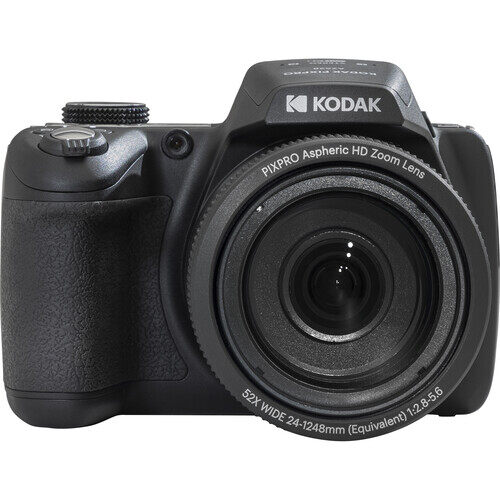
The Kodak PIXPRO AZ528 is for buyers who want a substantial 24–1248mm equivalent lens at the lowest practical entry price.
Its 52x optical zoom, optical stabilization, manual exposure modes, 6 fps burst, Wi-Fi control, and standard 52mm filter thread provide plenty of room for learning. In good light, it can handle family travel, school sports, zoo visits, and larger wildlife without requiring a separate lens system.
Cost-saving decisions are visible. There is no electronic viewfinder, so framing a distant subject on the rear screen can be difficult in direct sunlight. Video stops at 1080p/30, and the autofocus and burst performance are not designed for demanding birds-in-flight work. Buy it for affordable reach, not as a low-cost substitute for the RX10 V.
Advantages:
- Affordable 24–1248mm equivalent zoom
- Optical stabilization and manual exposure control
- Relatively light body with Wi-Fi connectivity
Limitations:
- No electronic viewfinder
- No 4K video
- Modest autofocus and burst performance for fast action
Used or Discontinued Long Zoom Cameras Still Worth Considering
A discontinued camera is not automatically a poor purchase. It can offer excellent value when the condition, battery health, controls, lens, and return policy are satisfactory. The important point is to compare its used price with a currently available model rather than assuming its original retail position still applies.
5. Nikon COOLPIX P950 — A More Manageable Alternative to the P1100
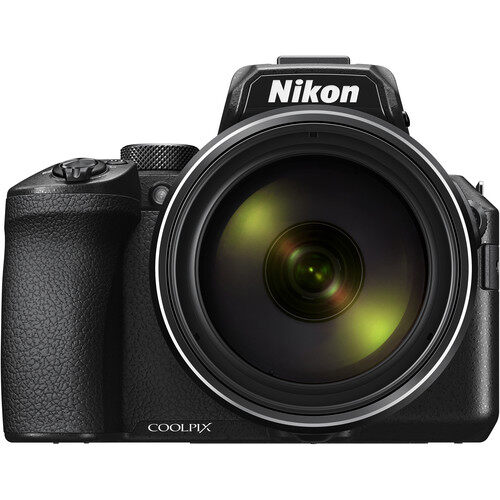
The Nikon COOLPIX P950 sits in a useful middle ground. Its 24–2000mm equivalent lens reaches far beyond most bridge cameras, while its approximately 1,005g body is noticeably easier to carry and control than the P1100.
The P950 supports RAW photography, 4K/30p video, a high-resolution electronic viewfinder, and a vari-angle screen. It remains attractive for birdwatching, aircraft, the moon, and distant landscapes—especially if 3000mm sounds impressive but unnecessarily difficult.
Its contrast-detect autofocus is less dependable for erratic action than a newer premium camera, and the small sensor still prefers daylight. Since availability is inconsistent, its value depends heavily on the price and condition of the individual unit.
Advantages:
- Useful 24–2000mm range in a smaller body than the P1100
- RAW capture, 4K video, and a good electronic viewfinder
- Strong option for birds, aircraft, and the moon
Limitations:
- Usually found used or as remaining stock
- Autofocus is not ideal for unpredictable fast movement
- Image quality falls more quickly in low light
6. Canon PowerShot SX70 HS — A Lightweight Travel-Friendly Superzoom
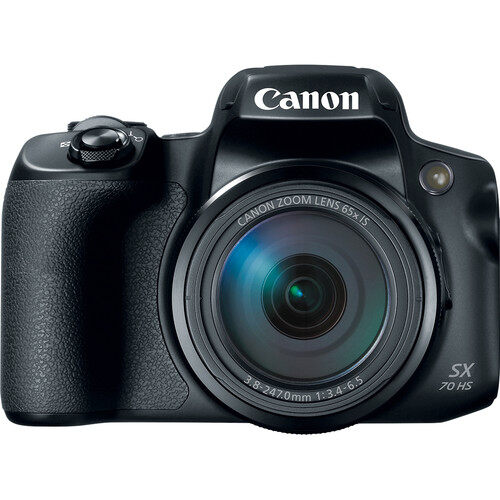
The Canon PowerShot SX70 HS makes more sense when portability and framing flexibility matter more than owning the longest lens.
At approximately 608g, it is much easier to carry on a hike or sightseeing day than the Nikon P1100. The lens starts at a wide 21mm equivalent and reaches 1365mm, so it can cover architecture, landscapes, family photographs, wildlife, and distant travel details without changing equipment. The vari-angle screen also helps when shooting above a crowd or close to the ground.
Its small sensor and relatively slow telephoto aperture are best matched with daylight. Although the camera can reach 10 fps, the rate is lower when continuous autofocus is required, so the headline burst figure does not tell the whole story.
Advantages:
- Wide 21–1365mm equivalent range
- Lightweight and comfortable for travel
- Vari-angle screen, electronic viewfinder, and 4K video
Limitations:
- Low-light image quality is limited
- Continuous-AF shooting is slower than the maximum burst figure
- Limited remaining stock can push second-hand prices unusually high
7. Panasonic LUMIX FZ1000 II — Better Image Quality Without Extreme Reach
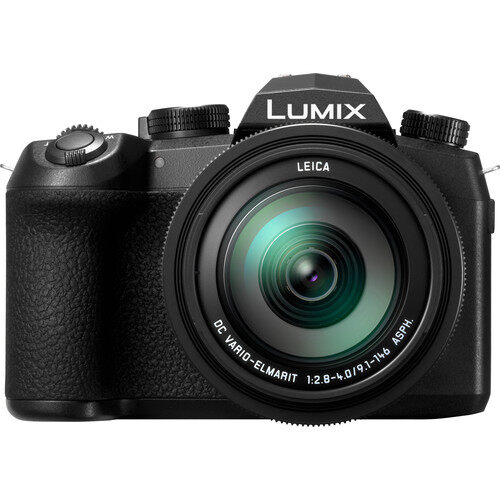
The Panasonic LUMIX FZ1000 II is the alternative for photographers who would rather have a cleaner 400mm image than a softer 1200mm image.
Its 20.1MP 1-inch sensor and 25–400mm equivalent f/2.8–4 lens provide better low-light flexibility, background separation, and overall image quality than most small-sensor superzooms. The 5-axis Hybrid O.I.S.+ system, responsive handling, 4K video, and vari-angle touchscreen make it suitable for travel, larger wildlife, field sports, and hybrid photo-video use.
The obvious limitation is reach. Small birds across a lake may still require substantial cropping. Its 4K mode also applies a tighter crop, making the wide end noticeably narrower during 4K recording.
Advantages:
- Strong 1-inch sensor and bright f/2.8–4 lens
- Good stabilization, handling, and video features
- Better image quality than extreme small-sensor superzooms
Limitations:
- 400mm is short for small or very distant wildlife
- The 4K crop reduces wide-angle coverage
- Heavier than entry-level travel superzooms
Bonus: Use OBSBOT Tail 2 for Fixed-Position Sports, Stage, and Event Filming
When you are filming a speaker from the back of a hall, a performer moving across a stage, or an athlete repeatedly passing through a known area, carrying a bridge camera may not be the most efficient solution.
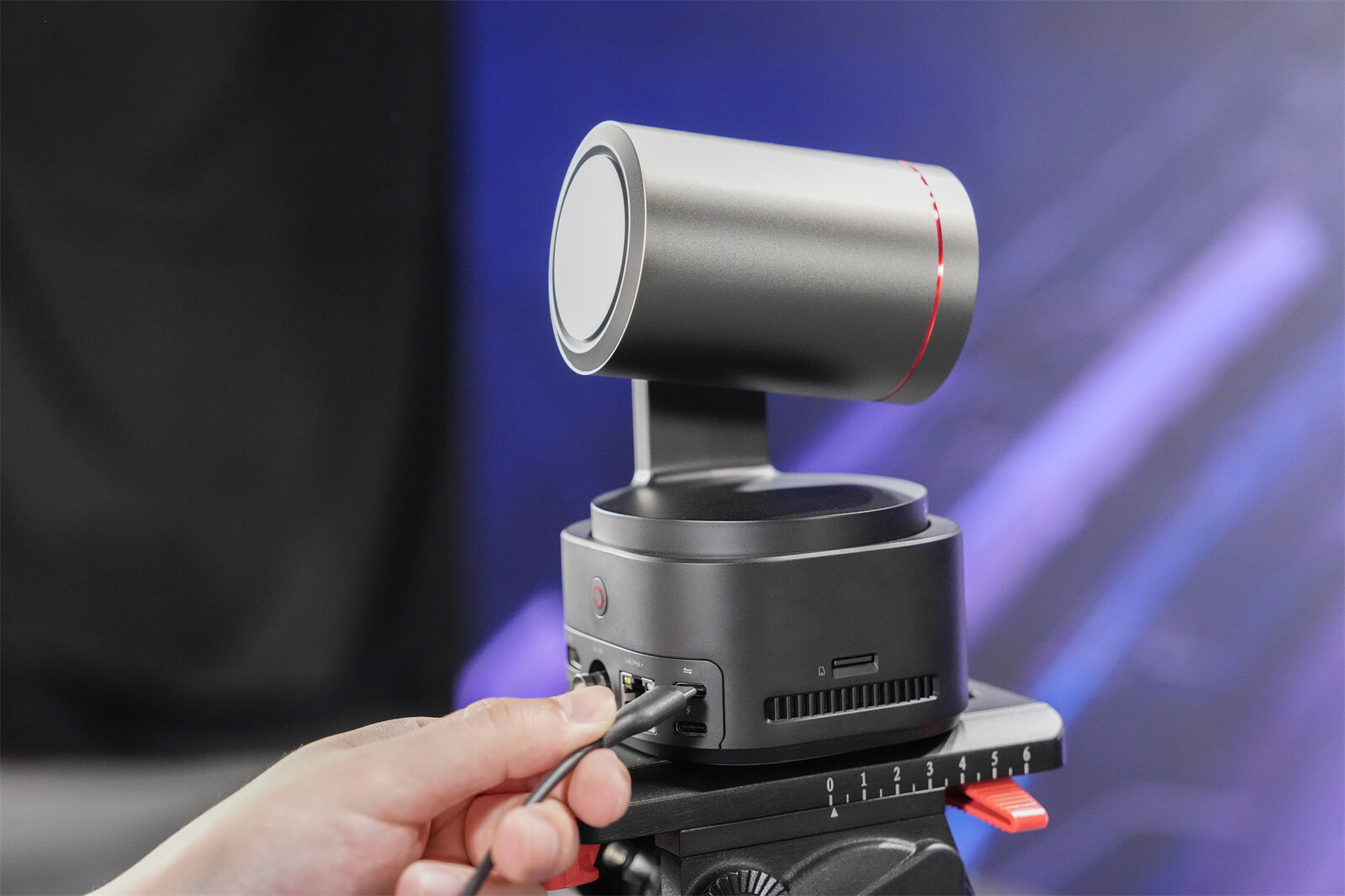
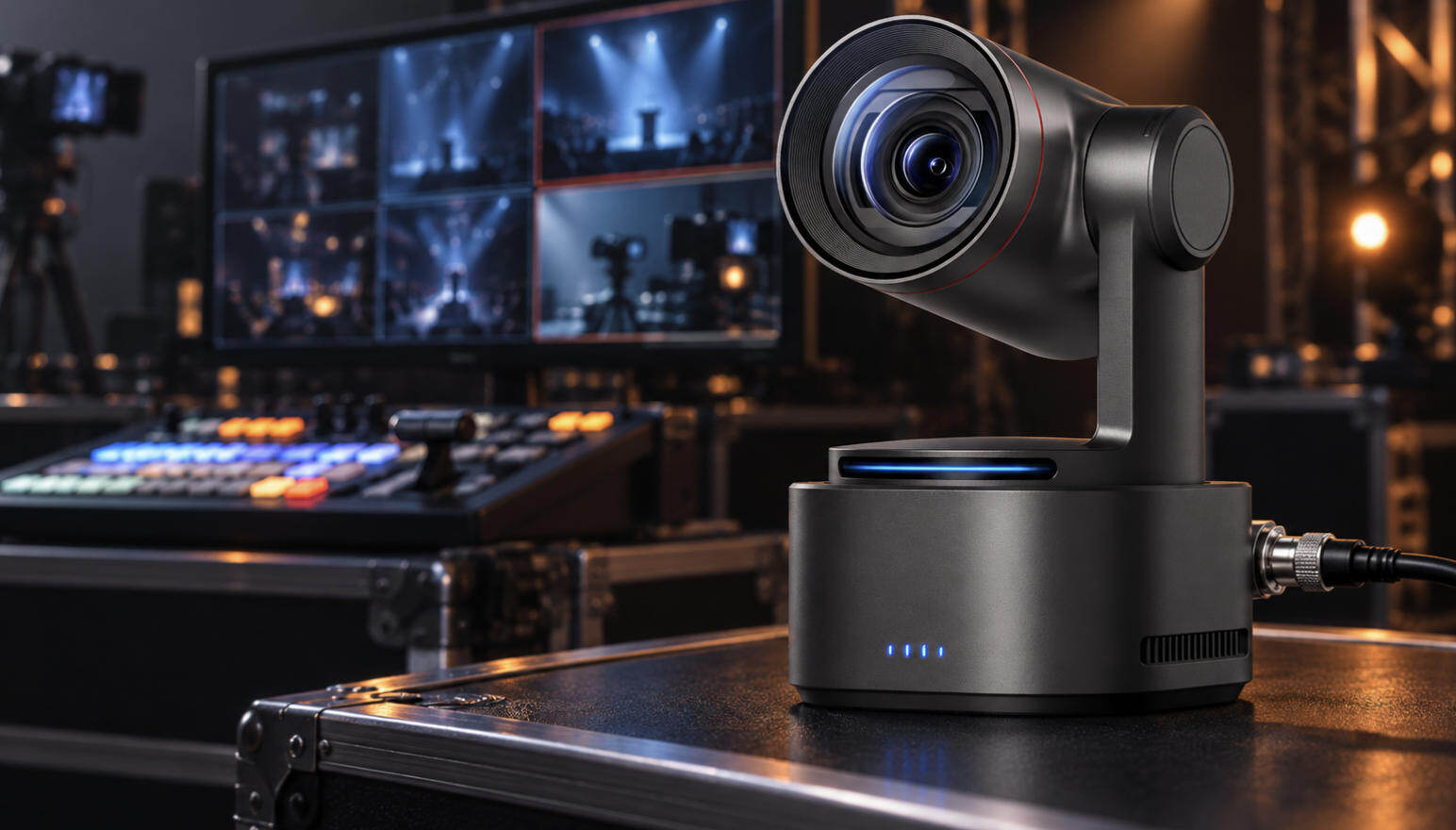
The OBSBOT Tail 2 can remain on a tripod while its AI tracking follows the selected person, animal, or object. Its motorized pan, tilt, zoom, and rotation help a small crew maintain framing while operating another camera or managing the stream. It records up to 4K/60p and supports HDMI, 3G-SDI, USB, Ethernet, and NDI workflows. Its 5x optical zoom is not intended to replace a 1200mm wildlife lens; it is designed for controlled video production where automatic tracking and remote operation matter more than extreme photographic reach.
How to Choose a Long Zoom Camera
Start with the Subject, Not the Largest Zoom Number
A 400–600mm equivalent lens can be enough for larger wildlife, sideline sports, zoo photography, and subjects that allow a reasonably close position.
A range extending to approximately 1000–1400mm provides more flexibility for birds, surfing from shore, motorsports, aircraft, and distant travel details.
Reach beyond 2000mm is more specialized. It can be useful for the moon, small birds at great distances, or aircraft, but it also magnifies camera shake, heat shimmer, haze, and focusing errors. More reach does not guarantee more detail.
Compare Equivalent Focal Lengths, Not Only "x Zoom"
The zoom ratio describes the difference between the wide and telephoto ends. It does not tell you the telephoto reach by itself.
For example, a 60x lens starting at 20mm reaches 1200mm, while a 25x lens starting at 24mm reaches 600mm. The second camera may still produce better images if it has a larger sensor, brighter lens, and stronger autofocus.
Use the 35mm-equivalent range when comparing cameras.
Decide Between Reach and Sensor Size
Most extreme superzooms use a 1/2.3-inch sensor. The small sensor makes a 1200mm, 2000mm, or 3000mm equivalent lens possible in one body, but it also produces more noise and less fine detail in low light.
A 1-inch sensor generally provides cleaner images, better dynamic range, and more control over background blur. The compromise is usually a shorter zoom range and higher price.
Choose a small-sensor superzoom for maximum daylight reach. Choose a 1-inch camera when image quality and changing light matter more than the longest possible focal length.
Check Autofocus and Burst Behavior
For a perched bird or the moon, burst speed is less important than accurate focus and stabilization. For birds in flight, racing, or field sports, subject-detection autofocus and continuous focus between frames become much more important.
Check whether the advertised burst speed maintains continuous autofocus. Some cameras achieve their highest number only with focus and exposure locked on the first frame.
Treat Weight as a Shooting Feature
A heavier camera can be stable and comfortable when used from a fixed position, but it becomes tiring during travel or a long hike.
Before choosing a 1.4kg superzoom, consider whether you will carry a monopod, tripod, spare battery, rain protection, and other equipment. A slightly shorter 600mm or 1200mm model may produce more photographs simply because you are willing to bring it.
Look Beyond the 4K Label
For video, check the available frame rates, crop, autofocus behavior, stabilization, recording limits, microphone input, and display movement.
A camera that records 4K does not necessarily provide a wide 4K field of view or reliable autofocus at maximum zoom. For fast action, 1080p/60 may sometimes be more useful than 4K/30 because it records smoother motion and allows modest slow motion.
How to Get Sharper Results at Full Zoom
Use a Faster Shutter Speed Than You Expect
Optical stabilization reduces camera shake, but it does not freeze a moving subject.
Useful starting points include:
- Perched birds and stationary wildlife: 1/500–1/1000 sec
- Walking animals: around 1/1000 sec
- Birds in flight and field sports: 1/1600–1/2500 sec
- Motorsports or fast aircraft: 1/2000 sec or faster
- The moon on a stable support: approximately 1/125–1/500 sec
Increase ISO when necessary rather than accepting motion blur that cannot be repaired later.
Avoid Maximum Zoom When Conditions Are Poor
Back away slightly from the longest focal length when the subject fits the frame. Lenses can be easier to stabilize and focus before their absolute maximum, while leaving a little space around a moving subject prevents accidental cropping.
On hot days, shooting across water, roads, rooftops, or long stretches of ground can introduce atmospheric shimmer. Moving closer or waiting for cooler air may improve detail more than adding further zoom.
Use Physical Support
A monopod works well for sports and wildlife because it supports weight while allowing movement. A tripod is more suitable for the moon, distant landscapes, or a fixed observation position.
Turn off stabilization only if the camera manufacturer recommends doing so when the camera is locked firmly on a tripod. Some modern stabilization systems can remain active without causing problems.
Find the Subject Before Zooming In
Start at a wider focal length, place the subject in the center of the frame, and then zoom in gradually. At 2000mm or 3000mm, attempting to find a bird after fully extending the lens can waste the entire opportunity.
Zoom-assist functions are particularly useful when a moving subject leaves the frame.
Shoot Short Bursts and Review at Full Size
Use short bursts rather than holding the shutter continuously. A three- to six-frame sequence increases the chance of obtaining one sharp frame without filling the memory card with nearly identical images.
Review focus around the eye or the most important detail, not only the overall image on the rear screen.
Frequently Asked Questions
What is a long zoom camera?
A long zoom camera has a fixed lens covering a broad focal range, usually from wide angle to strong telephoto. Many are bridge cameras, also described as superzoom or ultra-zoom cameras, because they combine compact-camera convenience with DSLR-like handling.
How much zoom do I need for wildlife?
A 400–600mm equivalent lens can handle larger animals and nearby birds. Approximately 1000–1400mm gives more framing flexibility for smaller or more distant subjects. A 2000–3000mm lens is specialized and requires strong light, steady support, and careful focusing.
Is 600mm enough for bird photography?
Yes, particularly for larger birds, feeders, hides, parks, and locations where the photographer can approach safely. Small birds at long distances may need more reach, but autofocus, sensor quality, and fieldcraft can matter more than another few hundred millimeters.
Are long zoom cameras good in low light?
Models with a 1-inch sensor and a relatively bright lens perform better in low light. Extreme 1/2.3-inch superzooms are generally strongest outdoors during the day. At full zoom, their smaller maximum aperture may force slower shutter speeds or higher ISO settings.
Is a bridge camera better than a mirrorless camera with a telephoto lens?
A bridge camera is usually cheaper, simpler, and more portable than a mirrorless body paired with several lenses. A mirrorless system generally offers better autofocus, low-light performance, and upgrade options, but a suitable super-telephoto lens can be large and expensive.
Is it worth buying a discontinued bridge camera?
It can be, provided the price reflects its age and condition. Check the lens for haze or damage, test the zoom mechanism and stabilization, inspect the battery compartment, confirm that replacement batteries remain available, and buy from a seller with a return policy when possible.
Conclusion
The best long zoom camera is the one that gives you enough reach without making focus, stability, image quality, or portability unmanageable. The Sony RX10 V offers the strongest all-round performance, while the Nikon P1100 provides unmatched reach and the Panasonic FZ80D delivers strong value. Used models can still be worthwhile, but their condition and price matter as much as their original specifications.