7 Best Small Venue Event Cameras in 2026
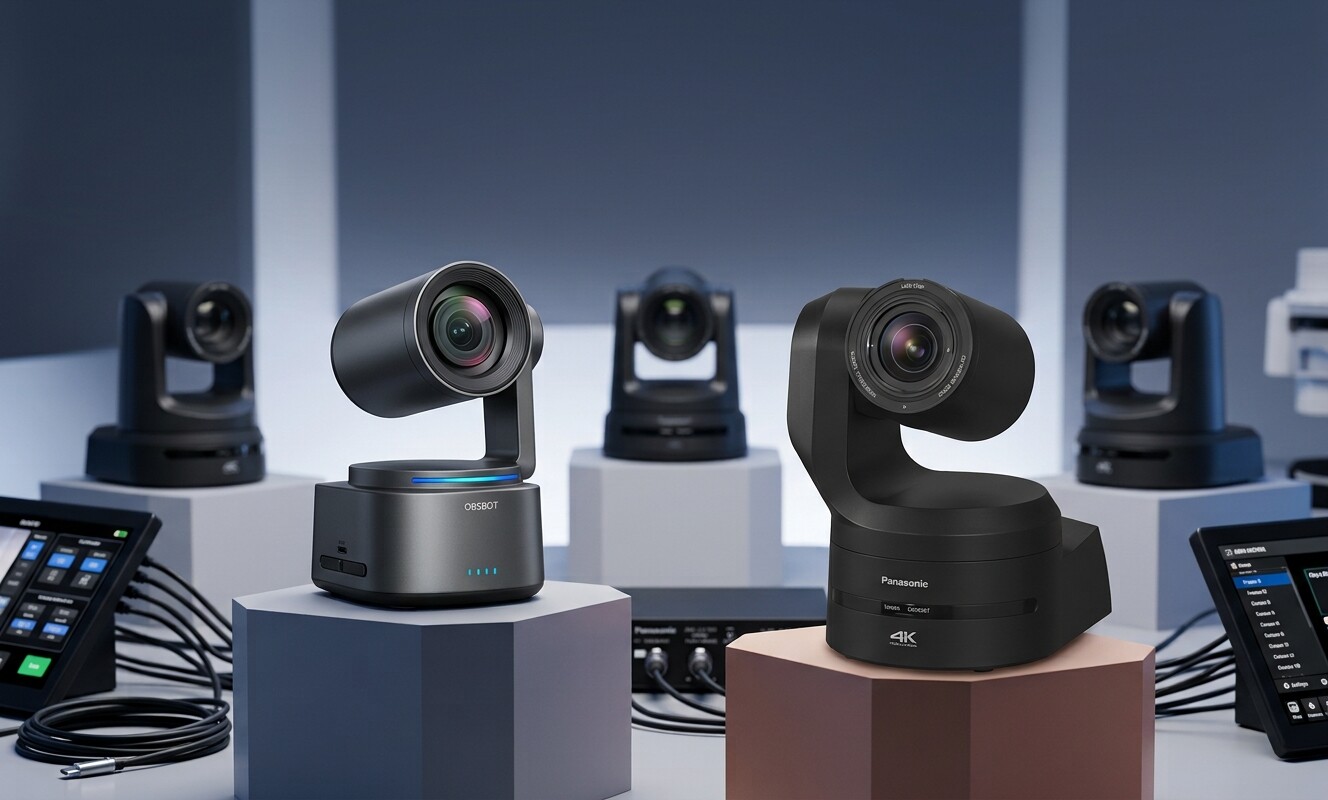
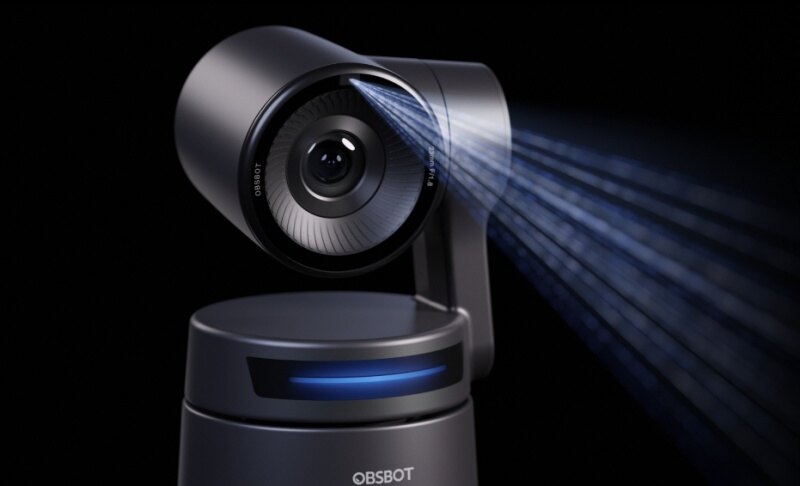
The best small venue event camera for most people is the OBSBOT Tail Air. It's a compact 4K PTZ camera with AI tracking, so it records or streams on its own, fits tight rooms, and needs no camera operator. If you also shoot stills or want the cleanest image in dark rooms, a full-frame mirrorless camera is the better choice.
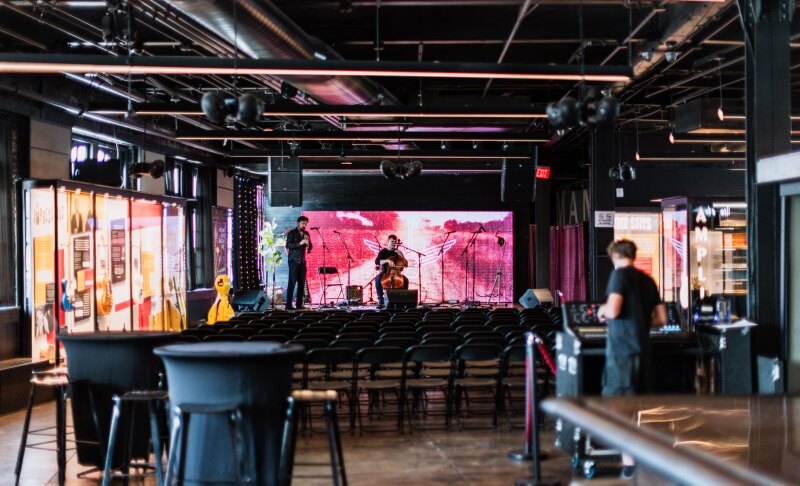
This list covers the best cameras for event content at clubs, bars, studios, and community halls, where light is dim, space is tight, and crews are small. Each pick was judged on low-light performance, zoom reach in small rooms, outputs, ease of setup, and value.
Part 1: Best Small Venue Event Cameras at a Glance
| Camera | Resolution | Low Light Performance | Key Outputs | AI Features | Approx. Price |
|---|---|---|---|---|---|
| OBSBOT Tail Air | 4K30 / 1080p60 | 1/1.8" CMOS, f/1.8 lens | USB-C, HDMI, NDI|HX3 (licence) | AI tracking (people, pets, objects), gesture control, AI Director Grid | $598 |
| Panasonic AW-UE50 | 4K30 | 1/2.5" MOS, f/1.8–4.0, 3 lx min. illumination (42 dB), 0–36 dB gain | HDMI, 3G-SDI, USB-C, IP/NDI|HX2, PoE+ | Auto tracking via optional AW-SF100/SF200 software | $3,299 |
| HuddleCamHD 3X | 1080p30 | 1/2.7" CMOS, ~0.1 lux rated min. illumination | USB (UVC) | None (IR remote and presets only) | $299 - $506.99 |
| Sony A7 IV | 4K60 (cropped) / 4K30 | Full-frame 33MP, ISO 100–51,200 (expandable to 204,800) | HDMI, USB-C | AI subject recognition AF (human, animal, bird) with real-time tracking | $1,999.99 (body only) |
| Canon CR-N300 | 4K30 / 1080p60 | 1/2.3" CMOS, f/1.8–2.8, ~1.5 lux min. illumination, 0–36 dB gain | HDMI, 3G-SDI, USB-C, IP/NDI|HX, PoE+ | Face AF, auto tracking via RA-AT001 app (Lite free, full version paid) | $2,999 |
| Marshall CV380-CS | 4K30 (4096×2160) | 1/2.5" Sony CMOS, 1.62 µm pixels, 0.2 lux color / 0.02 lux B/W | 6G-SDI, HDMI 1.4 | None (remote adjust via RS-485/VISCA) | $1,429.95 |
| Sony RX100 VII | 4K30 | 1.0-inch 20.1MP, f/2.8–4.5, ISO 100–12,800 (expandable to 25,600) | Micro-HDMI, USB | Real-time Tracking and Eye AF (human, animal) | $1,499.99 |
Prices are approximate and change often. Lux ratings come from manufacturers and aren't tested under identical conditions, so use them to compare roughly.
Part 2: The Best Small Venue Event Cameras
1. Best Overall- OBSBOT Tail Air Streaming Camera
Small venues rarely have a spare camera operator. The Tail Air solves that: it locks onto a singer or speaker and keeps them framed while you handle sound or doors. It weighs under 350 g, so it sits on a mic stand, shelf, or small tripod without taking up floor space. A single remote can also control up to three OBSBOT units, which makes a multi-camera live stream setup realistic for one person. It works well as a camera for live music streaming and as a PTZ camera for live streaming at talks and workshops.
- Strength in the room: The bright lens and larger-than-webcam sensor cope with club lighting, and infrared tracking helps it hold a subject when the stage goes dark.
- Trade-off: Zoom is digital only, so place it close to or facing the stage.
- Best for: One-person live-music bars, open-mic nights, workshop studios, and hybrid talks.
2. Best for Installed Venues - Panasonic AW-UE50
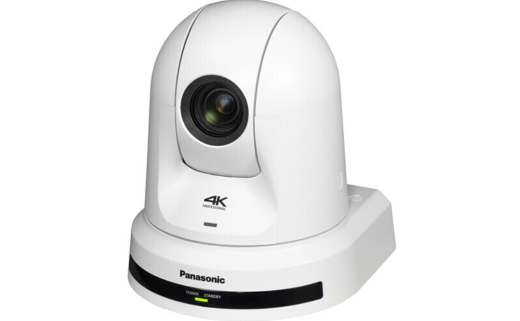
This is a 4K PTZ camera for events that you mount once and forget. Direct-drive motors keep pan and tilt quiet, which matters during acoustic sets and spoken-word nights. PoE+ lets one cable carry power and video, so there are no trailing cables for guests to trip on. A 24x zoom lets it sit on the back wall of a small theatre and still fill the frame.
- Strength in the room: Reliable, quiet, and easy to control remotely for venues that stream every week.
- Trade-off: A 3 lx rating means it wants decent stage light, and the price is hard to justify for occasional events.
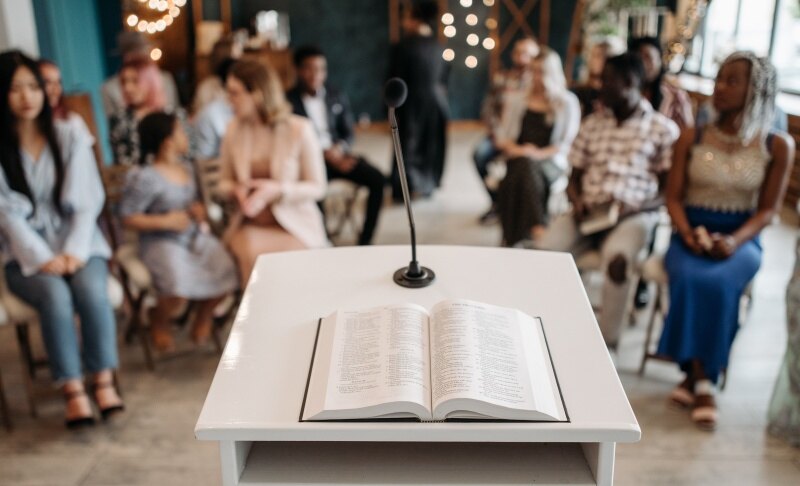
- Best for: Venues with a permanent install and weekly streams, such as arts centres, small theatres, and worship spaces.
3. Best Budget PTZ Camera - HuddleCamHD 3X
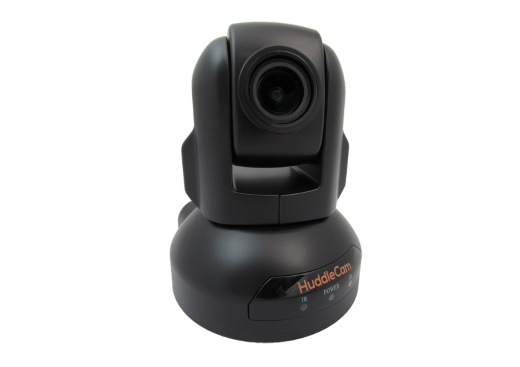
For a small, well-lit room, this is the best budget PTZ camera to start with. Plug it into a laptop over USB and it works as a webcam, with presets you switch using the included IR remote. That's enough to record a workshop, book reading, or panel without learning a full streaming rig.
- Strength in the room: Setup takes minutes and needs no capture card.
- Trade-off: It loses detail fast when the lights drop, so skip it for dim club stages.
- Best for: Well-lit classes, workshops, readings, and meeting-room talks.
4. Best for Low Light and Event Photography - Sony A7 IV
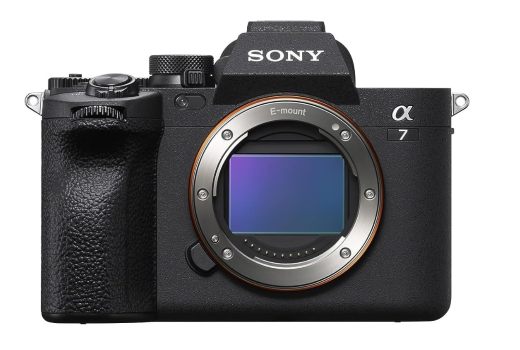
When the room is genuinely dark, sensor size wins. A full-frame body with a fast 35mm or 50mm prime (f/1.4–f/1.8) keeps faces clean at high ISO where smaller cameras turn muddy. It's a strong camera for event photography and one of the best cameras for event photography and video combined, since the same body shoots stills for the promo and 4K for the recap. For anyone needing the best digital camera for concerts, this class of camera is the benchmark.
- Strength in the room: The cleanest image in poor light, plus swappable lenses for tight rooms.
- Trade-off: It needs an operator, streaming means an HDMI capture card, and you should test recording limits on long sets.
- Best for: Dark jazz clubs, indie rock bars, and album launches where an operator is on hand.
5. Best Image Quality Among Installed PTZs - Canon CR-N300
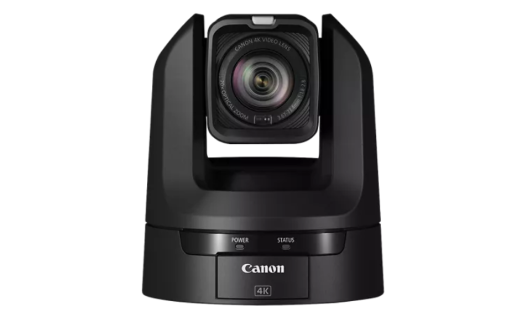
In a longer room, you can't always put the camera near the stage. The CR-N300's 20x zoom lets it sit at the back of a comedy club or lecture room and still deliver a tight shot. Canon's colour handling suits mixed stage lighting, and a free tracking app can follow a presenter automatically.
- Strength in the room: Natural skin tones under coloured lights, and a long reach from the back wall.
- Trade-off: A small sensor and a 1.5 lux rating mean it still needs proper stage light.
- Best for: Longer rooms such as comedy clubs, galleries, and lecture rooms shot from the back.
6. Best Compact Camera for Extra Angles - Marshall CV380-CS
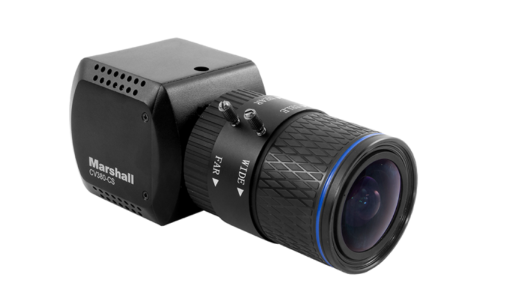
A small box camera is easy to hide where a bigger one won't fit: beside a drum kit, on a lectern, or at the lip of a stage. Adding one to a multi-camera live stream setup gives you cutaway close-ups that make a stream feel produced.
- Strength in the room: Its night mode (0.02 lux in B/W) is useful for very dark corners.
- Trade-off: It has no motor or zoom of its own, so you need a switcher and a CS-mount lens.
- Best for: Second and third angles on a drum kit, lectern, or stage lip in clubs and bars.
7. Best Compact Camera for Concerts - Sony RX100 VII
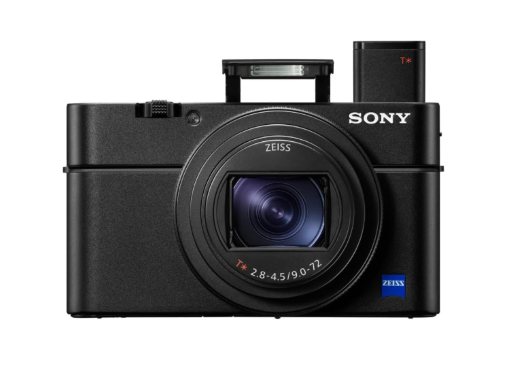
Some small venues ban large lenses or "professional" cameras at the door. A pocketable compact camera for concerts slips past most house rules, and its 24–200mm zoom lets you frame from the crowd without moving.
- Strength in the room: Nobody notices it, so you get candid shots at the front of a packed floor.
- Trade-off: The lens narrows to f/4.5 when zoomed, so use the wider end in dark rooms. It isn't built for live streaming.
- Best for: Gigs with strict camera policies, plus press and fan photography.
Part 3: What to Look for in a Small Venue Event Camera
A good low light event camera matters more than raw resolution. Use these checks to choose between the picks above.
- Sensor size and aperture: Bigger sensors and wider apertures gather more light. Full-frame beats 1-inch, which beats the small sensors in most PTZ cameras.
- Lux ratings: Lower is better, but compare cameras only when the test conditions are similar.
- Zoom vs. room depth: Use wide angle for tight rooms. For cameras at the back, choose optical zoom over digital.
- Operator or no operator: With no crew, choose an AI tracking camera. With one, choose a mirrorless body.
- Outputs: USB works for a laptop, HDMI or SDI for a switcher, and an NDI PTZ camera for networked rooms.
- Audio: Take a feed from the mixer. Camera microphones struggle with loud rooms.
One wide camera covers most small rooms. Add a second close-up angle for bands or panels, and a third only if someone is switching.
Part 4: How to Set Up a Small Venue Event Camera
Follow these five steps for a reliable recording or stream:
- Position the camera. Center it, slightly raised, at the back or side of the room, out of audience sightlines.
- Lock your exposure. Set exposure and white balance manually so changing stage lights don't make the image drift. Avoid pointing at bright LED screens.
- Connect audio. Take a line feed from the sound desk and check for delay against the picture.
- Connect and stream. Camera → capture card, switcher, or network → streaming software → platform. Use a wired internet connection when you can.
- Record a backup. Always record locally while streaming.
Quick tip for dim rooms: if you can, ask for basic front lighting on the performer or speaker. Even a little light improves the picture more than any camera upgrade.
Pre-event checklist:
- Power and spare batteries or cards
- A short test recording or stream
- Saved camera presets
- Venue photo and recording rules checked
For a live streaming camera for small venues, run a short private test stream before doors open.
Part 5: FAQs About Small Venue Event Camera
1. What is the best camera for a small venue event?
The OBSBOT Tail Air is the best choice for most small venues because it combines 4K, AI tracking, and a low price. If you need the cleanest low-light image or want stills too, choose a full-frame mirrorless camera like the Sony A7 IV.
2. Is a PTZ camera better than a regular camera for small venues?
Yes, for streaming and one-person operation. A PTZ camera can be controlled remotely and covers several angles with presets. A regular camera gives better image quality in the dark but needs an operator.
3. What is the best small venue event camera for low light?
A full-frame mirrorless camera with a fast prime lens, because it has the largest sensor. Among PTZ cameras, the Tail Air's larger 1/1.8" sensor and f/1.8 lens give it an edge over the smaller sensors in most conference-style PTZs.
4. Can I use a smartphone or webcam instead?
Yes, for very small events like workshops. For concerts or dim rooms, a dedicated camera performs much better in low light, zoom, and audio.
5. How many cameras do I need for a small venue?
One wide camera is enough for most small rooms. Two or three angles feel more professional, but only if someone can switch between them or you use a switcher.
6. Do I need permission to record or photograph events in small venues?
Yes. Check the venue, promoter, and performer rules first. Many venues ban flash, restrict professional cameras, or require approval to record.
Conclusion
Choose the OBSBOT Tail Air for hands-free recording and streaming, and step up to a full-frame mirrorless camera when low-light quality and photos matter most. The right small venue event camera depends on your room's depth, your lighting, and how many people run the event.
For a hybrid event camera that records and streams without an operator, the Tail Air is the simplest place to start. Venues with a permanent install and a bigger budget can step up to the Panasonic AW-UE50 or Canon CR-N300. For concert photography, pair a mirrorless body with a fast prime, or carry a compact like the RX100 VII when house rules are strict. Whichever you choose, test it in the actual venue before your first event.