What Is Video Production? Meaning, Types, and Examples

If you are planning a YouTube video, product demo, online class, livestream, or business video, you will often hear the phrase video production. The term sounds broad, but the idea is simple: it describes all the work needed to make a video ready for people to watch.
This guide explains video production in plain language, with simple examples, so you can understand what the term means before moving into a full production workflow.
What Is Video Production?
Video production is the process of creating a finished video. It usually includes deciding the message, planning what to record, capturing video and audio, editing the footage, and preparing the final file for publishing.
In simple words, video production means turning an idea into a complete video.
For example, filming a product on a desk is only one task. Writing the talking points, setting up the camera, recording clear audio, editing the clips, adding captions, and exporting the final file are all part of video production.
What Does Video Production Include?
Most video production work includes five basic parts:
| Part | Meaning | Simple Example |
|---|---|---|
| Idea | The reason for making the video. | Product tutorial, brand story, class lesson, or event recap. |
| Planning | Deciding what to say, show, and record. | Script, outline, shot list, or talking points. |
| Recording | Capturing video, audio, screen content, or live action. | Camera footage, voice recording, interview clips, or screen recording. |
| Editing | Organizing the footage into a clear final video. | Cutting clips, adding captions, music, graphics, and transitions. |
| Delivery | Exporting and publishing the video for the right place. | YouTube upload, website video, training file, or social clip. |
You do not always need a full crew. But you do need a clear message, clean visuals, understandable audio, and an output format that fits the platform.
Bonus: OBSBOT Talent 2 All-In-One Multi-Cam Live Streaming Studio
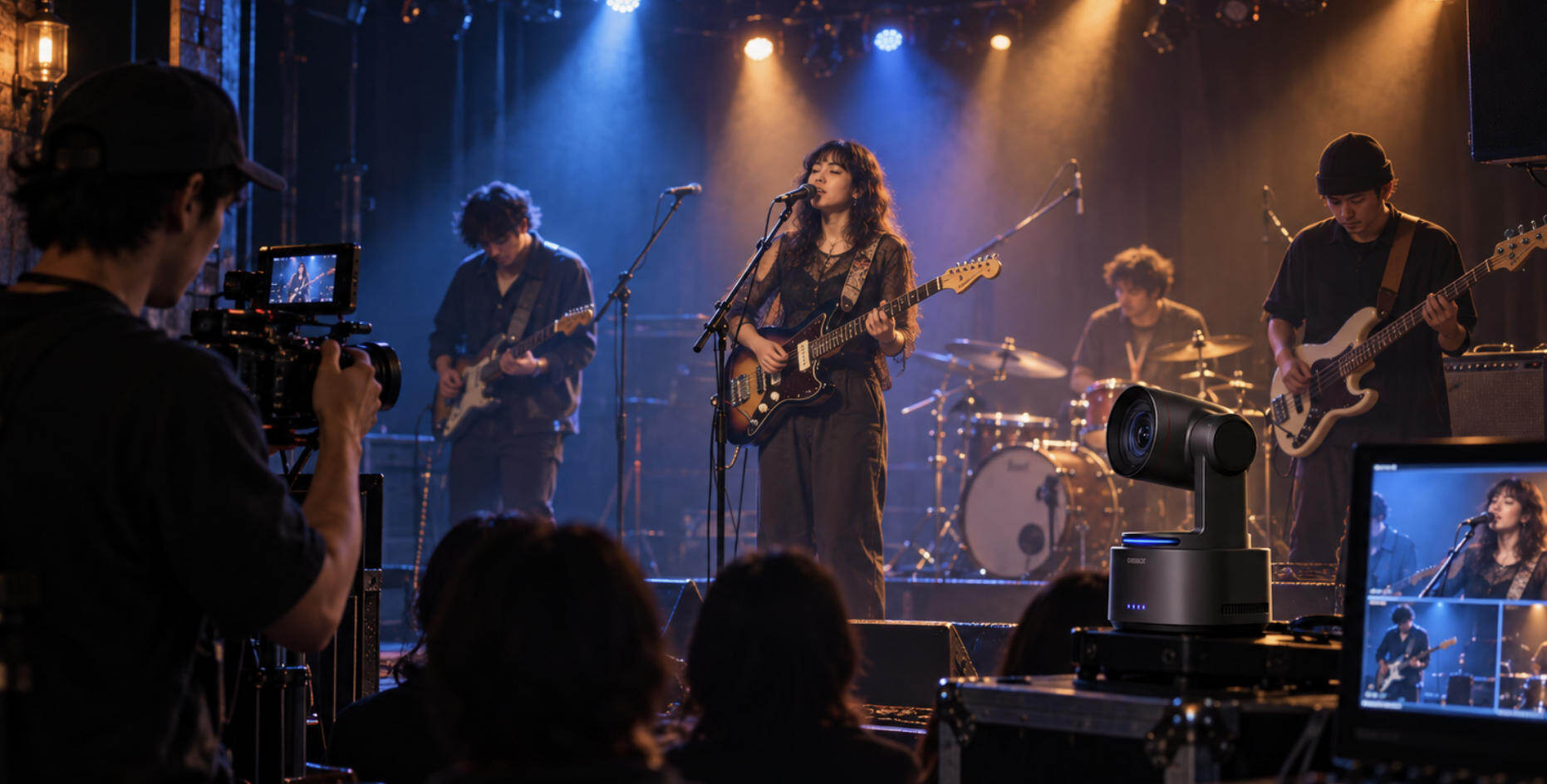
Video production usually means recording first and editing later—but once a project grows into multiple cameras, live delivery, or an event you can't re-shoot, that workflow changes. Instead of juggling a capture card, an encoder, a switcher, and streaming software as separate pieces, the OBSBOT Talent 2 brings them together. It's an all-in-one multi-cam live production studio that combines an encoder, switcher, recorder, and monitor in one compact device, so a small team can capture several angles, switch between them, and deliver the finished video—live or recorded—without building a full computer-based rig.
- All-in-One Production Hub: Encoder, switcher, recorder, and monitor in a single portable device—fewer pieces to set up, cable, and troubleshoot on set.
- Up to 16 HD Video Inputs: 4 HDMI, 2 USB, and up to 10 IP sources over NDI, SRT, RTSP, and RTMP, plus local media playback for multi-source projects.
- Flexible Delivery: Stream to up to 4 platforms at once in true 4K, in both landscape (16:9) and vertical (9:16) formats.
- ISO Recording: Record up to 4 independent 4K sources while streaming, with 128GB of built-in storage and Micro SD expansion—so every angle survives into the edit.
- Built-In Production Tools: Picture-in-picture, chroma key, lower thirds, countdowns, and an audio mixer, with control from the 7" touchscreen, a browser, or a Stream Deck.
Video Production Examples
Video production is used in many different situations. Here are common examples:
- Product videos: Show how a product works, what it looks like, and why someone might need it.
- Marketing videos: Promote a brand, campaign, service, or offer.
- Training videos: Teach employees, customers, students, or community members.
- Social videos: Create short content for TikTok, Instagram Reels, YouTube Shorts, or Facebook.
- Podcast videos: Record interviews, conversations, or solo episodes for YouTube and clips.
- Event videos: Capture conferences, performances, worship services, lectures, or live programs.
- Educational videos: Explain a topic in a way viewers can replay and learn from.
The format changes, but the purpose stays the same: make the message easier to understand through video.
Video Production vs Filming vs Editing
These terms are related, but they do not mean the same thing.
| Term | What It Means | Where It Fits |
|---|---|---|
| Video production | The complete process of making a finished video. | From idea to final delivery. |
| Filming | Recording the footage and audio. | One part of production. |
| Video editing | Putting clips together and polishing the final video. | After filming. |
| Post-production | All finishing work after filming. | Editing, sound, color, graphics, captions, and exports. |
If someone only records footage, that is filming. If someone only cuts clips together, that is editing. Video production covers the full project.
Who Needs Video Production?
Video production is useful whenever a message is easier to explain visually than through text alone.
- Businesses use it for product demos, ads, customer education, training, and sales content.
- Creators use it for YouTube videos, tutorials, reviews, podcasts, livestreams, and social clips.
- Schools use it for lessons, announcements, student projects, and online learning.
- Churches and event teams use it for live services, recordings, recaps, and hybrid events.
- Marketing teams use it to turn campaign ideas into videos people can watch and share.
You may need video production if you want your content to look planned, sound clear, and communicate a specific message.
FAQs About Video Production
What is video production in simple terms?
Video production is the process of creating a finished video. It includes the idea, planning, recording, editing, and final delivery.
Is video production the same as filming?
No. Filming is only the recording part. Video production includes filming, but it also includes planning, editing, and publishing.
Is video production only for businesses?
No. Businesses, creators, schools, churches, event teams, and individuals all use video production for different goals.
Do I need expensive equipment for video production?
Not always. Beginners can start with a simple camera, clear microphone, basic lighting, and editing software. More advanced setups are useful for multi-camera work, live events, or professional client projects.
What makes a video production successful?
A successful video has a clear purpose, understandable audio, watchable visuals, good pacing, and a final format that fits where the video will be published.
Conclusion
Video production is the full process of creating a video, from the first idea to the final export. It includes more than filming. It also involves planning, audio, lighting, editing, and delivery.
If you are just learning the term, remember this simple definition: video production is how a message becomes a finished video. Once you understand that, the next step is learning the actual workflow behind it.