12 Best Podcast Recording Software in 2026 [Free & Paid]
Instead of high-pitched interviews and evergreen soundtracks, a different digital audio fills your ears: podcasts. Podcasts are not just about entertainment anymore, nowadays, they are also about education and branding.
Awesome sound and good equipment can make or break your podcast quality. Here are the 12 best podcast recording software that can help you ace your podcast game (cover free and paid options). So, let's get started.
How to Choose the Best Podcast Recording Software?
Picking the right podcast recording software depends on your budget, your experience level, and your podcast format. Check four things before you choose.
- Recording format. Decide whether you need an audio recorder, a video recorder, or an online studio for remote guests.
- Device support. Check your operating system and whether guests can join in a browser or need an app.
- Editing needs. Look for separate audio tracks if you want to adjust one speaker's volume without changing everyone else's. Separate video tracks let you choose which speaker appears on screen during editing.
- Plan limits. Four 45-minute interviews add up to three hours. Compare that with the plan's allowance for downloading separate tracks. Then check export resolution, watermarks, and where you can publish the finished episode.
12 Best Podcast Recording Software
Quick Comparison
| Software | Best For | Platform | Remote Recording | Video Recording | U.S. Price |
|---|---|---|---|---|---|
| Audacity | Free audio recording and editing | Windows, Mac, Linux | No built-in guest studio | No | Free |
| GarageBand | Solo audio on Mac | Mac, iPhone, iPad | No built-in guest studio | No | Free |
| Riverside | Remote video interviews with files for an editor | Web, Mac, iOS, Android | Desktop browser or mobile app, separate local tracks | Up to 4K on eligible plans | Free and paid plans |
| Descript | Recording and editing from a transcript | Web, Windows, Mac | Desktop browser, separate local tracks | Yes, plan limits apply | Free, paid plans from $16/person/month billed annually |
| Zencastr | Remote recording, editing, and hosting | Web, iOS | Desktop browser, iOS app or Android Chrome, separate local tracks | Up to 4K | Free and enterprise plans |
| OBS Studio | In-person video podcasts | Windows, Mac, Linux | Via a separate call app | Yes | Free |
| Ocenaudio | Quick edits to one audio file | Windows, Mac, Linux | No built-in guest studio | No | Free |
| Ardour | Multitrack audio with custom routing | Windows, Mac, Linux | No built-in guest studio | No | Free source code, paid builds from $1/month |
| Adobe Audition | Detailed audio cleanup | Windows, Mac | No built-in guest studio | No | $22.99/month, annual plan |
| Hindenburg PRO | Interview-led audio storytelling | Windows, Mac | Audio from a separate call app | No | Subscription or one-time license, free trial |
| REAPER | Recurring multitrack audio shows | Windows, Mac, Linux | No built-in guest studio | No | $60 discounted or $225 commercial |
| Logic Pro | Podcasts with original music or sound design | Mac, iPad | No built-in guest studio | No | $199.99 one-time on Mac or subscription |
1. Audacity
Audacity is free, open-source recording and editing software for beginners. It lets you capture audio, add effects, and make cuts. You can work on several tracks at once, so you can lower your intro music without changing the narration. It's a practical choice for a solo audio show on Windows, Mac, or Linux.
Audacity records from one audio device at a time. If you want to record two USB microphones at once, you'll need to combine them into one recording device in your system settings or use an audio interface that presents both mic inputs as one device. For remote guests who need an invite link, use a remote recording studio.
2. GarageBand
GarageBand is a good free choice for a solo audio podcast on Mac, especially if you want to make your own intro. Record your voice on one track, build a short theme with the included loops, and adjust the music under your narration. It's also available on iPhone and iPad. If you and a co-host need to edit the same project on Mac and Windows, a cross-platform editor such as Audacity is a better fit.
3. Riverside
Riverside suits remote video interviews that you'll hand off to an editor. It records each participant on their own device and lets you download separate audio and video files. Your editor can switch between speakers or adjust a guest's audio without changing the host's track. Guests can join from a supported desktop browser. On a phone, they'll need the Riverside iOS or Android app.
The free plan gives you a one-time, two-hour allowance for separate-track downloads. Four weekly 45-minute interviews add up to three hours, so budget for a paid plan if your editor needs individual files for every episode. If you publish through Spotify for Creators, you can also use its Riverside integration to record and import an episode.
4. Descript
Descript is a good fit if you record and edit your own interviews. Descript Rooms saves a separate local file for each participant and brings the recording into the editor. You can find a tangent in the transcript, select the words, and cut that part of the episode. Rooms is also Descript's built-in remote recording option for people familiar with SquadCast.
Rooms is designed for desktop browsers. If guests regularly join from a phone, choose a studio with mobile recording support. Descript's Hobbyist plan includes five hours of Rooms recording per month and watermark-free exports up to 1080p. If you deliver episodes in 4K, factor a higher export tier into your budget.
5. Zencastr
Zencastr works well for a small remote show that wants to record, edit, and host episodes in one place. Guests can join through an invite link without creating an account. Each person's audio and video are recorded locally, so you can edit the tracks in Zencastr or download them for an editor.
The free Vibecastr plan supports six people total, including the host, and lists recording up to 4K with compatible equipment. That makes it an option for a host and up to five panelists. If you regularly invite more people, choose a studio with a higher participant limit. For phone guests, send the right instructions before the session. Zencastr uses its app on iPhone and iPad and Chrome on Android.
6. OBS Studio
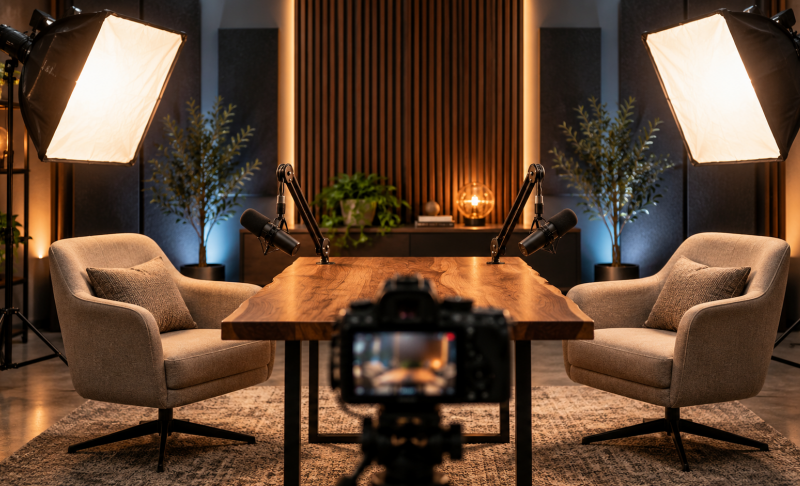
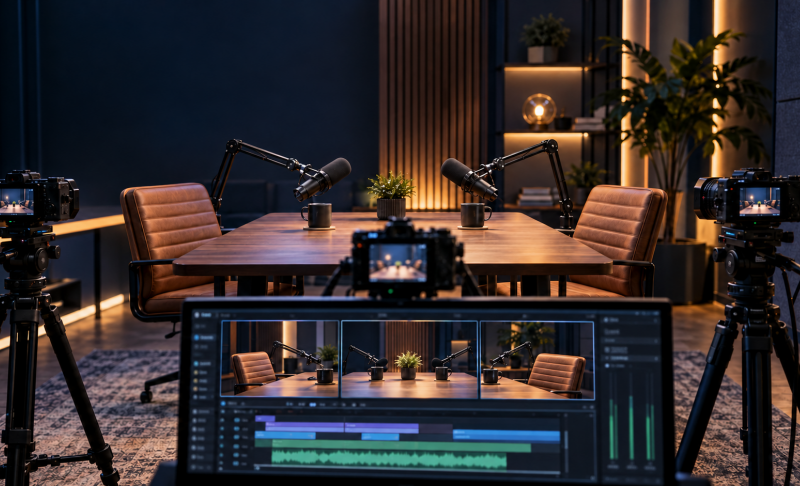
OBS Studio is a free option for filming a podcast in the same room. Add your cameras and microphones as sources, then switch between a wide shot and a close-up while you record. This works well when you want to finish the episode with the camera cuts you made during the session.
A standard OBS recording saves the on-screen program as one video file. You can configure separate audio tracks for each mic. If your editor needs to change camera angles after the session, arrange to record each camera separately. See our guide to OBS recording settings for help choosing an output format.
7. Ocenaudio
Ocenaudio can record or import audio in a variety of formats. It's useful when the job is to trim one file, such as a short trailer or a finished interview that needs a volume adjustment. You can preview gain or EQ changes before applying them. If your episode starts with separate files for the host, guest, and intro music, choose a multitrack editor such as Audacity so you can move and balance each part independently.
8. Ardour
Ardour is useful when you want more control over where each audio input goes. For a two-mic studio, you can send each host to a separate track and set up a headphone mix so both hosts can hear each other while recording. That control pays off when you have several inputs to manage. For a solo show with one mic and simple cuts, a basic editor gives you fewer settings to configure. Ardour's source code is free, and official ready-to-run full builds are paid.
9. Adobe Audition
Adobe Audition lets you make and reuse templates and edit multiple tracks. It's a good choice if audio cleanup is a regular part of producing your show. Its spectral display lets you see where a short noise occurs in a guest's clip so you can work on that area before mixing the interview with your narration and music.
The subscription makes the most sense if you use those repair tools regularly. If most episodes only need a few cuts and level adjustments, Audacity can handle that work for free.
10. Hindenburg PRO
Hindenburg PRO is made for spoken-word content, including podcasts, radio, and journalism. It suits shows that build a story from interviews recorded in different places. You can pull clips from several interviews, place them around your narration, and use automatic level adjustment to bring quieter recordings closer in volume to the rest of the episode.
If you want to search and cut hours of interviews by transcript, factor that into your plan choice. Hindenburg lists 20 hours of transcription per month on Plus. If the episode also needs separate recordings of remote guests' cameras, capture those in a remote video studio before assembling the audio.
11. REAPER

With REAPER, you can record, edit, mix, and master multiple tracks of audio and MIDI. Its value is easiest to see on a recurring show. Set up a project with one track per host, your usual effects, and your intro music. Reuse that template each week so you can start recording with the same setup. The upfront configuration is worth doing if you'll reuse it across a season. If you want to cut interviews by editing a transcript, Descript is a more direct fit.
REAPER offers a 60-day evaluation. Its $60 discounted license covers eligible personal users.
12. Logic Pro
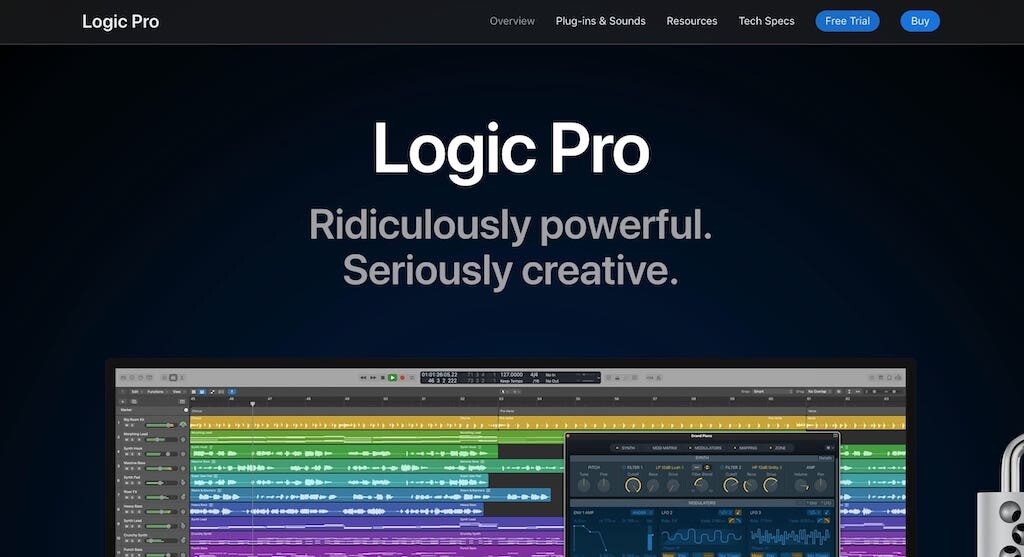
Logic Pro has an extensive toolkit for recording, editing, and mixing. It suits Mac users who produce original music or build detailed soundscapes for their podcasts. For example, you can compose a theme, edit the interview, and mix music and sound effects around the narration in the same project. If your episode only needs a voice track and some intro music, GarageBand already covers that workflow for free. Logic Pro is available as a $199.99 one-time purchase on Mac or through Apple Creator Studio.
Before publishing, you can use Auphonic to even out differences in volume and normalize the loudness of your finished episode.
Video Podcast Setup With the OBSBOT Tiny 3 Lite
For a desk-based video podcast, select the OBSBOT Tiny 3 Lite as your camera and your preferred microphone as the audio input. In OBS Studio, setting these up as separate sources lets you adjust the camera framing and microphone level independently.
The Tiny 3 Lite supports 4K at 30 fps and AI tracking. Tracking can help keep you in frame if you lean over to show an item or move during a demonstration. Your saved video resolution depends on the software and recording settings you choose.
FAQs About Podcast Recording Software
Can I Record a Podcast for Free?
Yes. You can record and export a solo audio podcast with free desktop software. If you interview guests remotely, check whether the free plan's separate-track allowance renews each month or applies only to your first recordings.
Is Audacity or GarageBand Better for Podcasts?
Choose Audacity if you want basic audio recording and editing on Windows, Mac, or Linux. Choose GarageBand if you record on a Mac and want built-in loops or sounds for your intro and transitions. Both let you adjust narration and music separately.
Can Remote Podcast Guests Join From a Phone?
Yes. Riverside guests can join through its iOS or Android app. Zencastr guests can use its app on iPhone or iPad, or Chrome on Android. For a Descript Rooms session, guests should use a supported desktop browser.
Conclusion
Before recording a full episode, make a one-minute test with the microphone, camera, and guest setup you'll actually use. Play back the export and check that you can access the tracks you'll need for editing your podcast.