Small Venue Concert Photography: A Practical Guide
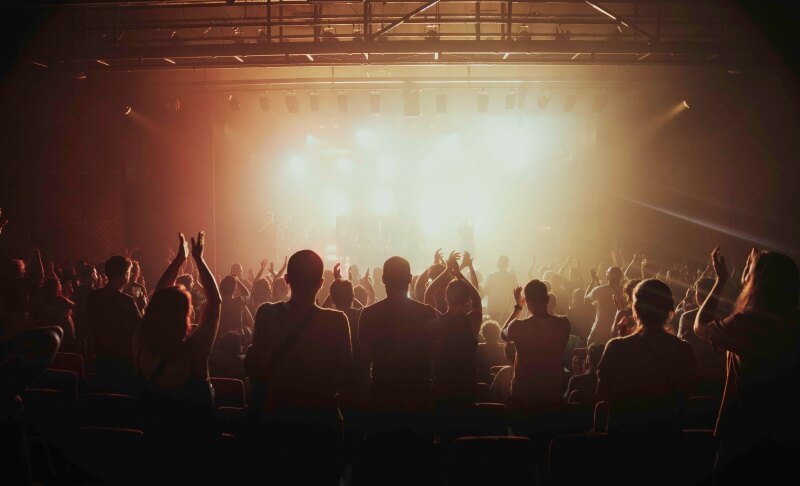
Small venue concert photography means shooting in dim, cramped rooms with no photo pit and unpredictable lighting. The fix is simple: a fast lens, high ISO, manual settings and smart positioning. This guide shows how to do concert photography in clubs and bars, from gear and positioning to etiquette, settings and editing, so you can walk into your next gig with a repeatable plan.
Part 1: Best Gear for Small Venue Concert Photography
Bring a low-light concert camera, one fast prime (35mm or 50mm), earplugs and spare batteries. Leave the flash and tripod at home.
Good gear for concert photography in a small room is about three things: gathering light, staying compact and being easy to operate in the dark. A $3,000 body won't save you if you fumble the dials.
Camera Body
Choose a good camera that stays usable at ISO 3200–6400, focuses reliably in dim light and handles bursts. Look for:
- Strong high-ISO performance, since you will rarely shoot below ISO 1600
- Fast, accurate autofocus with eye or face detection
- A silent or electronic shutter for quiet songs
- Dual card slots if you are shooting paid work
Full-frame sensors have a noise advantage, but a modern APS-C body with a fast lens is a perfectly good start.
Lenses
Lenses matter more than bodies in dark rooms. A wide aperture lets you keep the shutter speed fast and the ISO manageable.
| Lens | Best for | Notes |
|---|---|---|
| 35mm f/1.4–f/1.8 | Most clubs | Wide enough for tight rooms, close enough for band shots |
| 50mm f/1.8 | Portraits from mid-room | Cheap, light and sharp |
| 24–28mm f/2.8 or faster | Very small bars | Captures the whole stage and crowd |
| 24–70mm f/2.8 | Flexibility | Heavy, but handy when you can't move |
| 85mm f/1.8 | Larger small venues | Isolates singers from the back of the room |
If you can only buy one, buy a 50mm f/1.8. It is inexpensive and a classic starter lens for gigs.
Accessories That Earn Their Place
- Earplugs (musician-style ones keep the music clear)
- Two or more spare batteries, since cold, busy rooms drain power fast
- Extra memory cards, because you'll shoot hundreds of frames
- A small shoulder bag or belt pouch that stays close to your body
- A microfiber cloth for sweat, smoke and drink splashes
What to Leave at Home
Skip the flash. It distracts performers, annoys the crowd and kills the stage lighting that gives a show its mood. A tripod or monopod is also a liability in a packed room, and a big lens hood or bulky bag will catch on every passing elbow.
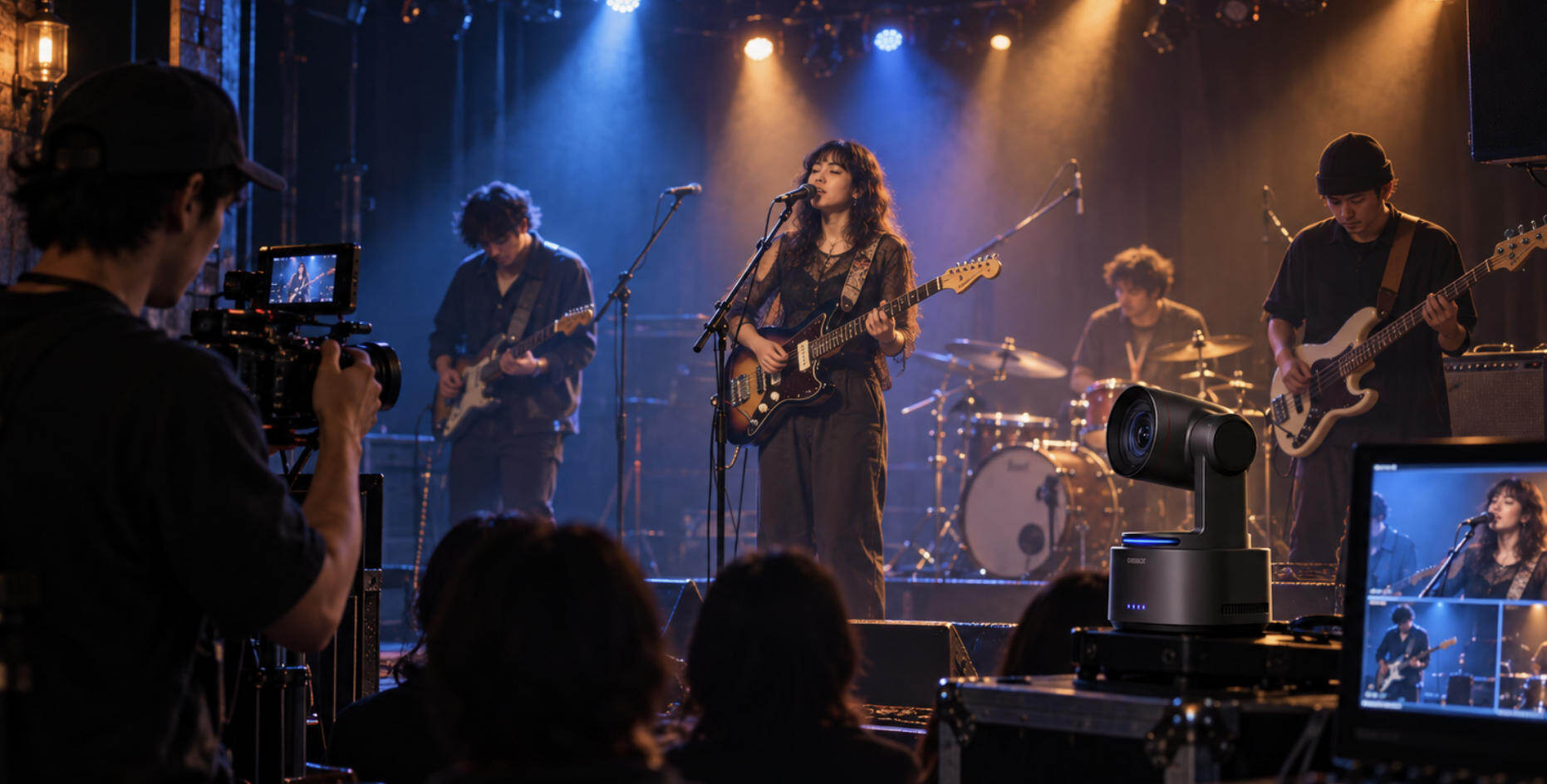
Bonus: Best Video Camera for Small Concert Recording - OBSBOT Tail Air Streaming Camera
If you want to shoot concert video as well as stills, a second, hands-free camera like the OBSBOT Tail Air lets you capture the whole set while you keep shooting photos. The hardest part of mixing photo and video is attention: you can't frame a great still and a smooth clip at the same time. A compact PTZ camera solves that by recording or streaming on its own.
Why it suits a small venue:
- 4K Resolution: It shoots 4K at 30fps and 1080p at 60fps, giving you sharp detail and room to crop in editing.
- AI Tracking: Human Tracking keeps the performer in frame automatically, so you can keep shooting stills. Gesture control lets you start or stop recording remotely.
- Low-Light Performance: A 2μm pixel size and f/1.8 aperture capture brighter, cleaner footage in dim rooms, and infrared focusing helps autofocus in the dark. Place it where stage lights hit the performers.
- Multiple Connection Options: Micro HDMI, USB-C, Ethernet with PoE, wireless and NDI (license sold separately) make it easy to plug into a monitor, laptop or live stream.
- Quick Setup for Small Venue Recording: Its compact size and flexible connections make it easy to set up in a tight club in just a few minutes.
Part 2: How to Shoot a Small Venue Show: Positioning, Timing, and Composition
Scout early, choose a spot with clear sightlines, shoot the peak moments, and stay considerate of the crowd and staff.
Before the Show
- Arrive early and scout the room.
- Note where the lights point and which areas stay dark.
- Find open sightlines past speakers and stage edges.
- Learn the setlist or the band's stage habits.
- Check the venue's photography rules and agree on expectations with the band or promoter.
Finding Your Position and Moving Through the Crowd
| Position | Advantage | Drawback |
|---|---|---|
| Front center | Direct angles, expressive faces | Mic stands and monitors in frame |
| Side of stage | Profile shots, band interaction | Limited view of the full band |
| Back of room | Wide shots with the crowd | Heads in the way |
Move between songs, not mid-chorus. Keep your elbows in, say a quick "excuse me" and never park in one spot long enough to block fans.
Capturing the Moment
Watch for peak moments: a singer leaning into the mic, a guitarist mid-solo, a drummer's follow-through, a crowd singing along. Try:
- Tight portraits showing emotion and sweat
- Wide scene shots of the room's energy
- Silhouettes against backlights
- Smoke and haze with beams of light
- Audience shots that tell the story of the night
Work with the lights: wait for a spotlight to hit the performer's face and use color and contrast for drama.
Concert Etiquette
- No flash, ever
- Don't block views, and keep your gear low
- Dim your camera screen
- Respect fans, staff and the band
- Know when to step back
Part 3: Useful Tips for Small Venue Concert Photography
Shoot RAW in manual mode, push your ISO without fear, ask for permission properly, and edit lightly to protect the mood.
Starting Camera Settings
| Setting | Starting point |
|---|---|
| Mode | Manual, or aperture priority with exposure compensation |
| Aperture | As wide as your lens allows (f/1.4–f/2.8) |
| Shutter speed | About 1/200s for moving performers, 1/100s for calm moments |
| ISO | 1600–6400, higher if needed |
| Focus | Continuous AF, single point or zone |
| Format | RAW |
Don't fear noise. A grainy shot beats a blurry or missed one. Expose for the performer's face with spot or center-weighted metering, because bright spotlights on dark backdrops fool the meter.
Getting Permission
Many small venues have no pass system, so ask directly. Message the venue, promoter or band with a short note and a portfolio link. Offer free photos, credit and quick delivery, or propose becoming the house photographer.
Editing and Sharing
- Cull hard: drop blinks and missed focus
- Fix white balance manually under colored lights
- Reduce noise gently to keep detail
- Try black and white to rescue messy color
- Send selects quickly to the band and venue, and tag them when you post
Part 4: FAQs About Small Venue Concert Photography
1. What is the best lens for small venue concert photography?
A fast 35mm or 50mm prime at f/1.4–f/1.8 is the best all-round choice. It collects plenty of light and keeps your kit small. Add a 24–28mm lens for very tight rooms.
2. What camera settings should I use at a small venue concert?
Start in manual mode with a wide aperture, a shutter speed around 1/200s, ISO 1600–6400 and RAW format. Use continuous autofocus and adjust ISO as the lighting changes.
3. Do I need a photo pass to shoot a small concert?
Usually not. Most small venues have no pass system, but ask the venue, promoter or band and follow house rules. Some venues restrict professional cameras, so check ahead.
4. Can I use flash at a concert?
No. Flash distracts performers, disturbs the audience and ruins the stage lighting. Use a fast lens and higher ISO instead.
5. How do I shoot in very low light without blurry photos?
Open your aperture fully, keep your shutter speed at 1/100s or faster and raise ISO until the exposure works. Brace your elbows against your body and focus on lit faces.
Conclusion
Small venue concert photography rewards preparation and practice: fast glass, high ISO, manual control, smart positioning and good etiquette. Scout the room, shoot the peak moments, and share your best frames with the band. Small clubs are the quickest way to build skills and a portfolio, so pick a local show this week and start shooting.