What is Full HD Resolution - A Comprehensive Guide

Whenever you watch movies or play video games, you must notice the quality of the videos. This is the resolution. The majority of screens are marketed as full HD or 1080p, but not everyone knows what this means. This is why people ask, "What is full HD resolution?" It is the display resolution of 1920 x 1080 pixels. It promises sharp and clear images that look much better than HD formats. Similarly, it has become the standard resolution for streaming videos, webcams, TVs, and computers. With this article, we are sharing a full guide on full HD resolution and how it compares with other resolutions.
Part 1: What Does Full HD Resolution Actually Mean?
The short answer to "what is Full HD resolution" is: Full HD (FHD) is a screen resolution of 1920 x 1080 pixels that delivers sharp and detailed images for videos, games, and digital displays. To understand this better, we need to look at what "pixels" and "resolution" mean.
A pixel is the smallest dot that makes up an image on a screen. When thousands or millions of these pixels come together, they form pictures and videos. Resolution describes how many pixels are displayed on the screen.
Full HD contains:
- 1920 pixels horizontally
- 1080 pixels vertically
This equals over 2 million pixels on the screen. Because there are so many pixels packed together, the image looks smooth and detailed.
Key Features of Full HD (1080p)
1. High Image Clarity
One of the biggest advantages of Full HD is its sharp image quality. With more than two million pixels, images look much clearer than older 720p HD displays. You can easily see fine details like facial expressions, text on screens, or textures in videos.
2. Progressive Scan (1080p)
The "p" in 1080p stands for progressive scan. Progressive scan means the screen displays all lines of an image simultaneously. This creates smoother motion and reduces flickering compared to older technologies like interlaced video. This is especially important for sports broadcasts, video games, fast-moving scenes, or people who wonder what is 1080p.
3. Wide Compatibility
Another reason Full HD became popular is that it works with almost every device. Today, Full HD is supported by TVs, laptops, smartphones, gaming consoles, webcams, and streaming services. Because of this wide support, Full HD is still one of the most common video formats.
4. Balanced Performance and File Size
Higher like 4K resolution look amazing, but they require more internet bandwidth and storage space. Full HD offers a great balance between quality and performance. Videos look sharp while still loading quickly online.
Common Use Cases for Full HD:
1. Streaming Movies and TV Shows
Platforms like YouTube, Netflix, and other streaming services commonly provide videos in Full HD. It offers good picture quality without requiring extremely fast internet speeds.
2. Gaming
Many gamers prefer Full HD because it allows smooth gameplay. Games run faster at 1080p compared to higher resolutions like 4K. For competitive games, smooth performance is often more important than ultra-high resolution.
3. Video Conferencing
Full HD webcams make video calls look much clearer and more professional. For online meetings, remote work, and virtual classes, 1080p cameras provide better image quality than basic HD cameras.
4. Content Creation
YouTubers, streamers, and educators often record videos in Full HD because it looks professional while keeping file sizes manageable. Full HD has become the standard video resolution for most online content creators.
Part 2: HD, FHD, UHD, 4K: What Are the Differences?
There are many types of screen resolutions today, and the names can be confusing. In simple terms, each type of resolution increases the number of pixels on the screen. HD is the basic level of high-definition video and usually has a resolution of 1280 x 720 pixels. If you are wondering what is FHD, Full HD (FHD) improves this by increasing the resolution to 1920 x 1080 pixels, which creates much sharper images and smoother video. UHD (Ultra High Definition) and 4K take image quality even further by using far more pixels than Full HD. In fact, 4K UHD has four times as many pixels as Full HD, which means it can show much finer details. This is for everyone who asks what is the 1080p resolution.
Resolution Comparison Table
|
Resolution Type |
Pixel Dimensions |
Total Pixels | Common Name | Typical Uses |
| HD | 1280 × 720 |
921,600 |
720p |
Basic streaming, entry-level webcams, small displays |
| Full HD | 1920 × 1080 |
2,073,600 |
1080p | Streaming, gaming, video calls, laptops and monitors |
| Ultra HD | 3840 × 2160 |
8,294,400 |
4K UHD | Smart TVs, high-quality streaming, gaming consoles |
| 4K (DCI 4K) | 4096 × 2160 |
8,847,360 |
4K | Digital cinema, professional video |
| 8K | 7680 × 4320 |
33,177,600 |
8K | High-end TVs, professional video production |
Part 3: Best Full HD Resolution Webcam
A good webcam can make a big difference for meetings, streaming, or online classes. If you want clear and professional video quality, a Full HD webcam is a great choice.
1. Best Overall: OBSBOT Meet SE Full HD Webcam
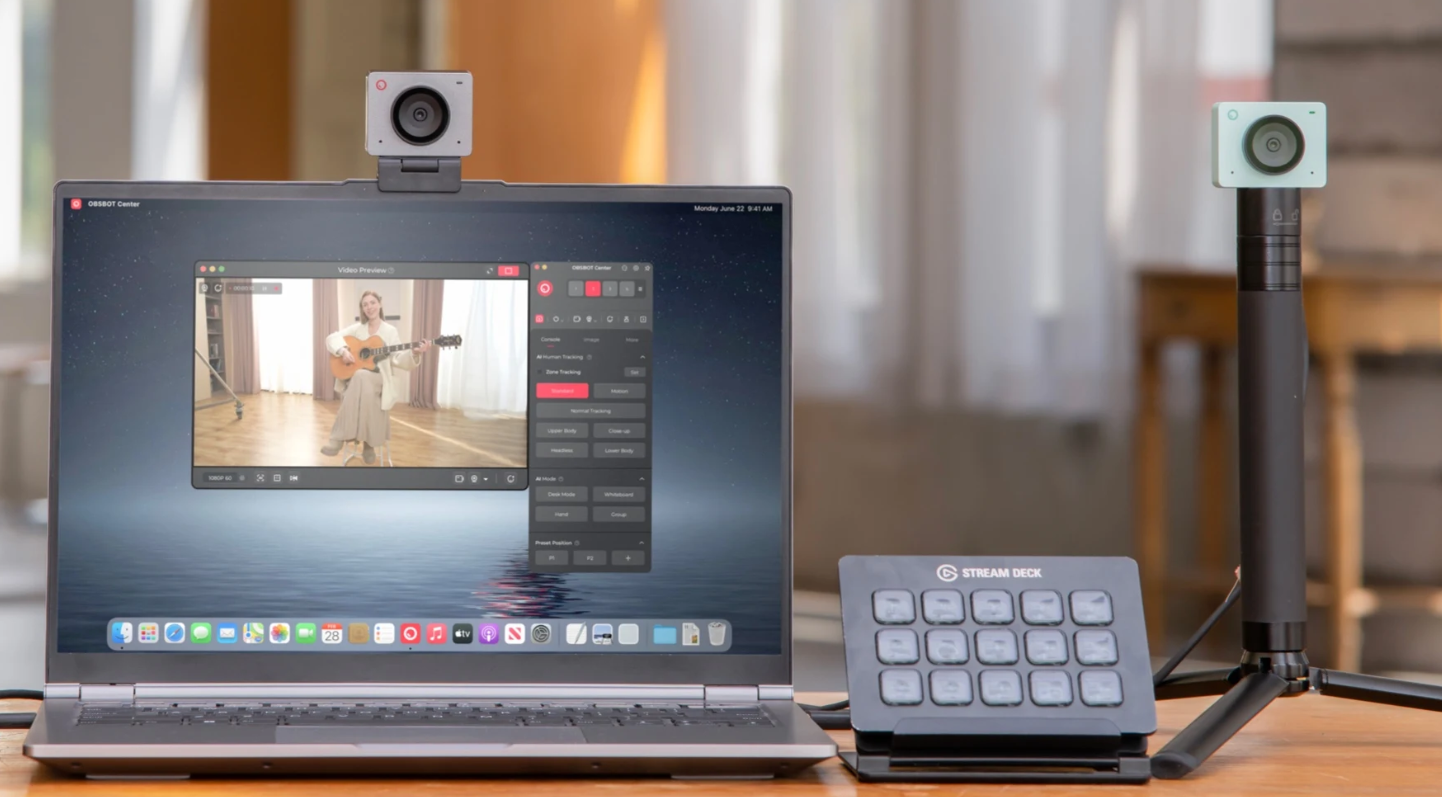
The OBSBOT Meet SE is an AI-powered Full HD webcam built for online meetings, streaming, and content creation. It combines intelligent camera technology with a compact and lightweight design to provide a smooth and user-friendly experience. Its portable 33.2g design also makes it easy to use with laptops, monitors, or small desk setups.
Key Features:
- High Video Resolution: Supports 1080p@100fps and 720p@150fps, delivering stable motion and clearer video during streaming, calls, and recordings.
- AI Auto-Framing: Automatically detects and keeps the user centered in the frame, helping maintain a professional appearance during meetings and presentations.
- Gesture Control: Allows users to adjust camera framing with simple hand gestures, making it easier to control the webcam without touching the device. For example, raising a hand can trigger auto-framing or adjust zoom
- Staggered HDR Imaging: Improves image balance by handling bright and dark areas in the frame, helping the camera produce clearer video in challenging lighting conditions.
- Good Low-Light Performance: Comes with a 1/2.8'' Stacked BSI CMOS sensor that improves light sensitivity and image processing, helping the camera capture sharper details.
2. Advanced Option: OBSBOT Tiny 3 Lite 4K PTZ Webcam
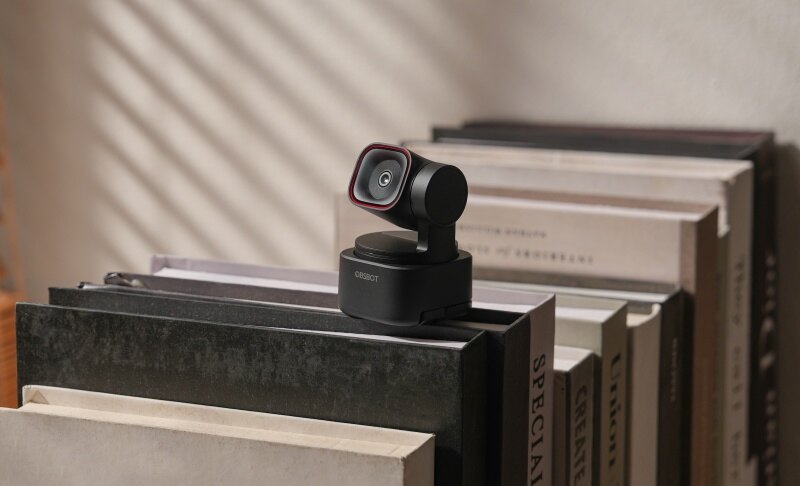
For users who want to go beyond Full HD and achieve even higher video quality, the OBSBOT Tiny 3 Lite offers a powerful upgrade. While 1080p webcams provide clear visuals for everyday meetings and streaming, this model delivers 4K resolution along with advanced AI camera technology for a more professional video experience. It is an excellent choice for creators, remote professionals, and users who want sharper details and smarter camera control.
Key Features:
- Stunning 4K Ultra HD: Delivers 4K@30fps and 1080p@120fps, allowing detailed visuals and smooth motion during video calls or gaming sessions.
- Flagship Low-Light Mastery: Designed with a large 1/2'' CMOS sensor with Quad Bayer technology to capture better details in low-light conditions.
- Reliable Voice Locator: Tiny 3 Lite automatically rotates toward the speaker's voice using spatial audio positioning, keeping the active speaker in focus during conversations.
- AI Tracking 2.0: Smoothly follows the subject in real time with support for Object Tracking. This ensures stable visuals and helps maintain quality during motion in Full HD.
- Clear & Balanced Audio: Includes three silicon MEMS microphones to capture clear audio while reducing background noise and offers natural spatial sound.
Part 4: FAQs About What is Full HD Resolution
1. Is Full HD resolution good enough today?
Yes, full HD resolution is still very good for most people. Many TVs, monitors, and webcams still use 1080p because it provides clear and detailed images. It is also easier to stream and requires less internet speed compared to 4K. For video calls, YouTube videos, and gaming, Full HD often provides the perfect balance between quality and performance.
2. Is 1080p the same as Full HD?
Yes, 1080p and Full HD mean the same thing. Both refer to a resolution of 1920 x 1080 pixels. The term "1080p" describes the number of vertical pixels and the progressive scanning method. Meanwhile, "Full HD" is simply a marketing term used by manufacturers to describe this resolution.
3. Is Full HD better than HD?
Yes, Full HD is better than standard HD. HD usually refers to 720p resolution, which has 1280 x 720 pixels. Full HD has 1920 x 1080 pixels, meaning it has more than twice as many pixels. Because of this, images appear sharper and more detailed on a Full HD display.
4. Do I need a Full HD monitor to watch 1080p videos?
Yes, to fully enjoy Full HD video quality, you need a screen that supports 1920 x 1080 resolution. If you watch a 1080p video on a lower-resolution screen, the device will reduce the image quality to match the display. However, most modern laptops, monitors, and TVs already support Full HD.
5. Is 4K always better than Full HD?
No, not always. While 4K offers more pixels and sharper detail, the difference is not always noticeable on smaller screens. It also requires faster internet and more powerful hardware. For many people, Full HD still provides excellent visual quality without the higher cost or data usage that comes with 4K.
Conclusion
Understanding what is full HD resolution helps you make better decisions when buying TVs, monitors, webcams, or cameras. Full HD offers over two million pixels, delivering clear images that work well for streaming, gaming, and video calls for work or talking to friends. Even though newer resolutions like 4K are becoming more common, Full HD remains one of the most practical, widely supported formats in digital media. Its balance of quality, performance, and compatibility keeps it relevant across many devices. As technology continues to improve, knowing about full HD resolution will help you choose the right display and video equipment for your needs.