The Best Webcams for Twitch Live Streaming in 2026

Twitch has grown from a gaming platform into a full-blown entertainment destination, and your webcam is often the first thing that separates a channel viewers stick around for from one they scroll past. We tested and compared six top options to help you find the best webcam for Twitch — whether you're just starting out or upgrading a setup that's holding your stream back.
Part 1: 6 Best Webcams for Twitch
Quick Comparison Table
| Webcam | Resolution | FoV | Sensor Size | AI Features | Best Twitch Use Case | Price |
|---|---|---|---|---|---|---|
| Logitech C920 | 1080p@30fps | 78° | 3-megapixel CMOS | None | Budget Twitch starter | $69.99 |
| Razer Kiyo Pro | 1080p@60fps | Adjustable (80°, 90°, 103°) | 1/2.8" | None | Low-light Twitch streaming | $119 |
| OBSBOT Meet Flip | 4K@30fps / 1080p@60fps | 79.1° (4:3), 72° (16:9) | 1/2" stacked CMOS | AI Auto Framing & Preset Mode & Gesture Control | Premium Twitch streams, face cam focus | $119 |
| Logitech Brio 4K | 4K@30fps | Adjustable (65°, 78°, 90°) | 1/2.5" | Auto exposure, HDR processing | Sharp image, professional look | $169 |
| YoloLiv YoloCam S3 | 4K@30fps / 1080p@60fps | 84° | 1/1.3" CMOS | PDAF autofocus, AI exposure/white balance/noise reduction | Premium image quality, DSLR-style look | $199 |
| Elgato Facecam 4K | 4K@60fps | 90° | 1/1.8" Sony STARVIS 2 | NVIDIA RTX background effects only (no onboard AI tracking) | Serious streamers using OBS, max image fidelity | $199.99 |
1. Best Budget Pick – Logitech C920
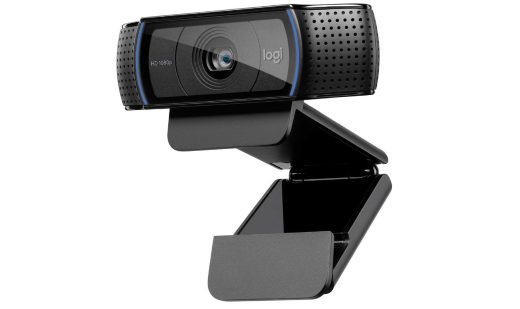
If your budget is tight, stop scrolling — Logitech C920 is the safest choice on this list. It won't wow you, but it's the one webcam here that's been proven reliable for years, and it'll get you streaming today without a second thought. Only look further down this list if you're already noticing your lighting is holding you back, or if you're committing to streaming long-term and want something that grows with you.
Key features for Twitch:
- Solid 1080p/30fps performance via glass autofocus lens
- 78° fixed field of view
- RightLight 2 auto light correction
- Universal mounting clip for laptops and monitors
- Long-standing plug-and-play reliability
Ideal for: New streamers, tight budgets, and anyone testing the waters before investing further.
2. Best for Low-Light Streaming - Razer Kiyo Pro
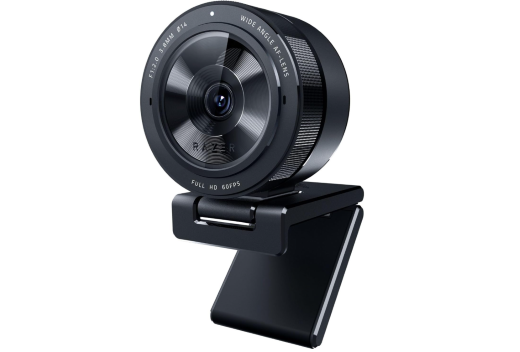
Not every streamer has perfect studio lighting. The Razer Kiyo Pro excels where other webcams struggle - in dimly lit rooms and evening streams. Its adaptive light sensor automatically adjusts to your environment, ensuring you always look your best regardless of lighting conditions.
Key features for Twitch:
- An adaptive light sensor works magic in low-light conditions
- Three field of view options (103°, 90°, 80°)
- HDR support for balanced exposure
- Streamlabs is certified for easy integration
- Built-in omnidirectional microphone
Ideal for: Streamers with variable lighting, bedroom streamers, and those who stream at different times of day.
3. Best Overall for Twitch - OBSBOT Meet Flip Foldable 4K Webcam
For streamers who want professional-quality video without a complicated setup, the OBSBOT Meet Flip delivers an all-in-one streaming solution with 4K video, AI-powered framing, and intelligent audio features. Its compact foldable design makes it easy to set up with laptops or desktop setups, while built-in privacy protection adds extra convenience for creators who stream, work, and create content from the same space.
Key features for Twitch:
- 4K@30fps and 1080p@60fps video delivers sharp, detailed visuals and smooth motion for gaming streams, Just Chatting, and content creation.
- AI Auto Framing keeps you perfectly positioned by automatically adjusting the frame as you move, making it easier to stay centered during live streams without manual adjustments.
- Fast PDAF autofocus maintains sharp focus when you lean closer, move around, or switch between different distances from the camera.
- Intelligent Dual-Mic System with four audio modes enhances your voice clarity during live gameplay commentary and streaming, while flexible audio modes help optimize sound pickup for different streaming setups and environments.
Foldable privacy design with instant setup automatically powers on when opened and physically covers the lens when closed, eliminating the need for a separate privacy cover.
Perfect for: Streamers who want professional quality without complex setup, and creators who value both video and audio quality.
4. Best for Sharp Image & Professional Look - Logitech Brio 4K

If image sharpness and a clean, professional appearance matter most to you, the Logitech Brio 4K is a solid choice for Twitch streaming. Known for its excellent image processing and reliable performance, the Brio delivers crisp visuals that instantly elevate the quality of your stream—especially for talking-head, Just Chatting, and interview-style content.
Key features for Twitch:
- 4K Ultra HD sensor with downscaling for cleaner 1080p streams
- 1080p at 60fps support for smooth, natural motion
- HDR and RightLight™ technology for balanced exposure in mixed lighting
- Adjustable field of view (65°, 78°, 90°) for flexible framing
- Full OBS and Streamlabs compatibility
Ideal for: Streamers who want a sharp, polished on-camera look, podcast-style creators, and professionals who value image clarity over AI-driven features.
5. Best for Premium Image Quality - YoloLiv YoloCam S3
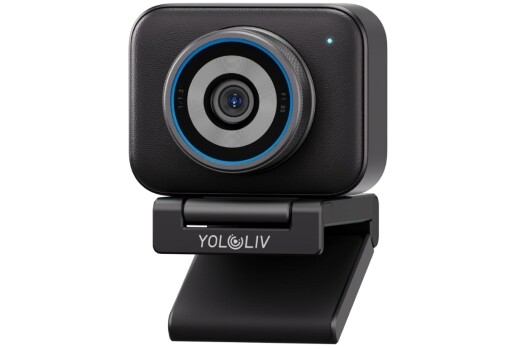
YoloLiv YoloCam S3 is the pick if you want camera-like quality without becoming a camera person. Its sensor is the largest on this list short of the Facecam 4K, and instead of making you dial in exposure and white balance yourself, it does that automatically — so you get a noticeably sharper, cleaner image than the Brio 4K without extra effort.
Key features for Twitch:
- 4K@30fps or 1080p@60fps (switchable, not simultaneous)
- 84° field of view, f/1.85 aperture
- 1/1.3" CMOS sensor with PDAF autofocus
- AI-assisted exposure, white balance, and noise reduction
- HDR support and manual color controls via Picasso Resolve (Windows; Mac coming)
Ideal for: Streamers who want top-tier image quality and fast autofocus without a full manual camera setup.
6. Best for Power Users - Elgato Facecam 4K
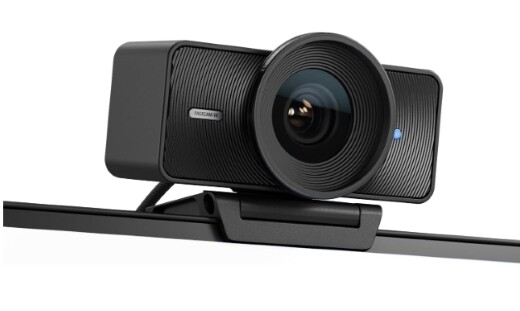
Elgato Facecam 4K only makes sense for a specific type of streamer: you're already comfortable in OBS, you already have decent lighting, and you want the highest possible ceiling — true 4K at 60fps, with full manual control over every setting. It's not the easiest camera to get looking great; its narrower aperture means it depends more on your lighting than on built-in AI, unlike the YoloCam S3 above. If that sounds like more setup than you want, the YoloCam S3 or Brio 4K will get you a similar-looking result with far less effort.
Key features for Twitch:
- True 4K@60fps (uncompressed via USB 3.0)
- 90° field of view, 1/1.8" Sony STARVIS 2 sensor
- Swappable 49mm lens filters (polarizing, diffusion, ND)
- Full manual controls (ISO, shutter speed, white balance) via Camera Hub
- HDR support and RTX-powered background effects (on compatible systems)
Ideal for: Serious streamers already using OBS and proper lighting, who want maximum resolution and frame rate without compromise.
Part 2: How to Choose a Webcam for Twitch Streaming
If you can only optimize one thing, make it frame rate — 60fps for fast-paced gaming, 30fps is fine for chatting/IRL. Put your budget into low-light performance and sensor size next. 4K is a nice-to-have, not a must. FOV depends on your content style, so decide that last.
1. Resolution: 1080p vs 4K
Twitch caps streams at 1080p, but a 4K sensor downsampled to 1080p still looks sharper and more detailed than native 1080p. Most streamers don't need 4K, but it future-proofs your setup for higher-res platforms or off-stream recording.
2. Frame Rate: Why 60fps Matters
For FPS or fast-motion games, 60fps keeps movement smooth and blur-free — 30fps tends to look choppy in comparison. If action games are your main content, prioritize a webcam with true 1080p60fps support, like the Razer Kiyo Pro.
⚠️ Bandwidth heads-up: Many webcams can't do 4K and 60fps at once — it's usually one or the other. USB bandwidth matters too: if you're on USB 2.0 or sharing a hub with a mic and controller, you may see dropped frames. Check the camera's actual USB spec and real-world frame rate combo, not just the marketing max.
3. Low-Light Performance
Most streaming setups don't have studio lighting, so low-light performance is one of the most practical factors when you choose a webcam for Twitch streaming. Bigger sensors mean cleaner images with less noise in dim rooms — look for a listed sensor size around 1/2" or larger. Adaptive light sensors and HDR also help if your space has uneven lighting.
4. Field of View (FOV)
- 60°-75° (narrow): Best for tight facecam-only streams, minimal background distraction
- 75°-90° (medium): Balanced — shows some of your setup without losing focus on your face
- 90°+ (wide): Good for IRL streams or showing your whole space, but watch for edge distortion
Some cameras offer adjustable FOV, which is worth it if you're not 100% locked into a content style yet.
Further reading: Low-Light Webcam Guide
Part 3: Twitch Webcam Setup and Optimization Tips
1. Perfect Webcam Placement
Position your webcam at eye level or slightly above for the most flattering angle. If using a monitor mount, ensure the camera sits just above your screen. For desk placement, consider a small tripod to achieve the right height.
2. Lighting Tips for Better Streams
- Face your primary light source (window or lighting)
- Use soft, diffused lighting to avoid harsh shadows
- Add a small fill light to reduce shadows on your face
- Ensure your background isn't significantly brighter than you
3. Software Settings for Optimal Quality
Most webcams include software for fine-tuning settings. Adjust exposure to match your lighting, set white balance for accurate colors, and experiment with saturation to find what makes you look best on camera.
Part 4: FAQs About Twitch Streaming Webcam
1. What's a Good Webcam for Twitch Streaming?
A good Twitch webcam should deliver 1080p at 30fps minimum, decent low-light performance, and reliable autofocus. Budget matters less than you'd think — proper lighting and placement can make even a $99 webcam look pro-level. If low light is your main challenge, prioritize sensor size over resolution.
2. What Do Most Streamers Use for a Webcam?
Most streamers skip built-in laptop cameras in favor of a dedicated USB webcam in the $70-150 range that delivers stable 1080p. Bigger creators sometimes step up to 4K models for extra detail or AI-assisted framing, but the jump isn't necessary until your audience or production quality demands it.
3. What Kind of Camera Do I Need to Stream on Twitch?
At minimum, 1080p at 30fps. Some streamers use DSLRs with capture cards for a more cinematic look, but webcams win on plug-and-play simplicity — no extra hardware or setup. Look for autofocus, decent low-light handling, and 60fps support if you play fast-paced games where smooth motion matters.
4. What Is the Highest Quality Webcam?
Quality isn't just resolution. The highest-end webcams combine a large sensor, HDR, accurate autofocus, and clean image processing — this is what actually determines sharpness and low-light clarity. Resolution (4K vs 1080p) matters less than people assume; a well-processed 1080p image often looks better than a poorly processed 4K one.
5. Do 4K 60fps Webcams Exist?
Rarely. Bandwidth and processing limits usually force a trade-off: 4K at 30fps (more detail) or 1080p at 60fps (smoother motion) — not both. A few high-end webcams let you switch between modes, but true simultaneous 4K60fps is still uncommon and expensive. Since Twitch caps streams at 1080p anyway, 60fps is usually the more useful priority.
6. How do I set up a camera for Twitch streaming?
To set up a camera for Twitch streaming, place it at or slightly above eye level, connect it via USB, and then add it as a "Video Capture Device" inside streaming software like OBS Studio or Streamlabs. For the best look, make sure you face a soft light source so your camera can deliver a clean, sharp image.
Conclusion
There's no single best webcam for Twitch — only the best one for your budget and stream style. If you're just starting out, the Logitech C920 gets you live today without overspending. If lighting is your real problem, the Razer Kiyo Pro fixes it automatically. And if you're ready to invest in a setup that scales with your channel, the OBSBOT Meet Flip hits the sweet spot of 4K quality, AI-assisted framing, and zero extra setup.