Best Webcams for Streaming in 2026: 10 Picks for Every Budget
A good streaming webcam should make you look clear without making your setup harder to run. For most Twitch, YouTube, and social livestreams, 1080p at 60 fps is the sweet spot: motion looks smooth, bandwidth stays manageable, and viewers rarely benefit from a 4K feed. A 4K webcam becomes valuable when you want to crop, reframe, or record locally at higher quality.
Our 2026 list starts with dependable budget streaming webcams and moves through portable, vertical-video, low-light, and AI-tracking options. Check out to find the one suits you best.
Quick Comparison: Best Streaming Webcams in 2026
| Webcam | Approx. Price | Best For | Max Video | Main Trade-Off |
|---|---|---|---|---|
| Elgato Facecam Neo | Around $40 | Entry-level 60 fps streaming | 1080p60 | No 4K; fixed USB-C cable |
| Logitech C920s | Around $60 | Simple talking-head streams | 1080p30 | Less fluid motion than 60 fps models |
| Razer Kiyo V2 X | Around $100 | Smooth motion under $100 | 1440p60 | No 4K or HDR |
| OBSBOT Meet Flip | $99 | Portable, privacy-first streaming | 4K30 / 1080p60 | No motorized PTZ |
| EMEET PIXY | Around $110–$160 | Affordable AI tracking | 4K30 / 1080p60 | More setup than a fixed webcam |
| Logitech StreamCam | Around $170 | Vertical and multi-platform content | 1080p60 | No 4K |
| Logitech MX Brio | Around $200 | Mixed lighting and desk demos | 4K30 / 1080p60 | Digital rather than motorized tracking |
| Elgato Facecam 4K | Around $200 | Manual control and Stream Deck workflows | 4K60 | Fixed focus rewards a controlled setup |
| Insta360 Link 2 Pro | Around $270 | Low light, tracking, and flexible audio | 4K30 / 1080p60 | 4K is limited to 30 fps |
| OBSBOT Tiny 3 | Around $349 | Premium PTZ streaming | 4K30 / 1080p120 | Expensive for a static desk setup |
The 10 Best Webcams for Streaming in 2026
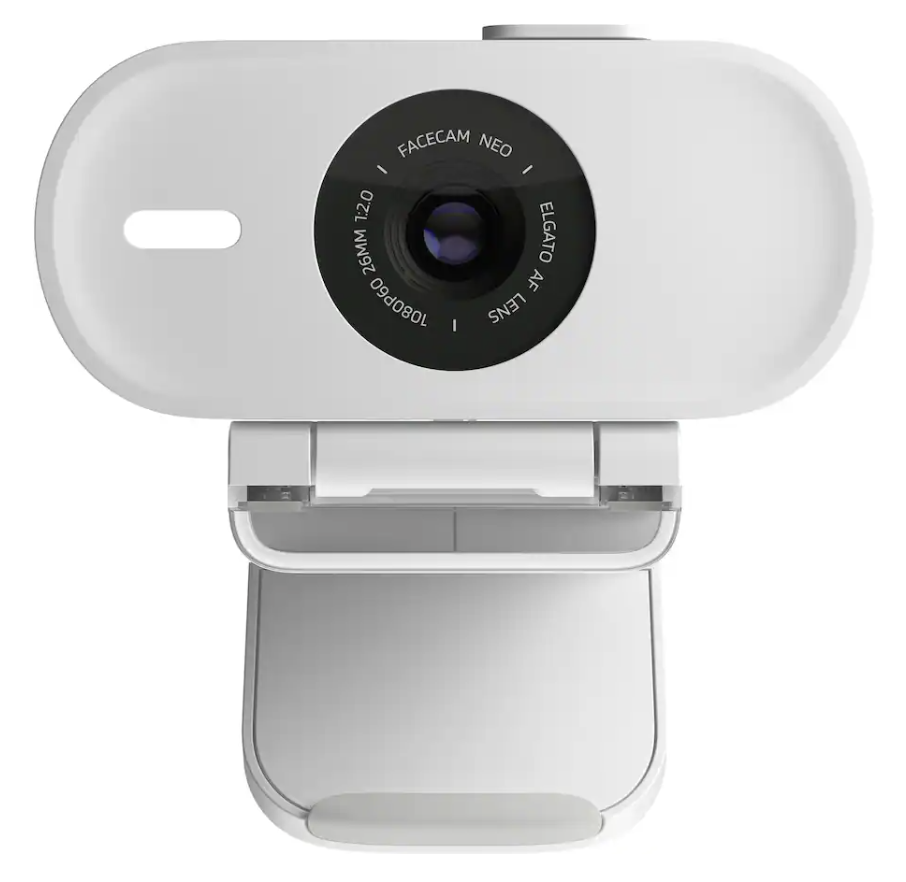
1. Elgato Facecam Neo: Best Entry-Level 60 fps Webcam
The Facecam Neo is the sensible starting point for a new streamer who wants smoother video without immediately entering premium-webcam territory.
Why it is a good entry-level streaming webcam:
- Its 1080p60 output gives hand movements, reactions, and scene changes a cleaner look than the 30 fps video common at this price.
- Autofocus also makes it forgiving when you lean toward the camera or hold up an item.
- Simplicity is its real advantage. You can plug it in and stream, then use Elgato Camera Hub later if you want more control over exposure, framing, etc.
- The 77-degree field of view suits one person at a desk and keeps the room from dominating the shot.
Prices: around $40
Choose it if: You want the lowest-cost route to credible 1080p60 video.
Know before buying: There is no 4K headroom, and the fixed USB-C cable gives you less installation flexibility than a detachable cable.
2. Logitech C920s: Best for a Simple, Reliable Talking-Head Stream
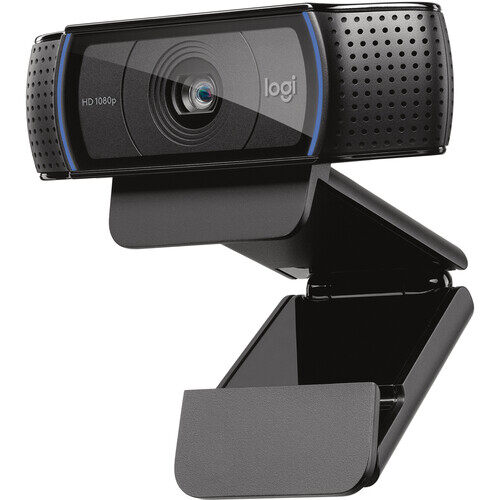
Not every stream needs 60 fps. If your webcam stays in the corner while you teach, interview guests, host a podcast, or play slower-paced games, the Logitech C920s remains a practical and low-risk choice.
Why it works well for fixed-position streaming:
- It records at 1080p30, which is sufficient for talking-head streams with limited movement.
- Its autofocus keeps your face clear if you occasionally move closer to the screen.
- The 78-degree field of view provides enough space for a natural desk setup without showing too much of the room.
- A built-in privacy shutter physically covers the lens when your stream ends.
- Its USB-A connection works with many older desktops without requiring an adapter.
Prices: around $60
Choose it if: You want an affordable, familiar webcam for podcasts, teaching, interviews, or streams where you remain seated.
Know before buying: Its 30 fps limit makes fast gestures and energetic on-camera segments look less fluid than they would on a 60 fps webcam.
3. Razer Kiyo V2 X: Best Under $100 for Smooth Motion
Fast-moving streams benefit more from a higher frame rate than from extra 4K resolution. The Razer Kiyo V2 X is designed for creators who want smoother movement without moving into a premium price range.
What makes it suitable for motion-heavy streams:
- It records at up to 1440p60 or 1080p60, giving dance, fitness, crafting, unboxing, and reaction streams more fluid motion.
- The 80-degree field of view provides space for upper-body movement without revealing your entire room.
- Autofocus helps maintain clarity when your distance from the camera changes.
- Razer Synapse provides additional controls for image settings and framing.
- An integrated privacy shutter gives you a clear physical way to cover the lens after streaming.
Prices: around $100
Choose it if: You prioritize smooth 60 fps movement and want to stay around the $100 price point.
Know before buying: It does not support 4K or HDR, although these features are less important if your platform outputs the final stream at 1080p.
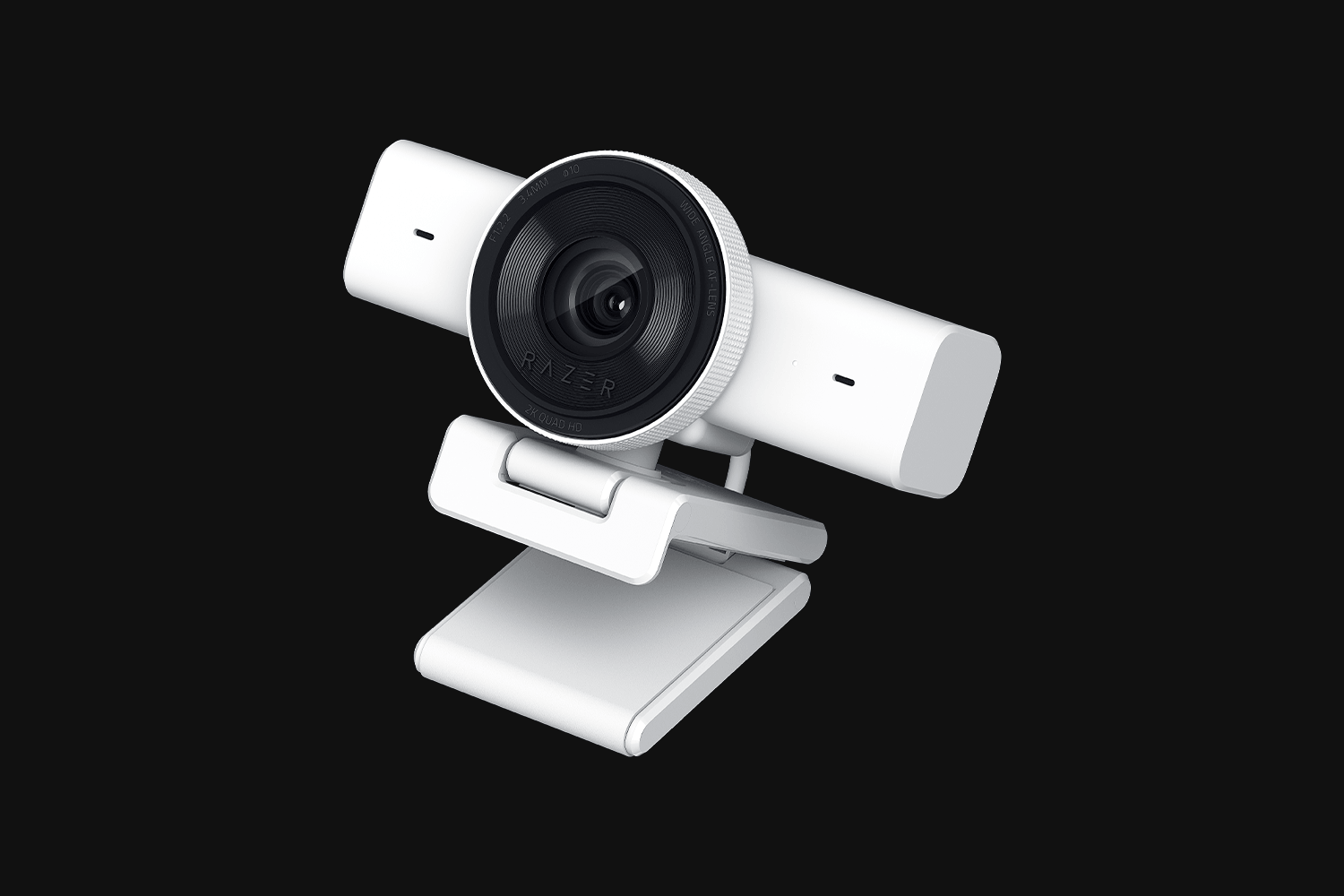
4. OBSBOT Meet Flip: Best Portable and Privacy-First Streaming Webcam
The OBSBOT Meet Flip is made for creators who do not always stream from the same desk. Its foldable, 37.7 g design is easy to carry between a home setup, shared studio, office, or travel location.
Why it stands out for portable streaming:
- It records at 4K30 when you need more detail or cropping room and at 1080p60 when smoother livestreaming is the priority.
- The foldable design physically covers the lens when closed, providing built-in privacy without a separate lens cap.
- Phase-detection autofocus helps the camera respond when you bring a product or object closer to the lens.
- Support for both landscape and portrait orientations makes it useful for Twitch, YouTube, TikTok LIVE, and other vertical platforms.
- OBS and Stream Deck compatibility allows the camera to fit into an existing creator workflow.
- Its dual-microphone system provides directional and omnidirectional recording modes.
Prices: around $99
Choose it if: You need a compact 4K webcam that is easy to transport and offers a clear physical privacy design.
Know before buying: Meet Flip is not a motorized PTZ webcam, and a dedicated microphone will still deliver better voice quality for audio-focused streams.
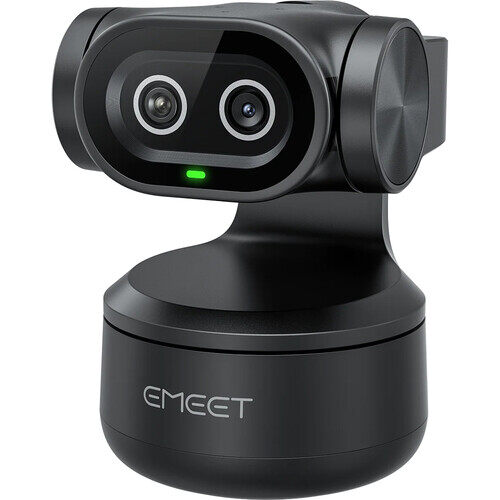
5. EMEET PIXY: Best Affordable AI Tracking Webcam
A fixed webcam can become limiting when you need to move between a workbench, whiteboard, instrument, or kitchen counter. The EMEET PIXY provides motorized tracking at a lower price than many premium PTZ webcams.
Why it is useful for active solo presenters:
- Its dual-camera AI tracking system can follow a presenter instead of relying only on digital reframing.
- Choose 4K30 when product detail matters or 1080p60 for smoother movement.
- Gesture controls allow you to operate supported functions without returning to the computer.
- Fast autofocus helps when the camera needs to switch attention between your face and an object in the foreground.
- The built-in three-microphone array provides a convenient starting point for an all-in-one setup.
Prices: $110-$160
Choose it if: You do cooking video streaming or teaching, fitness, demonstration streams and need affordable hands-free tracking.
Know before buying: AI tracking requires more preparation than a fixed webcam. Test its tracking boundaries before going live so background movement or another person does not distract the camera.
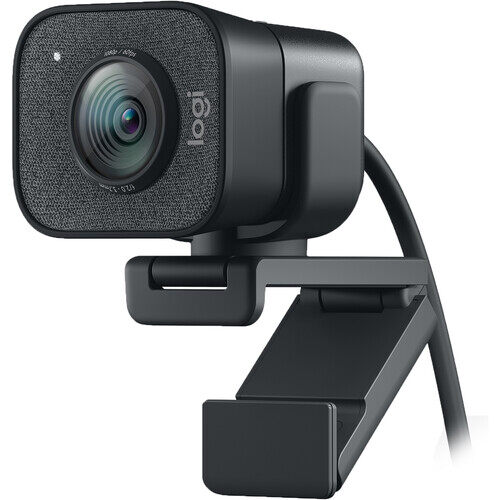
6. Logitech StreamCam: Best for Vertical and Multi-Platform Content
The Logitech StreamCam makes the most sense when the same recording session needs to supply content for several platforms. It can switch between conventional landscape streaming and native vertical capture without requiring an aggressive crop.
How it simplifies a multi-platform workflow:
- It records at 1080p60, providing smooth video for Twitch, YouTube, podcasts, and social livestreams.
- Rotating the camera enables native 9:16 vertical video for TikTok, Reels, and Shorts.
- Smart autofocus helps maintain clarity while automatic exposure reduces the number of image settings you need to monitor.
- Its mounting options make it easier to position the camera on a monitor or tripod.
- A USB-C connection suits modern laptops and compact creator workstations.
Prices: around $170
Choose it if: You regularly repurpose livestream footage for vertical social content and want to avoid repeatedly cropping a horizontal frame.
Know before buying: StreamCam does not offer 4K recording, and its price overlaps with some entry-level 4K webcams. Its main value is workflow flexibility rather than maximum resolution.
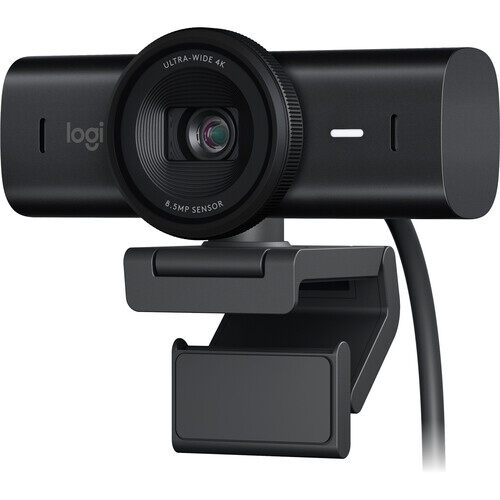
7. Logitech MX Brio: Best for Mixed Lighting and Desk Demos
The Logitech MX Brio is a strong option for streamers working in rooms that are not permanently lit like a studio. It is particularly useful when daylight, monitors, and household lighting compete within the same shot.
Why it works well in changing desk environments:
- Its 4K sensor and RightLight processing help keep your face visible under mixed or changing lighting.
- You can stream at 1080p60 for smoother movement or use 4K30 when you need more cropping room.
- A 65-degree field of view keeps the frame tight and hides more of the room.
- The 78-degree setting works well for a conventional one-person desk stream.
- The wider 90-degree option can include a guest, instrument, or larger workspace.
- Show Mode lets you tilt the camera down when sharing artwork, products, repairs, or handwritten notes.
Prices: around $200
Choose it if: You stream from a desk but frequently switch between your face, products, and a tabletop workspace.
Know before buying: The MX Brio is a fixed webcam rather than a motorized PTZ model, so it will not physically follow you around the room.
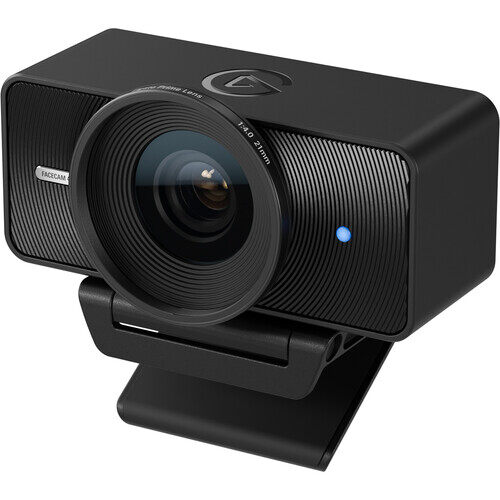
8. Elgato Facecam 4K: Best for Manual Control and Stream Deck Workflows
The Elgato Facecam 4K is aimed at creators who would rather lock in a consistent image than let automatic settings change exposure, color, or focus during a livestream.
Why it suits a controlled streaming studio:
- It can capture up to 4K60, providing detailed video and extra room for cropping or creating alternate framings.
- The 1/1.8-inch Sony STARVIS 2 sensor supports a more detailed image when paired with appropriate lighting.
- Elgato Camera Hub provides manual control over exposure, white balance, zoom, and other image settings.
- Stream Deck integration allows supported camera controls to be placed alongside scene changes and other stream actions.
- The 90-degree field of view offers enough space for wider setups or digital reframing.
- A 49 mm filter thread supports diffusion, polarizing, and other creative lens filters.
Prices: around $200
Choose it if: You have a controlled desk or studio setup and want detailed 4K video with extensive manual and Stream Deck control.
Know before buying: Its fixed-focus, f/4 design works best when your camera distance and lighting remain consistent. It is less forgiving if you regularly move toward and away from the lens.
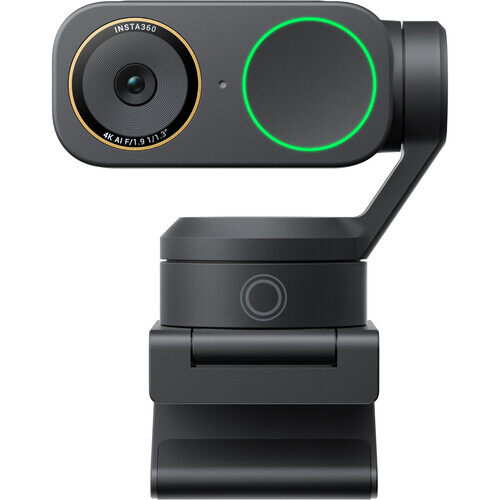
9. Insta360 Link 2 Pro: Best for Low Light, Tracking, and Flexible Audio
The Insta360 Link 2 Pro addresses three common livestreaming problems at once: a dim room, a presenter who moves, and a microphone that cannot always be positioned directly in front of the speaker.
Where its premium features make a practical difference:
- Its large 1/1.3-inch sensor and Dual Native ISO are designed to retain a cleaner image when you cannot use strong studio lighting.
- A two-axis gimbal physically follows the presenter instead of relying entirely on a digital crop.
- Phase-detection autofocus helps when you alternate between speaking to the camera and showing a product.
- Directional and omnidirectional microphone options can be adapted to a solo speaker or a wider group.
- It records at 4K30 for detail and 1080p60 for movement-heavy streams.
Prices: around $270
Choose it if: You create music, education, fitness, or product streams where low-light quality and physical tracking both matter.
Know before buying: Its 4K mode is limited to 30 fps, and a dedicated microphone remains the better option when voice quality is central to the stream.
10. OBSBOT Tiny 3: Best Premium PTZ Webcam for Solo Streamers
The OBSBOT Tiny 3 is designed for solo creators who want their webcam to handle part of the camera operation. Its motorized PTZ system can adjust the frame while you teach, perform, or move between different positions.
Why it is suited to premium solo production:
- Its AI-powered PTZ tracking can physically follow movement instead of only enlarging and cropping a fixed image.
- It records at 4K30 when detail and reframing room are important.
- Support for up to 1080p120 provides exceptionally smooth capture for compatible high-frame-rate workflows.
- The large 1/1.28-inch sensor helps it perform better in limited light than many small-sensor webcams.
- Voice commands and tracking controls reduce the need to return to the keyboard during a live segment.
- Immersive stereo and spatial audio features add directional information when the subject or camera moves.
- Privacy is handled through a sleep position that physically turns the lens away.
Prices: around $349
Choose it if: You produce fitness, teaching, performance, or multi-camera streams without a camera operator.
Know before buying: Its premium price is difficult to justify for a static gaming. Tiny 3 offers the most value when autonomous framing directly improves the production.
What to Look for in a Streaming Webcam
When comparing streaming webcams, focus on the features that directly affect your type of content and setup:
- Resolution and frame rate: For most streams, 1080p60 provides the best balance of detail, smooth motion, bandwidth, and price. Choose 4K if you want to crop the image, create several framings from one camera, or save a higher-resolution local recording. A well-lit 1080p image usually looks better than poorly lit 4K footage.
- Sensor and lighting: A larger sensor generally performs better in dim rooms, but thoughtful lighting is still important. If you stream at night, prioritize low-light performance and exposure control, then place a soft light near eye level before paying for additional resolution.
- Focus and tracking: Autofocus is useful when you lean toward the camera or hold up products. Motorized PTZ tracking is more valuable for fitness, teaching, cooking, music, and demonstrations where you leave your chair. For a fixed desk stream, reliable autofocus, or fixed focus at a planned distance, is usually sufficient.
- Field of view and framing: A field of view around 65–80 degrees keeps attention on one person. A 90-degree or wider view is better when you need to include guests, instruments, or a workspace. If you plan to use digital zoom, 4K resolution can provide a cleaner final 1080p crop.
- Connections and software: Check whether the webcam requires USB-A or USB-C and whether your port supports the bandwidth needed for its highest-resolution modes. Also consider OBS compatibility, saved camera settings, virtual camera features, and Stream Deck control.
- Audio and privacy: Built-in microphones are convenient backups, but a dedicated USB or XLR microphone will usually improve a voice-led stream more than upgrading from 1080p to 4K. A physical shutter, folding lens, or visible privacy position also makes it easier to confirm that the camera is no longer recording.
Frequently Asked Questions
What is the best webcam for streaming in 2026?
The best choice depends on your set. Elgato Facecam Neo is a strong low-cost 1080p60 option. OBSBOT Meet Flip is the better portable 4K pick with an integrated physical privacy design. OBSBOT Tiny 3 is the strongest choice here for premium motorized tracking. Choose around the way you stream, not the longest specification list.
Is 1080p60 enough for Twitch or YouTube streaming?
Yes. For most creators, 1080p60 provides enough facial detail and smooth motion while remaining easier to encode and upload than 4K. Lighting, composition, and audio usually produce a more noticeable improvement than increasing resolution alone.
Do I need a 4K webcam for streaming?
Not necessarily. Most viewers will watch a compressed stream at 1080p or below. A 4K webcam is useful when you want to crop without making the final 1080p frame soft, create multiple virtual angles, show detailed products, or save a higher-resolution local recording.
Can these webcams work with OBS Studio?
Most UVC-compatible webcams can appear as video sources in OBS Studio. However, features such as AI tracking, 4K60, virtual cameras, or saved image settings may require the manufacturer's desktop software, a USB 3 connection, or a specific plugin. Check the requirements for the exact mode you plan to use.
Final Recommendation
Start with the stream you actually produce. A seated beginner gets excellent value from Facecam Neo or C920s; a motion-heavy creator should prioritize 60 fps or PTZ tracking; and a traveling creator will benefit from Meet Flip's compact, privacy-first design. Move to MX Brio, Facecam 4K, Link 2 Pro, or Tiny 3 only when their lighting, cropping, control, or tracking advantages solve a real production problem.