Best 8 Vlogging Cameras for Beginners in 2026
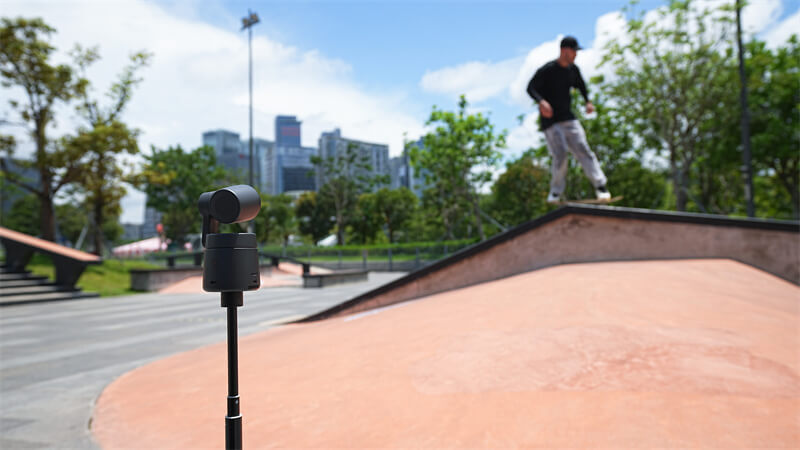
Best vlogging cameras for beginners include OBSBOT Tail 2, Sony ZV-E10 II, DJI Osmo Pocket 4, and Canon PowerShot V1. These cameras are perfect for recording high-quality videos, even if you don't have professional skills. The vlogging cameras come with simple controls and reliable autofocus to ensure the vlogs have good audio and a stable image. With this article, we are sharing details about the 8 best options for people looking for a vlogging camera for beginners. Also, we have extra tips to help you find the best fit.
Part 1: How to Choose a Vlogging Camera for Beginners
When shopping for your starter vlog camera, traditional specs like 4K resolution, fast autofocus, and decent battery life are important baselines. You need a camera that shoots clear video and keeps your face in focus. However, looking at numbers on a spreadsheet does not tell the whole story.
To find a camera you will actually enjoy using every day, you need to look past the basic specs and focus on how these features handle real-world vlogging challenges:
1. Fixed Lens vs. Interchangeable Lenses (Simplicity vs. Growth)
Do you want a tool that works perfectly out of the box, or a system you can upgrade later?
- Fixed-lens compacts are small, light, and require zero extra thought. You get one lens that does everything, making them ideal for everyday storytelling.
- Interchangeable-lens mirrorless cameras are bulkier, but they let you swap lenses. You can buy a wide-angle lens for travel today, and a blurry-background lens for setups tomorrow.
2. Digital vs. Mechanical Stabilization (Walking vs. Talking)
If your videos are shaky, people will look away. However, how you stabilize depends on your content.
- If you plan to sit at a desk, talk to the camera, or use a tripod, you do not need heavy-duty stabilization.
- If you plan to walk around, do street vlogs, or travel, look for a camera with a built-in mechanical gimbal. Digital stabilization fixes shakes by cropping into your video, which can make your face look too close to the screen.
3. Audio Layout (Built-in Mics vs. External Mics)
Bad audio ruins a vlog faster than bad video quality.
- If you want to grab the camera and run without packing extra gear, look for a model that explicitly markets advanced built-in microphones that isolate your voice.
- If you do not mind clipping a microphone to your shirt, just make sure the camera has a standard 3.5mm microphone jack.
4. Color Straight Out of the Camera (No-Edit vs. Color Grading)
Color editing is the most time-consuming part of video production. As a beginner, you want to avoid it.
- Look for cameras that feature "film simulations," "creative looks," or built-in color presets.
- You want a camera where you can transfer the files directly to your phone and upload them immediately, rather than sitting in front of a laptop tweaking flat, grey footage for hours.
Part 2: Best 8 Vlogging Cameras for Beginners
Below, we review the 8 best beginner YouTube cameras based on video quality, stabilization, battery life, and more.
Quick Comparison Table
| Camera | Resolution & FPS | Autofocus System | Image Stabilization | Battery | Price (Approx) |
|---|---|---|---|---|---|
| OBSBOT Tail 2 | 4K@60fps 1080p@120fps |
All-pixel PDAF (Phase Detection Auto Focus) | 3-axis gimbal stabilization | 5000mAh battery offering up to 343 minutes | $1,199 |
| Sony ZV-E10 II | 4K@60fps 1080p@120fps |
759-point phase detection AF | Electronic "Active Mode" stabilization | NP-FZ100 rechargeable battery pack) for up to 130-195 minutes | $1,199.99 |
| DJI Osmo Pocket 4 | 4K@60fps 1080p@30fps |
Full-Pixel Fast Focusing | 3-axis gimbal stabilization | 1545 mAh Li-ion battery for up to 240 minutes | $477 |
| Canon PowerShot V1 | 4K@60fps 1080p@120fps |
Dual Pixel CMOS AF II system | Lens-based optical image and digital stabilization | 1040mAh offering up to 70 minutes | $849 |
| Insta360 GO Ultra | 4K@60fps 1080p@240fps |
Fixed focus + AI tracking | FlowState stabilization for gimbal-like smoothness | 500mAh battery offering over 120 minutes | $449 |
| FUJIFILM X-M5 | 6.2K@30fps 4K@60fps 1080p@240fps |
AI subject detection AF | Digital stabilization | NP-W126S lithium-ion battery offering over 45-50 minutes | $1,319.95 |
| Sony Alpha 6400 | 4K@30fps 1080p@120fps |
Real-time Eye AF + 425-point PDAF | Optical SteadyShot (OSS) stabilization | NP-FW50 Lithium-Ion battery offering up to 75 minutes | $1,099 |
| Panasonic Lumix G100D | 4K@30fps 1080p@60fps |
DFD contrast AF with tracking | 5-axis hybrid electronic image stabilization | DMW-BLG10PP lithium-ion battery offering up to 40 minutes | $1,095.98 |
1. OBSBOT Tail 2 Live Production Camera
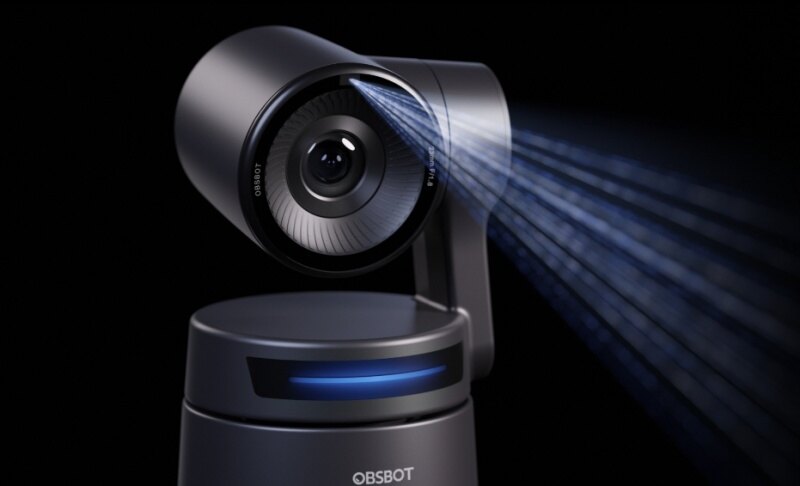
If you are a solo creator working entirely on your own, one of the biggest frustrations is having nobody behind the camera. The OBSBOT Tail 2 feels like it was built specifically to solve that problem. Its intelligent auto tracking and motorized gimbal keep you perfectly framed at all times, whether you are cooking, dancing, or moving around the room. You do not need a camera operator, a focus puller, or a complicated rig setup to create smooth and dynamic footage by yourself. For solo creators and frequent livestreamers, it is one of the easiest ways to achieve professional-looking shots without an extra crew.
Key Features:
- AI Tracking 2.0: Uses AI Tracking to follow subjects while the "Only Me" mode feature locks onto a single subject, making it perfect for solo vloggers.
- Exceptional Video Quality: Supports 4K@60fps and 1080p@120fps, delivering smooth, detailed footage so entry-level vloggers can capture cinematic quality and slow-motion shots.
- Low-Light Performance: Has a large 1/1.5-inch CMOS sensor capable of capturing up to 50MP image data, improving detail and low-light performance, making it ideal for beginner vlogs.
- Reliable Zooming: Offers 5x optical zoom for true detail and up to 12x hybrid zoom for extended reach, so beginner vloggers can capture distant subjects clearly.
2. Sony ZV-E10 II

Want a more cinematic look without learning a bunch of complicated camera settings? The Sony ZV E10 II makes it easy. As the upgraded version of a fan favorite, its biggest advantage is the built-in Cinematic Vlog mode and color presets. Just pick the look you like, and it delivers rich skin tones and polished colors straight out of the camera. The large sensor also gives you natural background blur, helping your videos look far more professional than typical phone footage.
Key Features:
- Directional 3-capsule microphone captures clearer front-facing audio for vlogs
- BIONZ XR processor enables faster image data processing for video vlogs
- Offers Creative Look presets with customizable color profiles
- Cinematic Vlog mode includes S-Cinetone and mood settings for professional vlogging
- 759-point phase-detection system enhances subject recognition coverage
- 5 GHz Wi-Fi enables fast wireless file transfer for quick vlog uploads
3. DJI Osmo Pocket 4

For travel, street, and food vloggers, heavy gear can kill the fun of creating. The DJI Osmo Pocket 4 is built for easy, grab and go shooting. It is small enough to fit in your pocket, but the built in 3 axis gimbal keeps footage incredibly smooth even when you are running through busy streets with one hand. The 1 inch sensor also performs well in low light, so you can pull it out anytime and still get clean, polished shots on the move.
Key Features:
- 1-inch CMOS sensor improves low-light and depth for travel vlogging
- 14-stop dynamic range captures high-contrast scene details in outdoor vlogs
- 10-bit D-Log enables advanced color grading flexibility for vlog editing
- 107GB internal storage supports long, uninterrupted vlog recordings
- 800MB/s transfer speed enables a fast file management workflow
- OsmoAudio system supports multi-channel audio recording for immersive vlogs
4. Canon PowerShot V1

The Canon PowerShot V1 is perfect for creators who want to keep things simple. It comes with a built in fold out stand and an ultra wide lens, so you do not even need a tripod. Just set it on a table, flip open the screen, and start talking to the camera. It is designed for quick, everyday shooting without the hassle of changing lenses, making it a great fit for casual vloggers, beauty creators, and beginners who want an easy way to capture ideas and daily moments.
Key Features:
- 1.4-inch CMOS sensor enhances image detail capture for high-quality vlogs
- Built-in 16–50mm f/2.8 wide-angle zoom lens for handheld vlogging
- Canon Log 3 enables flexible post-production color grading for vlogs
- Built-in ND filter controls exposure in bright outdoor vlogging scenes
- UVC/UAC support enables direct webcam and streaming use
- Vari-angle touchscreen supports flexible self-recording angles for vlogs
5. Insta360 GO Ultra

If you want true first person POV footage, a regular camera just cannot do the job. The Insta360 GO Ultra is a tiny wearable camera that clips magnetically onto your chest. It is so light you barely notice it, letting you film completely hands free while viewers see everything from your perspective, whether you are cooking, skating, or filming unboxings. Its smart auto editing features can also turn clips into polished short videos with almost no editing work needed.
Key Features:
- Magnetic mounting system enables hands-free POV vlogging
- Ambient Light Sensor improves real-time color accuracy in daily vlogs
- 5nm AI chip supports faster image processing for smooth vlog footage
- Removable microSD storage supports flexible recording sessions
- Voice Control 2.0 enables touch-free camera operation while vlogging
- 48kHz 32-bit AAC audio improves vlog sound capture
6. FUJIFILM X-M5

If you care a lot about colors and hate spending time color grading, the FUJIFILM X M5 is an easy pick. Fujifilm built its famous film simulations right into a dedicated dial on this retro-style camera. You can switch between 20 different film looks with rich colors and flattering skin tones, then post straight from your phone to Instagram or RedNote. Even beginners can get a distinct visual style without touching editing software.
Key Features:
- Film Simulation dial offers twenty looks for unique vlog styles
- Three built-in microphones capture clear directional audio
- F-Log2 recording expands dynamic range for better editing flexibility
- Product Priority mode smoothly shifts focus during product vlogging
- Short Movie mode records vertical clips ideal for social media
- Frame.io Camera to Cloud enables instant sharing for fast uploads
7. Sony Alpha 6400

The Sony Alpha 6400 is the kind of camera you can always rely on. One of the biggest problems for beginners is losing focus while moving around on camera, but its industry leading eye autofocus keeps your face sharp no matter how you turn or walk. Even though it looks like a traditional mirrorless camera, it offers excellent image quality and access to a huge lens lineup. It is a camera you can start with as a beginner and still keep using for years as your content grows.
Key Features:
- Real-time Eye AF tracks faces accurately during moving vlogs
- 425-point phase detection improves subject tracking in busy scenes
- Interchangeable E-mount lenses support diverse vlogging styles
- Flip-up LCD screen helps vloggers frame shots easily
- High-speed burst shooting captures fast action vlog moments
- BIONZ X processor improves image processing for cleaner footage
8. Panasonic Lumix G100D

A lot of people forget that good vlogs are not just about video. Sound matters just as much. If the audio is messy, viewers leave fast. The Panasonic Lumix G100D is made for creators who focus on speaking and storytelling, like interviewers, educators, and podcast-style vloggers. It's built-in OZO audio system tracks your voice and reduces background noise automatically, so you can record clear, natural-sounding audio even without an external microphone.
Key Features:
- OZO Audio system tracks subjects for clearer vlog sound
- Dedicated Video Selfie mode optimizes framing and audio automatically
- V-Log L profile supports flexible color grading for content
- Free-angle touchscreen helps vloggers record from any angle
- Frame Marker overlays guide proper social media composition
- Wi-Fi and Bluetooth enable quick sharing for instant uploads
Part 3: FAQs About Vlogging Camera for Beginners
1. What storage options should I consider for vlogging?
Get a fast SD card (labeled UHS-I or UHS-II) to prevent video lag, especially when shooting in 4K. A storage size of 64GB or 128GB is the perfect starting point for most beginners.
2. Do beginners need 4K video for vlogging?
Yes. While 1080p works, 4K keeps your content relevant for the future and lets you crop into your footage during editing without losing sharpness.
3. Is a smartphone better than a vlogging camera for beginners?
Smartphones are great for day one, but a dedicated camera gives you better background blur, cleaner low-light video, superior audio options, and stronger image stabilization.
4. Are mirrorless cameras better than compact cameras for beginners?
Compact cameras are cheaper, lighter, and easier to use right out of the box. Mirrorless cameras are bulkier and more complex, but they allow you to change lenses and upgrade your setup as your channel grows.
5. What type of lens is best for beginner vloggers?
A wide-angle lens is best. It ensures your face and a good portion of your background stay in the frame when you hold the camera at arm's length.
Conclusion
Starting your vlogging journey is easier than ever because modern cameras are designed with beginners in mind. Beyond just features, it's also important to think about how comfortable you feel using the camera and how well it fits your content style. Some creators prefer compact devices, while others may want more creative control with lenses and settings. Choosing the right vlogging camera for beginners is not only about technology but also about matching your goals and creativity. As you grow, your skills and needs will change, so picking a flexible and reliable option now will help you build a strong foundation for future success.