[2026] 8 Best Webcams for Zoom: Compared for Calls and Meetings

A good Zoom webcam should make your face look clear without adding extra work before every call. For most people, that means reliable 1080p video, sensible framing, and exposure that can handle an imperfect home office. A 4K webcam becomes more useful when you need digital cropping, presentations, or higher-quality local recordings.
Below are eight of the best webcams for Zoom in 2026, compared by the situations in which their features matter most.
In This Article
8 Best Webcams for Zoom in 2026
The best choice depends on whether you stay seated, travel with a laptop, share a room, or move while presenting. Prices below are approximate and may change.
| Webcam | Best For | Max Video | Field of View | Microphone | Price (Only for reference) |
|---|---|---|---|---|---|
| Logitech Brio 500 | Everyday Zoom calls | 1080p at 30 fps | 65°, 78°, or 90° | Dual beamforming mics | $130 |
| OBSBOT Meet Flip | Portable 4K calls | 4K at 30 fps; 1080p at 60 fps | 72° in 16:9 | Dual mics with four modes | $119 |
| Dell WB3023 | Zoom-certified work calls | 2K at 30 fps | 65° or 78° | Noise-reduction mic | $66 |
| Opal Tadpole | Laptop users and travel | 1080p at 30 fps | About 70° | Directional VisiMic | $129 |
| Razer Kiyo V2 X | Smooth motion and dual use | 1440p at 60 fps | 80° | Dual stereo mics | $100 |
| Insta360 Link 2C | Presentations and DeskView | 4K at 30 fps; 1080p at 60 fps | 79.5° | Noise-reducing mic | $150 |
| EMEET SmartCam C960 | Basic budget calls | 1080p at 30 fps | 90° | Dual omnidirectional mics | $40 |
| OBSBOT Tiny 3 | Presenters who move | 4K at 30 fps; 1080p at 120 fps | 74° in 16:9 | Multi-mic audio system | $349 |
1. Logitech Brio 500
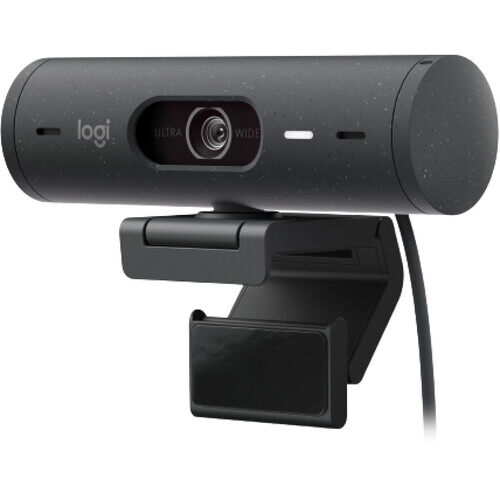
The Logitech Brio 500 is the most balanced option for routine Zoom calls. Its 1080p resolution meets the needs of typical meetings without making you pay for detail Zoom may not transmit.
Three field-of-view settings make it easier to control the frame:
- 65° creates a tight head-and-shoulders view.
- 78° leaves more room for natural gestures.
- 90° can include another person or more of the workspace.
RightLight 4 adjusts exposure when a bright window or lamp would otherwise leave your face too dark. RightSight can recenter the frame as you shift in your chair.
Show Mode adds another practical use: you can tilt the camera down to share notes or sketches on your desk. This combination makes the Brio 500 particularly suitable for home offices and hybrid employees.
The dual beamforming microphones are convenient in quiet rooms. In a shared or echo-heavy workspace, a headset will still produce clearer speech.
2. OBSBOT Meet Flip
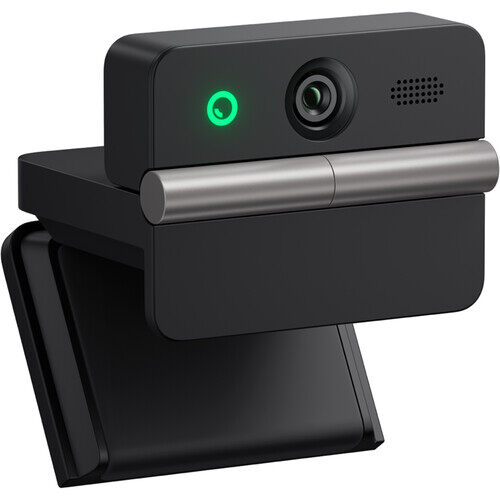
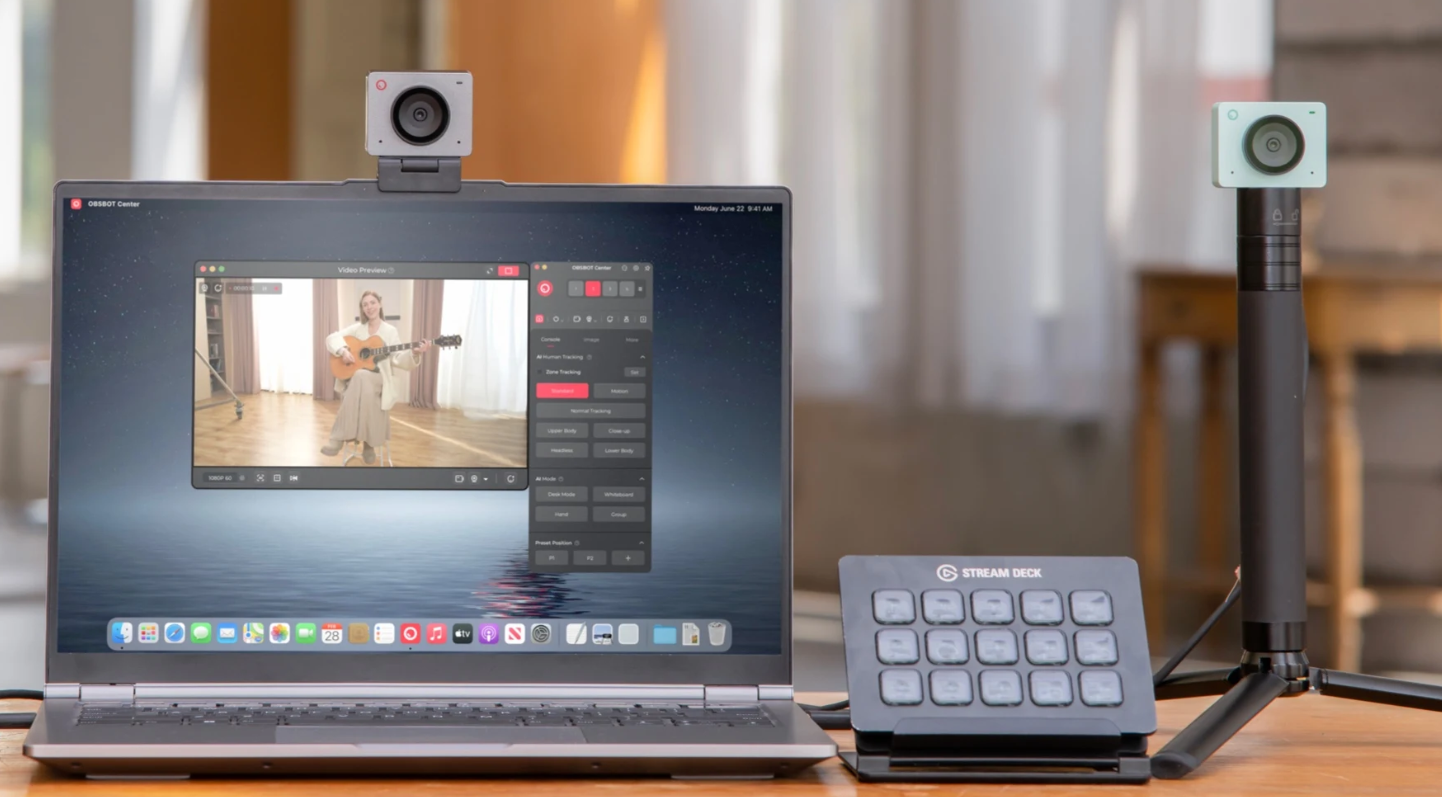
The OBSBOT Meet Flip takes a different approach from the usual webcam-and-monitor-clip design. Its folding body makes it easy to place in a laptop bag, while closing the camera physically covers the lens. That folded lens design provides most visible privacy.
The camera records 4K at 30 fps and 1080p at 60 fps. Zoom may not transmit the full 4K signal, but the extra resolution gives automatic framing more room to crop without immediately losing detail.
Its approximately 72° view in 16:9 also avoids showing an unnecessarily large part of the room. That is helpful in hotel rooms, coworking spaces, and temporary offices.
Automatic framing works digitally rather than through a motorized gimbal. It can correct small movements around a desk, but it is not intended to follow someone walking across a classroom. The dual-microphone system offers four pickup modes, although a headset remains useful in a noisy environment.
3. Dell WB3023

At approximately $66, the Dell WB3023 provides an unusual combination: 2K video, autofocus, selectable framing, and Zoom certification at a price closer to many basic 1080p webcams.
That makes it a practical choice for businesses buying several webcams. Certification can provide additional confidence during standardized purchasing, while the price remains easier to justify than premium 4K models.
The 65° setting keeps attention on one person. Switching to 78° leaves more space for gestures without exposing as much of the room as a 90° webcam.
HDR and digital noise reduction help manage uneven office lighting. The built-in microphone also includes noise reduction, but it is better suited to one person sitting near the computer than a group around a conference table.
One detail to check is the connection. The WB3023 uses USB-A, so newer USB-C-only laptops may need an adapter.
4. Opal Tadpole

The Opal Tadpole is primarily designed for people who work from a laptop in different locations. Its compact body clips onto a laptop display without adding a large mount or stand.
In practice, its portability matters more than its specifications. A conventional webcam may offer more mounting options, but it is also easier to leave behind when moving between an office, hotel, and coworking space.
The approximately 70° view creates a focused head-and-shoulders frame. It also limits how much of an unfamiliar room appears behind you.
Its directional VisiMic is intended to prioritize the speaker in front of the laptop. A tap-to-mute control lets you silence the microphone without searching for the Zoom toolbar.
The Tadpole outputs 1080p video and uses USB-C. It is less suitable for desktop monitors, group meetings, or situations that need wide framing. For laptop-first users, however, its small size may be more valuable than 4K resolution.
5. Razer Kiyo V2 X

The Razer Kiyo V2 X is not limited to business meetings. Its 1440p-at-60-fps capture makes it more attractive to someone who uses the same camera for Zoom, streaming, and recorded content.
For normal Zoom calls, the benefit is not simply the resolution number. The camera also offers:
- An 80° field of view that leaves room for gestures.
- Autofocus for showing objects or moving closer to the lens.
- A physical privacy shutter.
- Dual stereo microphones.
Zoom may not transmit the complete 1440p or 60 fps feed. Those specifications become more valuable when you switch to local recording or streaming after the meeting ends.
Need to mention that the microphones do not provide active noise cancellation. Keyboard sounds and conversations elsewhere in the room may therefore remain audible. A headset is the safer choice for important meetings in a noisy space.
6. Insta360 Link 2C

The Insta360 Link 2C is useful when your Zoom meetings include demonstrations instead of only face-to-face conversation.
For example:
- DeskView can help show notes, sketches, or a physical product.
- Smart Whiteboard Mode can make a whiteboard easier for remote participants to follow.
- Gesture controls reduce the need to interrupt a presentation and reach for the mouse.
Its 4K capture provides extra detail for digital framing, while 1080p at 60 fps supports smoother movement in compatible applications. The 79.5° field of view provides room for gestures without becoming excessively wide for one person.
The Link 2C has a fixed camera body. Unlike a motorized PTZ camera, it follows movement by cropping the image rather than turning the lens. It works well around a desk but is not designed to follow a presenter across a large room.
It also uses a single built-in microphone. Trainers and consultants presenting to larger groups may want a dedicated microphone or speakerphone.
7. EMEET SmartCam C960

The EMEET SmartCam C960 is the budget option in this comparison. At around $40, it provides 1080p video, dual microphones, a privacy cover, and a 90° field of view.
What does the lower price mean in practice?
You still get a noticeable upgrade over many old laptop cameras in a well-lit room. The wide frame can also accommodate two people sitting near the same computer.
The tradeoffs appear in more demanding situations. Low-light image quality and microphone isolation are more limited than on higher-priced webcams. The 90° view may also reveal more of your room than you want during an individual call.
Its fixed-focus lens prevents distracting focus changes when you remain seated. However, it is less suitable for showing documents or small objects close to the camera.
The C960 makes the most sense for students, occasional Zoom users, and anyone seeking a basic webcam without paying for AI framing or 4K capture.
8. OBSBOT Tiny 3 4K PTZ Webcam
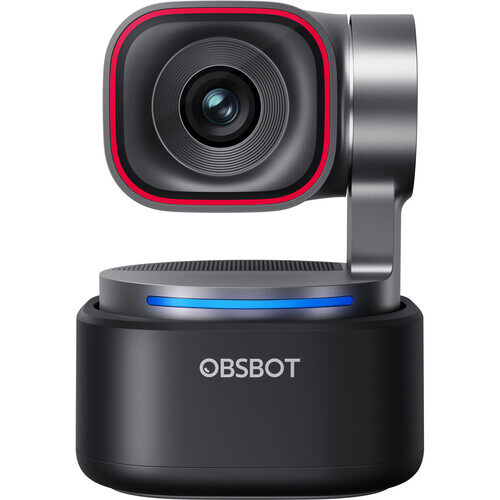
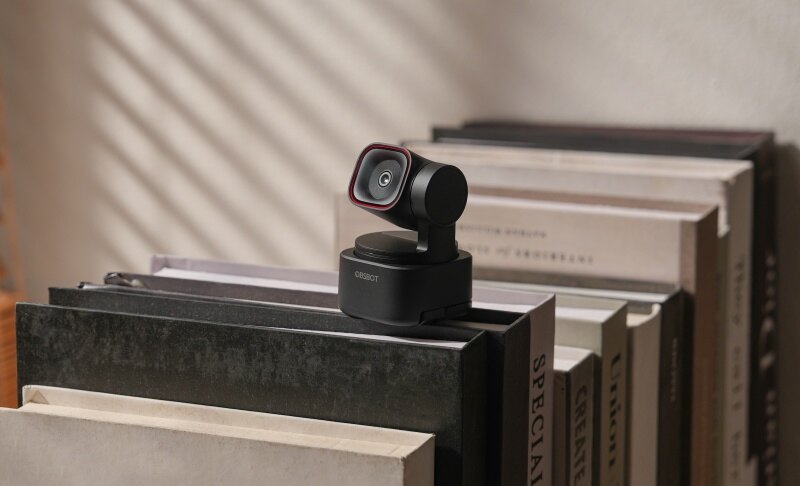
The OBSBOT Tiny 3 earns its place through movement rather than resolution alone. Its motorized pan, tilt, and AI tracking allow the lens to follow a teacher, trainer, or presenter who steps away from the desk.
This capability is valuable when you:
- Teach beside a whiteboard.
- Present while standing.
- Move between a desk and demonstration area.
- Want physical camera movement instead of digital cropping.
The camera records up to 4K at 30 fps. Its 74° view in 16:9 keeps the frame controlled, while motorized movement covers more space than a wide fixed lens.
Its larger sensor is also intended to retain more detail in challenging lighting. The multi-microphone system provides different audio modes, although a wireless microphone remains more reliable when the presenter moves far from the computer.
At around $349, the Tiny 3 is considerably more expensive than a conventional Zoom webcam. Its 1080p-at-120-fps mode also offers little benefit for an ordinary seated meeting. The price is easier to justify when motorized tracking replaces the need for someone to operate the camera.
How to Choose the Best Webcam for Zoom
Start with the conditions around your calls instead of choosing the highest resolution. You can also compare more options in our guide to the best webcams for a home office.
Resolution and Frame Rate
For most Zoom meetings, 1080p at 30 fps provides enough clarity. A 4K webcam can still improve digital framing and local recordings, but Zoom may transmit a lower resolution depending on your account, meeting settings, device, and network.
Higher frame rates are useful for quick movement and content creation. They are not essential when you mainly sit and speak.
Lighting and Exposure
A webcam with HDR, automatic exposure, or a larger sensor can help when a bright window is behind you. However, even an expensive webcam will look better with a soft light placed in front of your face.
If your room is consistently dark, prioritize low-light handling before 4K resolution.
Field of View
A 65° to 78° field of view generally works well for one person. It keeps attention on your face and limits background distractions.
An 80° to 90° view provides more room for gestures or a second participant. Wider views can be useful in small conference rooms, but they may show more of your workspace.
Autofocus and Framing
Autofocus is helpful when you move closer to the camera or show an object. Fixed focus can be more stable for someone who stays at the same distance.
Digital auto-framing is sufficient for small movements around a desk. Choose a motorized PTZ webcam when you need the camera to follow you across a larger area.
Microphone Quality
Built-in microphones are convenient for individual calls in quiet rooms. Look for directional pickup, beamforming, or noise reduction if you do not want to wear a headset.
A headset or dedicated microphone remains the better option for noisy rooms, echo-heavy spaces, and important presentations.
Connection, Mounting, and Privacy
Check whether your computer has USB-A or USB-C ports before buying. Also consider how the camera attaches to your monitor, especially if you use a thin laptop display.
A physical shutter or folding lens provides clearer privacy than relying only on software controls.
Zoom Compatible vs. Zoom Certified
A Zoom-compatible webcam is generally a USB camera that your computer and the Zoom application can recognize. Most modern UVC webcams fall into this category and can work without a special driver.
A Zoom Certified camera has completed Zoom's hardware certification process. Certification offers additional confidence that a device meets defined requirements, but it does not automatically make that camera better for every room or user.
| Type | What It Means | Suitable Use |
|---|---|---|
| Zoom compatible | Recognized as a camera by Zoom and the operating system | Most home and individual users |
| Zoom Certified | Evaluated against Zoom hardware requirements | Business purchasing and standardized office setups |
After connecting a webcam, open Zoom's video settings and select it from the Camera menu. If Zoom cannot detect it, close other applications that may be using the camera and check the operating system’s privacy permissions. See our troubleshooting guide if your Zoom camera is not working.
FAQs About Webcams for Zoom
Do I need a 4K webcam for Zoom meetings?
No. A reliable 1080p webcam is enough for most Zoom calls. A 4K model is more useful for digital cropping, presentations, and high-resolution recordings outside Zoom.
Will any USB webcam work with Zoom?
Most modern USB webcams that support standard UVC video work with Zoom on Windows or macOS. You should still confirm the connection type and operating-system support before buying.
What field of view is best for Zoom?
A 65° to 78° field of view is usually suitable for one person. Choose 80° to 90° when you need more room for gestures, two participants, or a small meeting space.
Is a built-in webcam microphone good enough?
It can be sufficient in a quiet room when you sit close to the computer. A headset, USB microphone, or speakerphone will usually produce clearer speech in noisy or echo-heavy environments.
What internet speed do I need for 1080p Zoom?
Zoom lists approximately 3.8 Mbps upload and 3.0 Mbps download for 1080p group video. Actual quality can still change with meeting settings, account support, network congestion, and the capabilities of other participants.
Conclusion
The Logitech Brio 500 offers the most balanced setup for routine meetings, while the OBSBOT Meet Flip combines portable 4K video with a folding privacy design. The Dell WB3023 provides Zoom-certified value, and the Insta360 Link 2C adds useful presentation modes.
Users who move while teaching or presenting can consider the motorized OBSBOT Tiny 3. Whichever model you choose, when choosing the best webcam for Zoom, lighting, framing, microphone placement, and reliable setup often matter more than resolution alone.